WALIKALE, Democratic Republic of Congo — A military court in eastern Congo has sentenced 66 government soldiers to death following a 12-day trial involving allegations of mutiny, disobeying orders, cowardice in combat and misuse of ammunition.
The proceedings took place before the Goma Garrison Military Court sitting in Walikale, North Kivu province. Of 71 soldiers tried, four were acquitted and one was given a 10-year prison term. Military authorities presented the case as an effort to strengthen discipline during fighting with armed groups, according to Radio Okapi’s November 8 report.
The 66 soldiers were sentenced to death, not confirmed executed. No reporting reviewed for this article establishes that their executions have taken place.
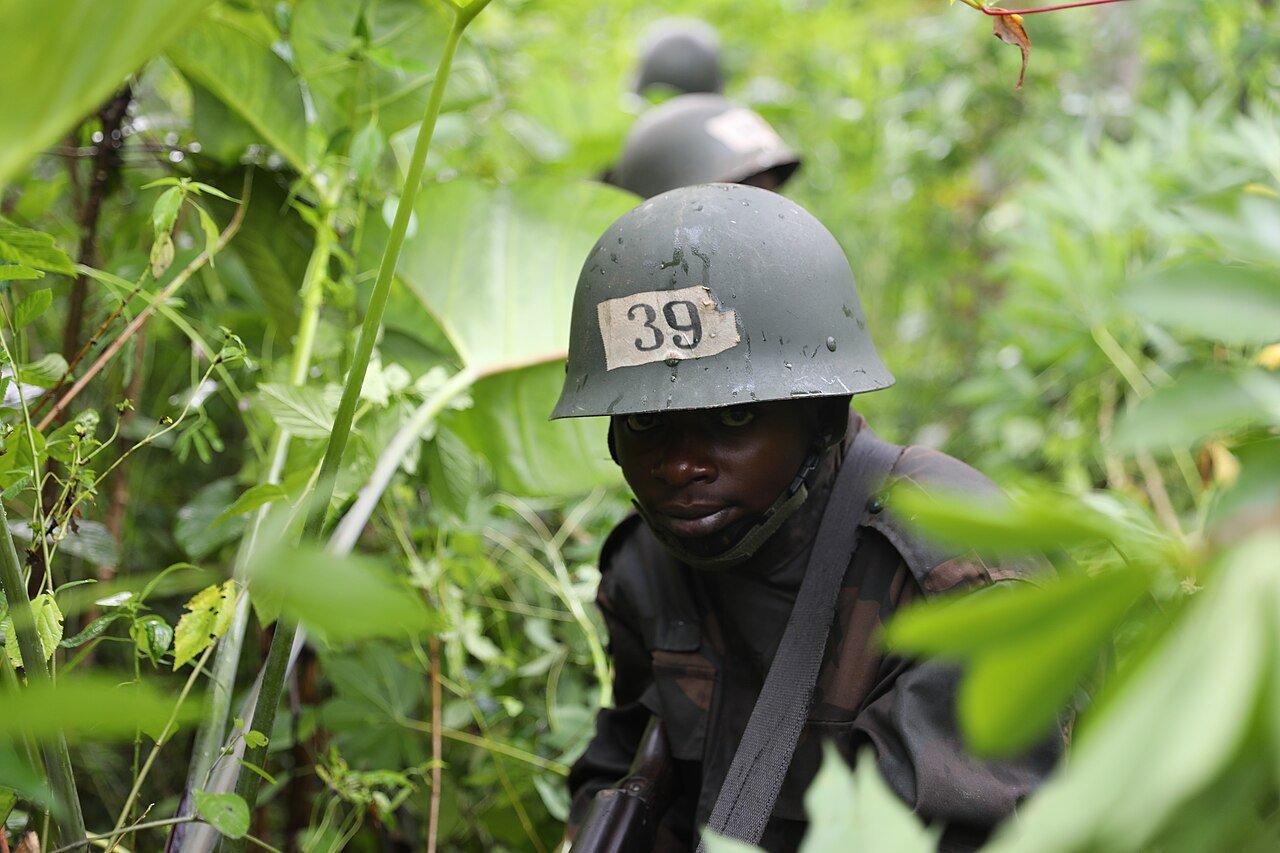
Featured photo: ARCHIVAL (April 29, 2025) — FARDC personnel training with MONUSCO peacekeepers in Beni, North Kivu; not the trial. Photo: MONUSCO / Ado Abdou. Original · CC BY-SA 2.0.
What happened at the trial?
The defendants were members of the Congolese armed forces’ 3415th Regiment. Proceedings began on October 26, 2026, and expanded from an initial 54 defendants to 71. The verdict was reported after 12 days of hearings.
Descriptions of the charges include military revolt, abandoning positions, disobeying orders and wasting ammunition. Earlier Radio Okapi reporting on November 3 adds an important fact: the investigation also encompassed shootings on October 16 and 20 that reportedly killed two soldiers and a civilian. Military personnel had allegedly clashed during attempts to stop troops from leaving a combat zone without authorization.
The available summaries do not establish which specific charges were proved against each condemned defendant. Full individual judgments and the status of any appeals have not been independently verified. It would therefore be inaccurate to describe every soldier as sentenced solely for running from battle.
A military struggling with deeper problems
Eastern Congo has endured years of conflict involving government forces, M23 and other armed groups. Soldiers and commanders have also reported problems involving equipment, pay, command and logistics.
A Reuters investigation published March 3, 2025 examined earlier military desertion prosecutions and accounts from troops who said they had become separated from their units during chaotic fighting. Officers described deep institutional problems. Those accounts do not determine the guilt or innocence of any defendant in the November 2026 proceeding. They do provide context for questions about whether harsher penalties can resolve structural failures.
The return of capital punishment
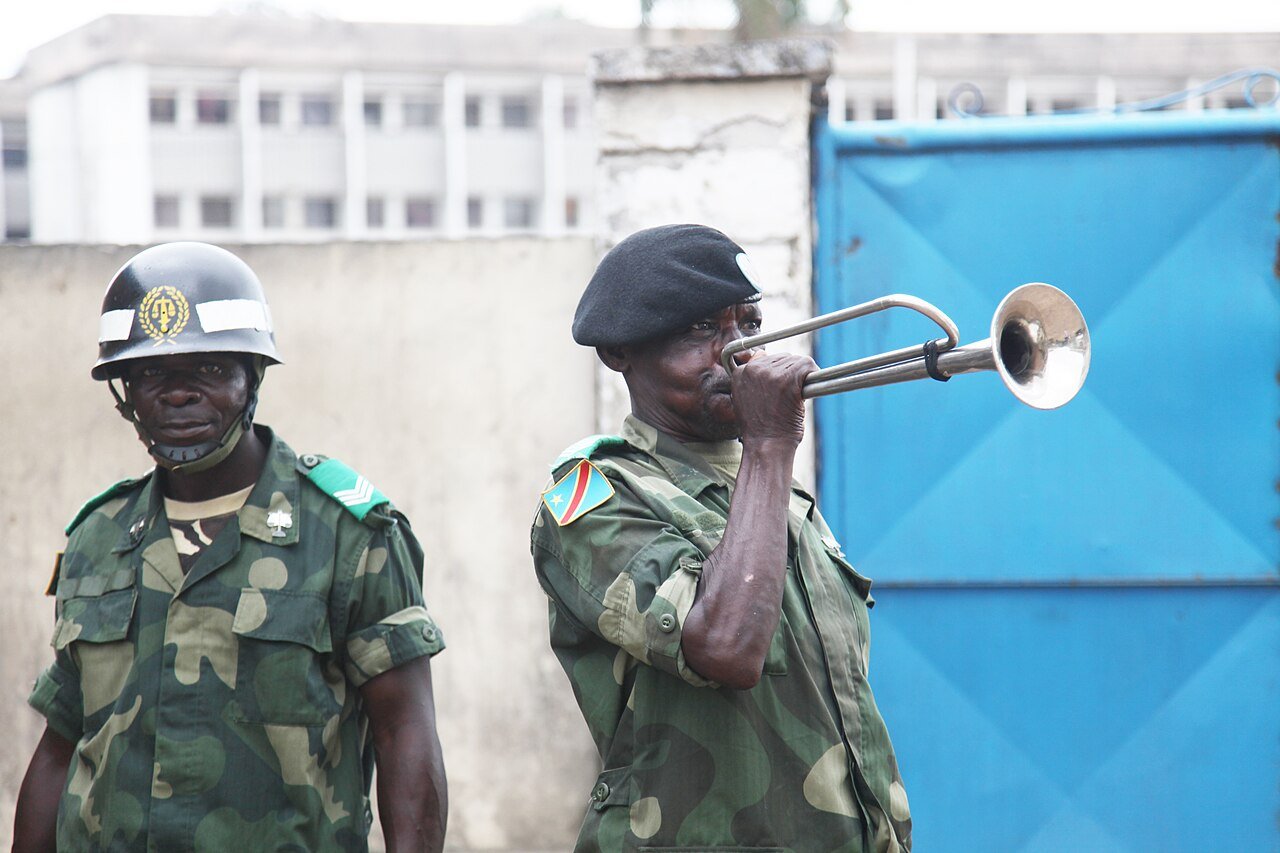
The Congolese government announced in March 2024 that it would end a roughly two-decade moratorium on executions, citing treason in the armed forces, national security and violent crime. Amnesty International opposed the decision and warned that weaknesses in the justice system raised the risk of wrongful executions following unfair trials.
Amnesty reported in January 2025 that military courts had handed down at least 300 death sentences since the 2024 announcement. That figure describes an earlier period, not the number sentenced in the latest case. Amnesty has identified 2003 as the year of the last known executions in Congo. The November sentences must not be conflated with completed executions.
Why the case matters to the United States
Although this is a Congolese military justice case, instability in eastern Congo is directly relevant to American diplomacy and supply chains. The United States facilitated a June 2025 peace agreement between Congo and Rwanda and the December 2025 Washington Accords for Peace and Prosperity.
The United States and Congo also signed a strategic partnership on critical minerals and infrastructure in December 2025. Congo is a major producer of cobalt and copper, vital inputs in industrial and technological supply chains. On November 6, 2026, Reuters reported that Congolese officials were pressing Washington to translate the minerals partnership into investments, electricity improvements and local processing, alongside progress toward peace.
There is no evidence that the United States directed or approved these military prosecutions. The connection lies in Washington’s stated interest in Congo’s stability, investment environment and regional peace process.
What remains unanswered?
Publicly available reporting does not provide the individual court findings for each condemned soldier or establish whether every defendant had access to adequate legal representation and a fair opportunity to contest the charges. The fate of possible appeals or commutations also remains unresolved.
For people in eastern Congo, the larger stakes remain civilian protection and safety after years of fighting and displacement. For Congo’s international partners, the verdicts sharpen questions about accountability, military effectiveness and the rule of law. The immediate verified fact remains narrow but grave: 66 soldiers have been sentenced to death; their executions have not been confirmed.
Sources
- Radio Okapi, November 8, 2026: verdicts for 71 soldiers
- Radio Okapi, November 3, 2026: charges and shooting allegations
- Reuters, March 3, 2025: military desertion trials
- Amnesty International, March 2024: response to execution policy
- Amnesty International, January 2025: death-sentence report
- United Nations, December 2025: Washington Accords
- International Energy Agency: U.S.–DRC strategic partnership
- Reuters, November 6, 2026: U.S. minerals partnership developments