By Joseph | Khemetic Nation News Network | November 12, 2026
Chandra X-ray data suggest a compact companion drives a massive star’s recurring eruptions; astronomers have not yet identified whether it is a neutron star or black hole.
A mystery of repeated stellar eruptions
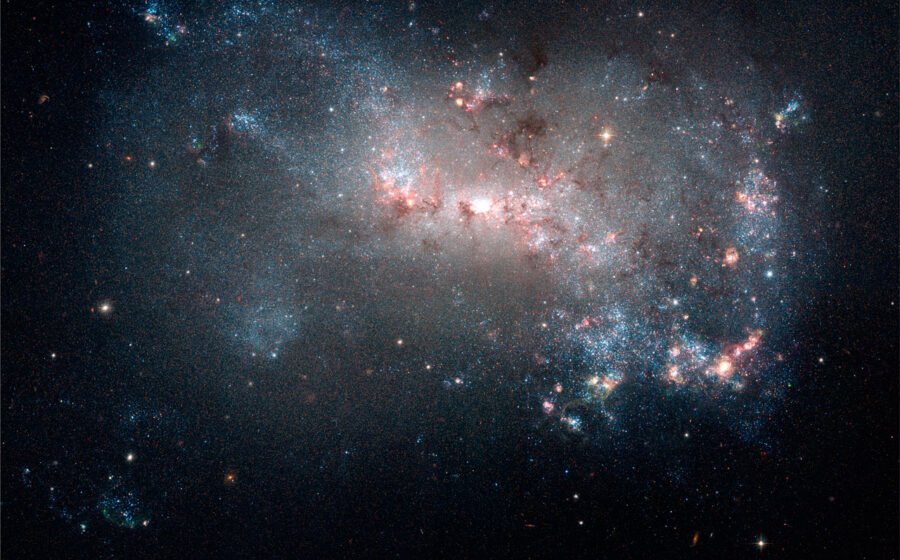
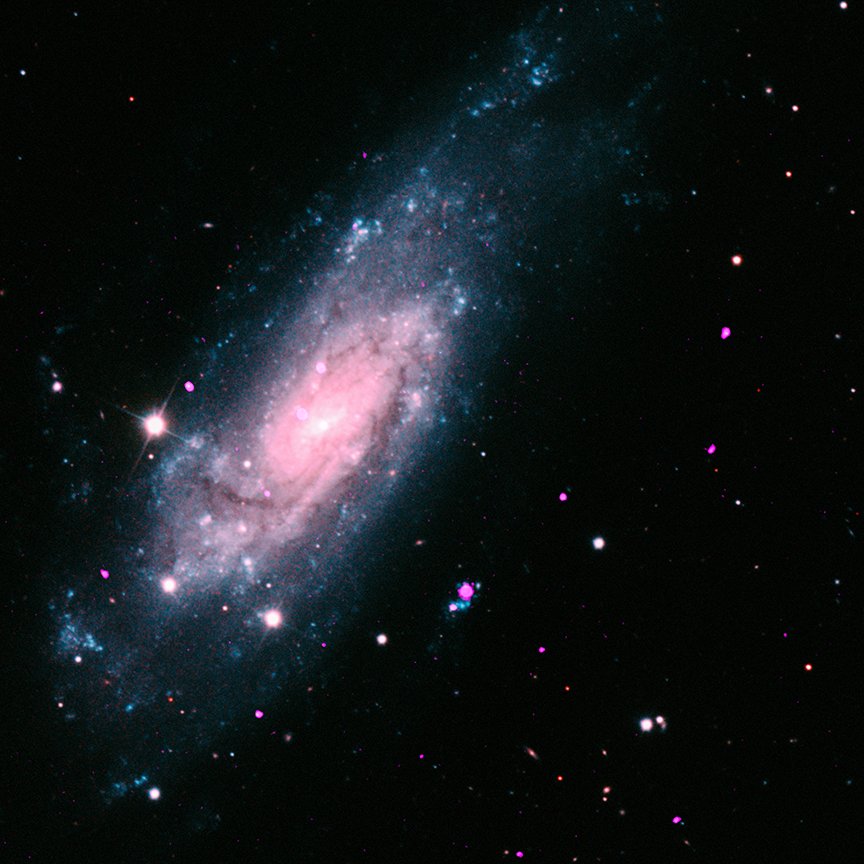
A new study reported by NASA on November 9 uses Chandra X-ray observations to explain a giant star that has repeatedly brightened without destroying itself. The source, AT 2016blu, lies in galaxy NGC 4559 roughly 30 million light-years away. The star is estimated to have at least 33 times the Sun’s mass. From 2012 to 2026, observers recorded at least 27 optical outbursts occurring roughly every 113 days.
An unseen partner changes the system
Researchers timed Chandra observations to a March 2026 outburst. X-rays were at least 100 times brighter than in older Chandra data, indicating that a compact companion could be capturing matter shed from the unstable star during close orbital approaches. Material falling toward a neutron star or stellar-mass black hole can heat enough to radiate strongly in X-rays, which may then drive visible brightening. The companion has not been individually identified as one type or the other, and the new observation does not show the giant star exploded as an ordinary supernova.
What the observations can and cannot prove
A systematic rhythm in brightness can offer evidence for an orbiting companion when synchronized optical and X-ray measurements support the model. The interpretation is based on observational astronomy, not a physical close-up of the hidden object. The work also provides a possible connection between some ultraluminous X-ray sources and eruptive giant stars, which needs further testing.
A philosophical comparison with the Book of Maat
The Book of Maat (2018 edition, printed page 156, The Seven Principles of Maat, Principle of Rhythm) describes a philosophical picture of recurring movement and change. The star’s 113-day recurrence provides a useful metaphorical comparison to rhythm, but the Book’s spiritual principle does not calculate the orbit, predict the Chandra observation, or replace the measured astrophysical mechanism. This is a comparison of perspectives, not proof of a scientific prediction.
Sources: Primary official scientific or government announcement. Photo credits and licenses are preserved in the WordPress media library. This report distinguishes archival photographs from new findings or announcements.