By Joseph | Khemetic Nation News Network | November 12, 2026
NASA’s November 2026 coverage of dwarf galaxy NGC 4449 highlights surprising evidence that stellar winds and explosions may spread heavy elements more efficiently than expected.
A small galaxy with a big scientific question
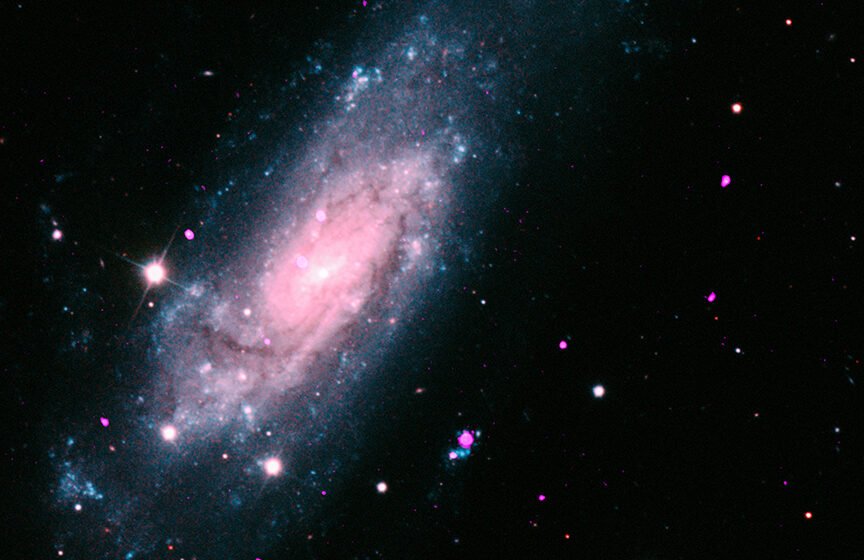
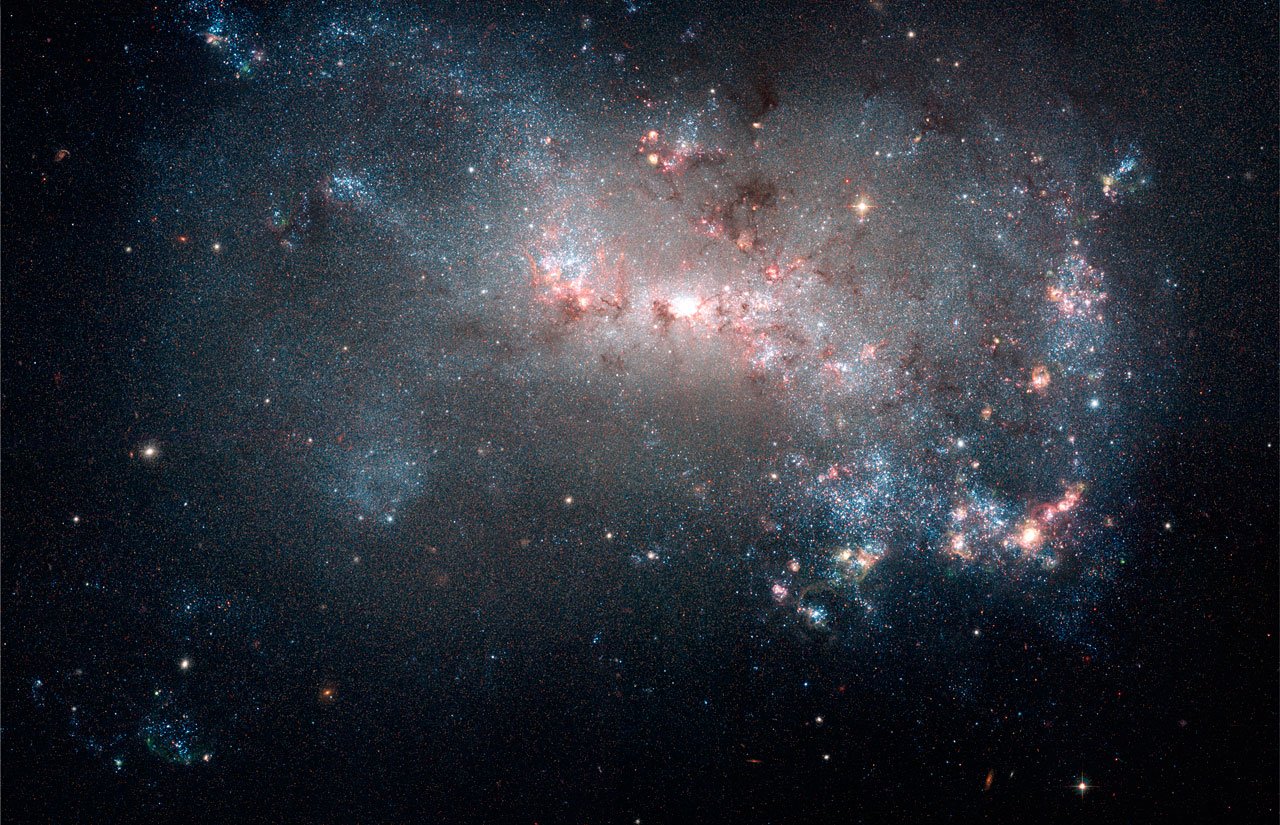
NASA’s Astronomy Picture of the Day on November 11 highlighted NGC 4449, a nearby dwarf starburst galaxy whose bright young stars make it a useful laboratory for studying galactic evolution. Smaller galaxies contain fewer stars than the Milky Way but are numerous across the universe. The Hubble observation captures clusters of stars and glowing clouds of gas where stellar activity is intense.
What the missing oxygen suggests
Astronomers have found that NGC 4449 and similar dwarf galaxies hold less oxygen than some models predict. Heavy elements such as oxygen are produced by earlier generations of stars, then spread by stellar winds and supernova explosions. The mismatch suggests that outflows from comparatively small galaxies may remove such material more effectively than expected, contributing to the enrichment of intergalactic gas.
An important date distinction
The featured Hubble photograph is a real telescope image with original public release dating to 2007. NASA’s new November 2026 scientific coverage revisits the galaxy; it is not a photograph freshly taken on November 11. Observations, modeled oxygen expectations and the proposed escape mechanism are distinct pieces of evidence. Researchers still have to test how broadly these results apply across different dwarf galaxies.
Interpreting correspondence without conflating evidence
The Book of Maat, 2018 edition, printed page 156, introduces the philosophical Principle of Correspondence, linking patterns across levels of existence. Astronomers also compare structures at different scales, but their conclusions rely on spectroscopy, observation and numerical modeling. The similarity is interpretive; no spiritual passage establishes the galaxy’s oxygen abundance or proves the proposed stellar-wind mechanism.
Sources: Primary official scientific or government announcement; Supporting NASA observation documentation. Photo credits and licenses are preserved in the WordPress media library. This report distinguishes archival photographs from new findings or announcements.