United Airlines has moved to block unauthorized third-party artificial intelligence agents from booking flights and accessing its travel systems. The Chicago-based carrier announced the restrictions on November 11, 2026, citing risks to customer accounts, unintended purchases and federal aviation procedures. The policy applies to AI agents generally—not just Meta’s Muse.
The decision places United among U.S. companies drawing boundaries around software that can act on a customer’s behalf. The airline is updating its booking, ticketing and distribution policies for both direct channels and intermediaries such as travel agencies and aggregators, according to its official announcement.
What United is restricting
United says personal AI assistants may require access to passwords, payment details and MileagePlus accounts. Giving a third-party agent that access could expose private information or lead to purchases, changes or mileage redemptions that a traveler did not intend. Those are risks cited by the company, not a finding that every AI agent has misused customer information.
United also points to check-in requirements. Passengers must acknowledge restrictions on dangerous items in baggage, and the airline says an automated agent completing that step could create compliance problems. United did not say that a particular Muse booking had caused such a violation.
The restriction reaches unauthorized agents that interact with United’s own systems and those attempting to act through distribution partners. In reporting on United’s updated terms, Search Engine Journal noted that the carrier distinguishes conventional search indexing from automated assistants acting on a customer’s behalf. Ordinary travel research is not itself prohibited, but agents seeking to use United’s systems need the airline’s permission.
A fight over the next middleman
United chief executive Scott Kirby described a second concern beyond cybersecurity. “I don’t want to create another middleman,” he said, according to The Wall Street Journal. The remark points to the commercial stakes: AI travel tools could become a new gatekeeper between airlines and passengers, influencing which fares customers see and which company controls the shopping relationship.
CBS News quoted aviation analyst Henry Harteveldt, who said the airline also faces costs from flight searches and may be wary of another powerful intermediary. That assessment is industry analysis, not an additional reason independently confirmed by United.
Southwest is choosing a different path
United’s approach contrasts with Southwest Airlines, which announced a ChatGPT flight-shopping integration on October 6. Southwest says the integration lets travelers discover destinations and compare flight options through an authorized connection, while booking and confirmation are completed through Southwest’s own website.

The distinction is important: Southwest’s announced service is a controlled airline partnership for flight discovery. It should not be confused with an independent AI agent making purchases or using account credentials without the airline’s authorization. Travel Weekly confirmed the purchase handoff to Southwest.com.
What travelers should know
Travelers can continue looking for United flights through established services such as Google Flights, Kayak and online travel agencies, according to CBS News. The new limitation concerns unauthorized autonomous agents, rather than a blanket prohibition on comparing fares or using ordinary booking websites.
United says it will not cancel reservations made by AI agents before November 11, 2026. It recommends checking those reservations for accuracy and has said it will continue evaluating AI tools as their security and authorization mechanisms evolve, according to Travel Weekly.
For customers, the immediate lesson is to verify who is receiving account passwords, payment details and loyalty credentials before using an AI service to act on their behalf. For airlines, the longer-term question is whether third-party AI tools can become a trusted booking channel without surrendering security, accountability or customer relationships.
Video and original sources
Video: ABC News — “United Airlines banning AI bots from booking flights” (November 12, 2026). Watch on the original publisher’s site.
Primary statement: United Airlines, “United Restricts Access for Third-Party AI Agents,” November 11, 2026. Other reporting: Reuters, November 11; CBS News, November 11; Search Engine Journal, November 14. Comparison: Southwest/AWS announcement, October 6.
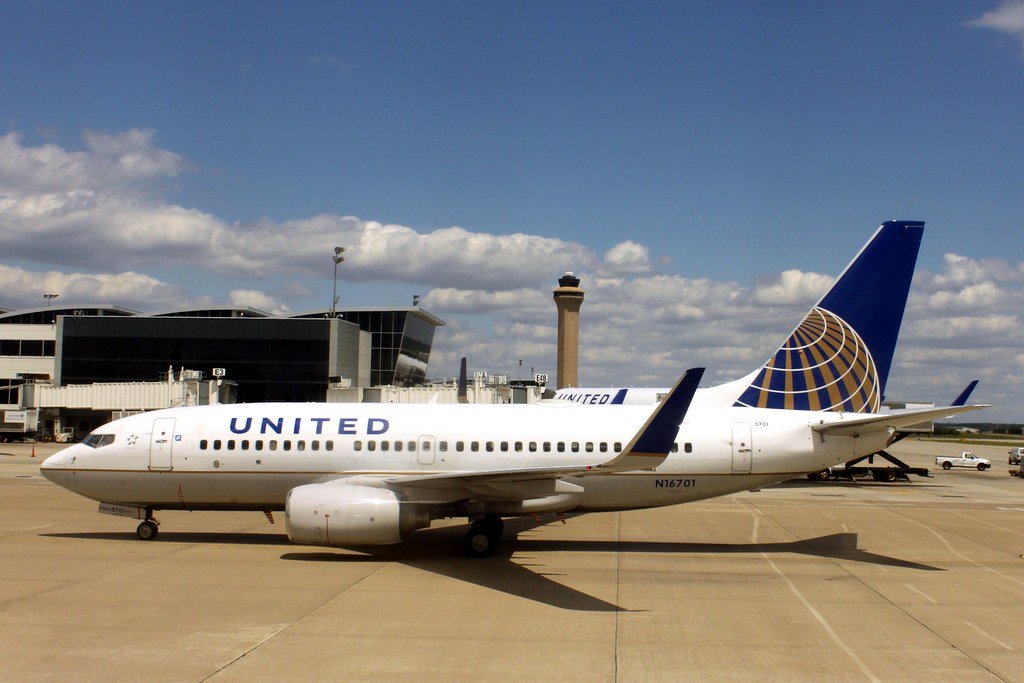
Featured image: Archival photo of a United Airlines Boeing 737-800 (N16701) by Prayitno, CC BY 2.0, via Flickr. The aircraft images are illustrative of the two airlines, not photographs of the AI booking systems.