November 17, 2026 | Business Wire — Intel Corporation faces a proposed federal securities class action accusing the chipmaker and two executives of misleading investors about weakening personal-computer demand before its shares fell 28.6% on October 30. The complaint was filed November 13 in the U.S. District Court for the Northern District of California. The allegations have not been proven. Federal court docket.
The plaintiff named in the complaint is the City of Southfield Fire and Police Retirement System, a Michigan pension fund. Intel CEO Lip-Bu Tan and CFO David Zinsner are also defendants. The case seeks unspecified damages for people who bought Intel shares between July 23 and October 29, 2026. Reuters confirmed the lawsuit.
What shareholders say Intel withheld
According to the plaintiffs’ lawyers, Intel’s public statements did not adequately reflect the severity of a slowdown in the personal-computer market. They claim PC manufacturers and distributors had accumulated unwanted inventory as higher component prices depressed consumer demand, limiting Intel’s ability to compensate for falling sales with higher prices.
The complaint also alleges that benefits from data-center construction and the AI boom did not adequately offset PC-related headwinds, and that semiconductor substrate constraints restricted Intel’s ability to increase data-center CPU production. These remain allegations, not judicial findings.
Intel’s financial results show contrasting trends
Intel’s October 29 earnings release filed with the SEC reported third-quarter revenue of $16.5 billion, up 21% from the year before. Its Client Computing and Physical AI Group generated $8.1 billion, down 5% year-over-year, while Data Center and AI revenue rose 78% to $7.3 billion.
The company forecast fourth-quarter revenue of $15 billion to $16 billion and warned that the PC slowdown could last through at least the first half of 2027. Plaintiffs contend the business deterioration was more severe earlier than those disclosures suggested.
Why Intel’s $23 billion share offering matters
Intel completed a $23 billion public equity offering in August, explaining in its earnings release that the funding would help support future growth and its balance sheet. Reuters reported that shareholders cited the offering’s timing in arguing executives had motive and opportunity to mislead investors while business conditions weakened. The sale itself is not proof of securities fraud.
A 28.6% drop and a $140 billion market-value decline
Intel shares declined 28.6% on October 30, erasing approximately $140 billion in market capitalization after its results and outlook disappointed investors, according to Reuters. The market reaction is relevant to claimed shareholder losses, but a steep price drop does not itself establish that the company violated securities law.
What the case means for pension investors
The named plaintiff is a retirement fund for firefighters and police officers. The dispute illustrates how corporate disclosure questions can affect institutional investments that help support workers’ retirement benefits. At issue is whether Intel’s earlier statements adequately described known PC demand, inventory and manufacturing risks while the company highlighted growth tied to AI infrastructure.
What happens next
The proposed class action is City of Southfield Fire and Police Retirement System v. Intel Corporation et al., No. 26-cv-13758. According to the plaintiffs’ lawyers, January 12, 2027 is the deadline to seek appointment as lead plaintiff. That date is a procedural deadline, not a ruling on the merits. Intel and the individual defendants may contest the accusations. As of Reuters’ November 15 report, Intel had not immediately responded to its request for comment.
Updated November 20, 2026: PC sales volumes and disclosure law
New reporting context: A closer review of Intel’s SEC-filed third-quarter Form 10-Q, released October 30, supplies more specific figures than the segment revenue totals alone. Notebook and desktop client revenue was $6.9 billion, down $424 million from a year earlier. Intel attributed that decline to a 14% decrease in unit volume amid lower demand and competition. At the same time, average selling prices rose 9%, partly because of pricing actions and a higher mix of premium products. These are Intel’s disclosed financial figures, not findings of misconduct.
The filing also reported that Client Computing and Physical AI Group operating income declined $409 million from the prior-year quarter. Intel attributed part of that decline to $763 million in higher period charges, primarily linked to inventory, while lower operating expenses partially offset the impact. The detail helps show why the dispute concerns the severity and timing of weaker PC demand, rather than whether Intel eventually disclosed the slowdown. The plaintiffs allege earlier statements were misleading; the company’s filing alone does not establish that allegation.
Is an earnings report enough disclosure? What U.S. securities law says
A November 2026 UFD Tech commentary video raises the question of whether a company’s earnings report is the proper place to reveal bad news. Earnings releases and SEC filings are important disclosure channels, but their existence does not automatically settle whether earlier public statements were accurate when made. Nor does securities law generally require a company to publish every adverse internal development immediately.
In Macquarie Infrastructure Corp. v. Moab Partners (2024), the U.S. Supreme Court held that a pure omission, by itself, is not actionable under Rule 10b-5(b). An affirmative statement can still be misleading if it leaves out information needed to prevent a materially false impression—a so-called half-truth. The Intel defendants could contest what was known, what was said, when any disclosures were required and whether the alleged misstatements caused losses. The video expresses an opinion about the suit; it is not court evidence.
Court status and investor deadline as of November 20
The publicly available Justia docket index identifies the November 13 complaint, notices of appearance and proposed summons, but explicitly says its listing was last retrieved November 13. It therefore cannot establish that no later filings occurred. No decision on the merits or court certification of the proposed class was independently confirmed in the records reviewed for this update. According to the plaintiffs’ attorneys, January 12, 2027 is the deadline for investors to seek appointment as lead plaintiff; that deadline is not a compensation deadline or a ruling that Intel violated the law.
Additional documentation: Intel Form 10-Q (October 30) · U.S. Supreme Court, Macquarie decision · Ars Technica reporting (November 16) · UFD Tech commentary video. The video is linked rather than embedded because its playback thumbnail could not be independently verified.
Documentation and sources
Federal case docket · Intel SEC-filed Q3 earnings report · Plaintiffs’ lawyers: case allegations · Reuters, Nov. 15 · Tom’s Hardware.
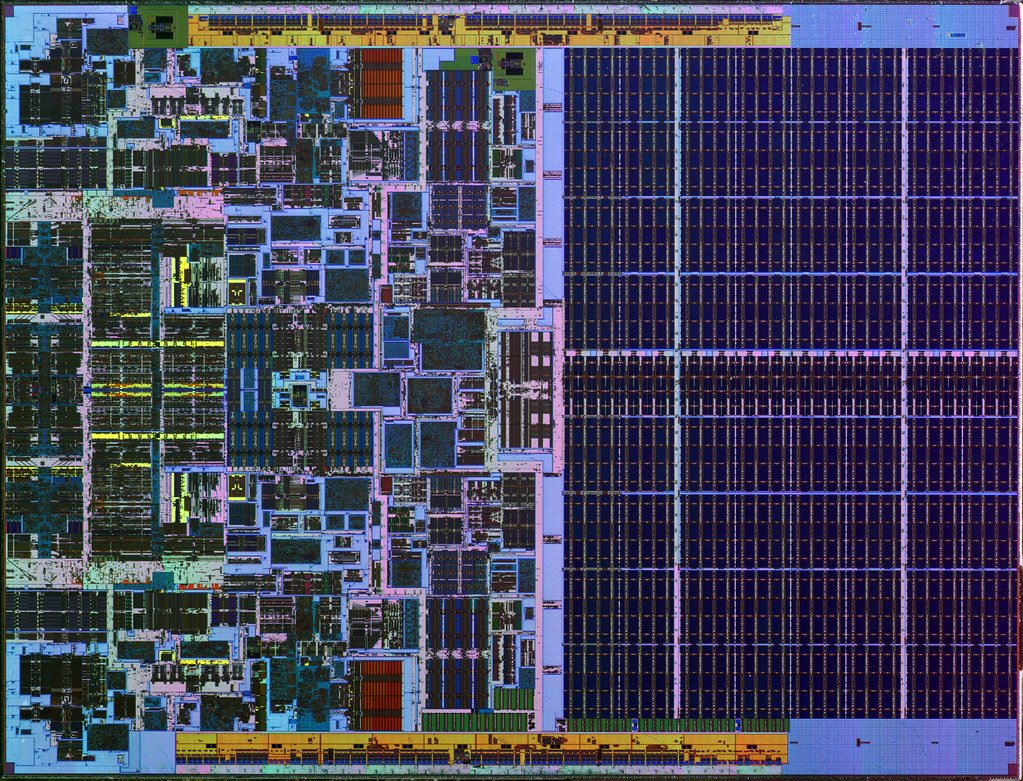
Featured photo: Archival photograph of an Intel Xeon 3060 processor by cole8888, CC BY-SA 2.0. Both hardware photographs are illustrative and do not depict the lawsuit, a 2026 Intel product launch or current production.