International Space Station researchers are investigating whether astronauts can perform medical imaging with less direct assistance from specialists on Earth.
In a November 25 mission update, NASA reported that Jessica Watkins and Luke Delaney used the EchoFinder-2 ultrasound system to examine internal organs. The research combines ultrasound with augmented-reality guidance and computational tools intended to assist with locating organs.
Why independence matters
Future missions farther from Earth may face communication delays and limited access to medical specialists. Research into guided imaging could help crews gather information about their health without requiring continuous real-time assistance. NASA’s update describes an investigation, not a proven clinical capability or approval for routine diagnosis.
Other crew members conducted blood-pressure measurements as part of cardiovascular research. Together, these activities demonstrate how the station supports investigation of the effects of spaceflight on human health.
A Ma’at perspective
In the Book of Maat (2018), Part 1, precept 37 emphasizes gaining understanding through stages of experience. That ethical idea offers a useful parallel to scientific development: testing a device and establishing its reliability are separate steps. It is a philosophical comparison, not scientific evidence for the system.
Source: NASA International Space Station update, November 25, 2026.
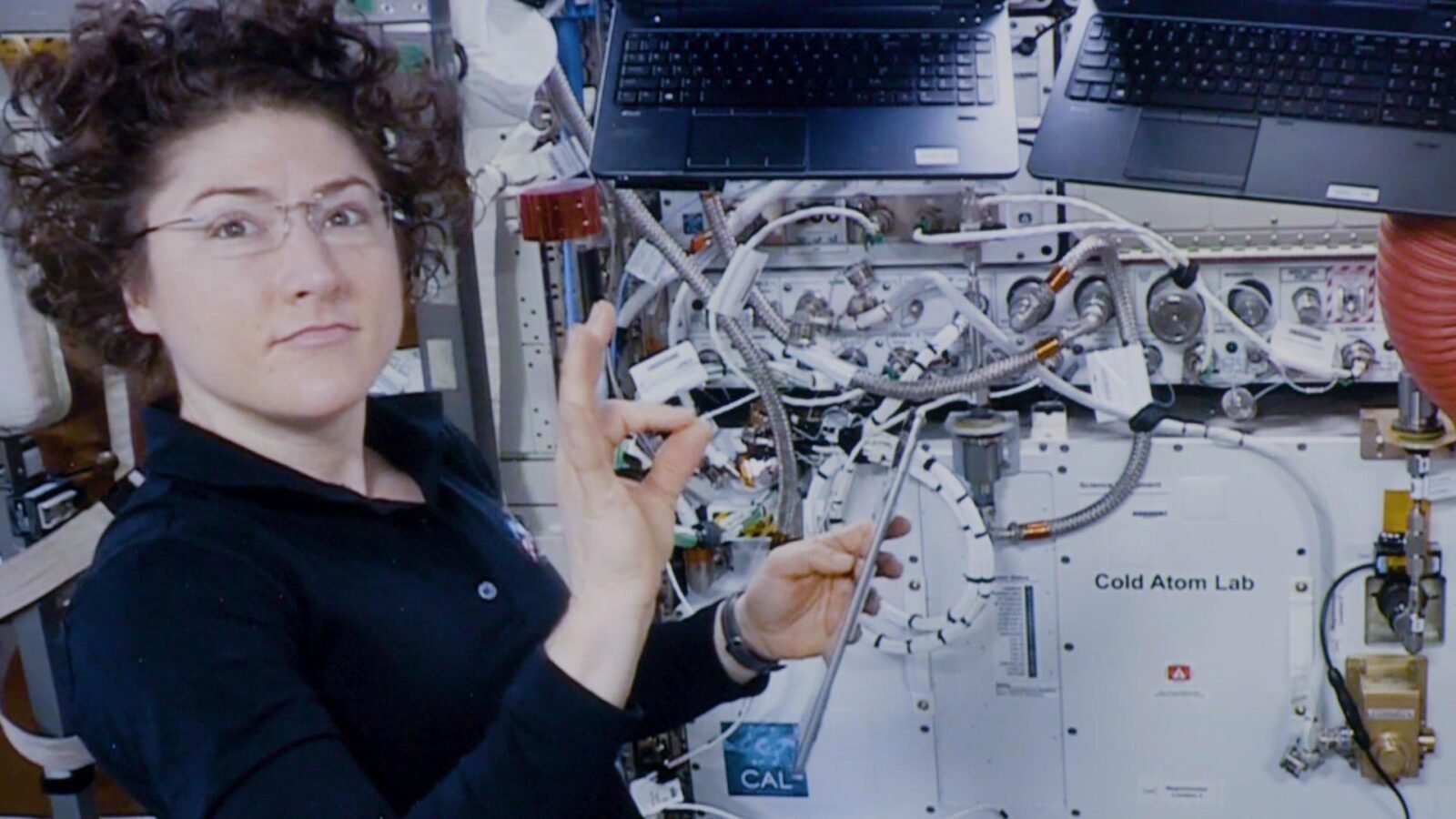
Featured image: NASA archive photograph: astronaut Christina Koch with the Cold Atom Laboratory aboard the ISS, 2020. Illustrates the station’s research environment, not the EchoFinder-2 experiment.