MANUS PROVINCE, Papua New Guinea — On Ahus Island, families are struggling to find enough drinking water, fishing has declined, and extreme heat has shortened the school day. The emergency has unfolded despite years of community efforts to prepare, including water tanks, seawalls and initiatives to sustain fishing livelihoods.
The conditions were documented in a November 15 investigation by The Guardian’s Ben Doherty, based on conversations with residents and ocean sustainability researchers who visited in October. A household survey cited by the researchers found that just 7% of surveyed households had enough drinking water and 81% reported being unable to cope with climate change. These figures describe the sampled Ahus community, not the whole country; the published account does not provide the survey sample size.
Ahus is far from the United States, but the underlying challenge has a direct American connection. The November 10 U.S. Drought Monitor assessment reported moderate drought in American Samoa and newly identified abnormal dryness in Guam. The locations face different immediate conditions, yet their dependence on reliable island water supplies makes the comparison significant.
Water scarcity is becoming a food and livelihoods crisis
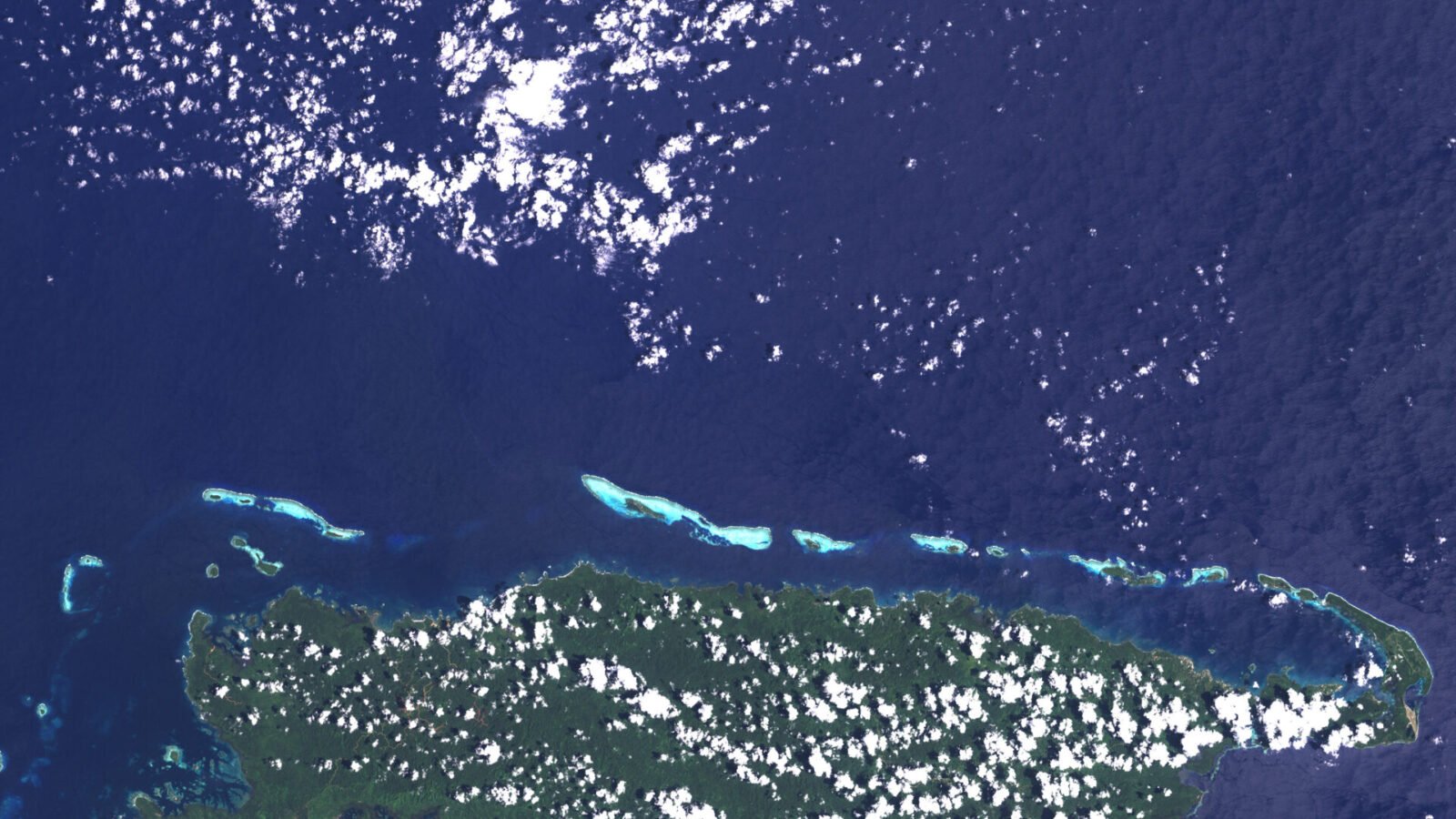
Ahus lies off Manus Island in northern Papua New Guinea. Rainwater harvesting and access to nearby freshwater are important to daily life. According to the Guardian, high temperatures and drought are exhausting residents, discouraging fishing and undermining exchanges of fish for food grown on Manus.
University of Sydney professor Joshua Cinner and fellow researchers, who have worked on the island for many years, encountered residents conserving energy indoors during an October visit. Their account described sharply reduced fishing and shortened school hours. The Guardian also interviewed resident Michelle Suri, who reported widespread hunger and inadequate access to safe water.
A further complication concerns the rain itself. The Guardian reported Cinner’s account that smoke from fires in Borneo affected rainfall and that residents disconnected rainwater-catchment systems to protect their existing supplies. The article did not publish laboratory measurements establishing the rain’s acidity or contaminant concentrations. The reported fear of contamination should not be presented as a verified island-wide water chemistry finding.
Weather agencies warn the dry spell could persist
There is independent confirmation of a wider regional drought. The United Nations Food and Agriculture Organization reported on October 31 that agriculture and disaster officials were coordinating drought response across Papua New Guinea’s 22 provinces. National Weather Service warnings placed Manus under a drought alert, as reported by Papua New Guinea’s National Broadcasting Corporation.
In a November 5 update, the World Meteorological Organization warned that the strengthening El Niño could bring below-normal rainfall to parts of the western Pacific between November 2026 and January 2027. Forecasts describe regional risks, not the precise water outlook for each island. The timing and severity of local impacts remain uncertain.
Why American Samoa and Guam should pay attention

The U.S. Drought Monitor found Pago Pago, American Samoa, received just 0.44 inch of rain from November 1 to 10, about 12% of normal for that period. The same update classified Guam as abnormally dry, citing recent rainfall deficits and emerging short-term indicators.
These are not equivalent to the emergency documented on Ahus, and a drought category is not a direct measure of household drinking-water access. Still, the U.S. Geological Survey explains that some low coral islands depend on thin freshwater lenses that can be damaged or depleted during severe drought. For U.S. territories, investments in water storage, monitoring, emergency delivery and resilient infrastructure matter before the next prolonged dry period.
Indigenous land rights shape the options
Moving families to safer ground is often presented as a straightforward response to climate hazards. For an Indigenous community, resettlement also involves customary land rights, cultural responsibilities, access to fishing grounds and dependable water supplies.
On Ahus, the Guardian reported that households seeking water across the channel on Manus Island do not necessarily have rights to the sources they find there. Customary ownership makes relocation legally and socially complex, even where land may appear physically available. Emergency assistance and secure water access cannot be replaced by a vague suggestion that residents move.
Ahus residents have a history of stewarding their marine resources. NASA Earth Observatory described generations-old customary restrictions on certain reef fishing methods, which supported fish stocks and local exchange. That record shows extensive community environmental knowledge, not an ability to withstand every external shock.
What happens next
Important questions remain unresolved: how much safe water the island presently holds, what emergency supplies have arrived, whether suspected rainfall contamination has been tested, and how representative the most recent survey is. The published accounts do not establish that permanent relocation is inevitable.
The immediate concerns are safe water, food access, health and the ability to earn a living. Future updates from local authorities, meteorologists and the researchers will be essential to determining whether conditions stabilize or further assistance is needed.
The U.S. connection is practical rather than symbolic. The same principles—reliable water systems, timely drought monitoring, local decision-making and respect for Indigenous rights—deserve attention across American Pacific communities before a shortage becomes an emergency.
Sources and further reading
- The Guardian, November 15, 2026 — Ahus Island reporting by Ben Doherty
- FAO, October 31, 2026 — Papua New Guinea drought response
- WMO, November 5, 2026 — Western Pacific outlook
- NBC Papua New Guinea, November 12, 2026 — Provincial drought alert
- U.S. Drought Monitor — November 10 conditions, American Samoa and Guam
- USGS — U.S.-affiliated Pacific water risks
- NASA Earth Observatory — Ahus Island reef management and historic satellite image