By Seba | Science Desk
Ancient DNA has identified the likely genetic cause of an exceptionally rare developmental condition in a 1,600-year-old infant buried at Jauranga, in Peru’s Palpa Valley. Researchers report that the infant had cyclopia, a severe condition involving a single eye socket at the center of the face, associated in this case with an extra copy of chromosome 13. The finding, published online in the Proceedings of the National Academy of Sciences on November 9, 2026, connects skeletal evidence with genomic evidence in an archaeological individual.
A rare diagnosis preserved in an ancient burial
The infant’s remains were recovered inside a ceramic vessel alongside a second infant at a cemetery containing several dozen burials from the Middle Nasca period, dated in the study to approximately A.D. 325–440. The affected infant’s skull was unusually small and had a single median orbit, together with other cranial developmental features consistent with cyclopia. Genetic analysis identified an additional copy of chromosome 13, known as trisomy 13 or Patau syndrome, which the researchers identify as the likely cause of the condition.
Cyclopia develops when early embryonic brain and facial development is severely disrupted. It is a very rare and usually lethal condition. Trisomy 13 is one known chromosomal cause, although cyclopia occurs in only a small proportion of trisomy 13 cases. The ancient genome therefore provides more than a visual diagnosis: it offers direct evidence linking a specific chromosomal abnormality to the skeletal pattern in this individual.
Two infants, one vessel
The infant with cyclopia was positioned at the bottom of the ceramic vessel, with a second infant above her. The researchers interpret the arrangement as likely representing a single burial event. Genetic analysis showed that the two infants did not share the same mother. The second infant did not display the same skeletal abnormalities.
Urn burial was an established mortuary practice for young children in the Nasca cultural region, but the placement of two infants in one vessel was unusual in this particular archaeological context. The grave was part of a regular cemetery and did not contain special grave goods that would clearly mark the child with cyclopia as either excluded or treated in an exceptional way. The researchers caution that one burial cannot establish how the entire Nasca community understood disability or congenital difference.
The infant’s estimated age at death may indicate survival for weeks or months after birth, but the research team says the exact length of life cannot be determined. Nor can the available evidence establish the mother’s age or explain the circumstances that brought the two infants into the same burial vessel.
A useful comparison with Maya child burials
There is a meaningful, but limited, comparison with ancient Maya mortuary archaeology. Archaeological studies document the burial of infants and very young children in ceramic urns at several Maya sites. In some contexts, these interments were associated with household or ancestral relationships; in others, urns were incorporated into platforms or shrine construction. Maya archaeologists emphasize that the meaning depended on local chronology and burial context. These examples show that ceramic-vessel interment of the very young was not unique to the Nasca world, but they do not demonstrate that Nasca and Maya communities shared the same ritual meanings or social practices.
What the evidence can—and cannot—tell us
The strongest conclusion is biological: the infant’s skeletal condition is consistent with cyclopia, and ancient DNA identifies trisomy 13 as its likely cause. The burial also provides evidence that the child was placed in a shared vessel within a broader cemetery. It does not prove how the child was treated during life, whether the community regarded her condition as sacred or stigmatizing, or why the two infants were buried together. Those questions remain open until additional archaeological evidence can be compared.
This case is important because it brings together paleogenomics, osteology and mortuary archaeology. Rather than relying on appearance alone or projecting modern assumptions onto an ancient population, the study uses genetic evidence to clarify a diagnosis while allowing the burial context to remain a separate line of interpretation.
Sources and further reading
- Tomasto-Cagigao, E., Reindel, M., Isla Cuadrado, J., Lund Valle, M., Kassadjikova, K., Harkins, K. and Fehren-Schmitz, L. (2026). “A Nasca-period perinatal burial reveals cyclopia associated with trisomy 13 in southern Peru,” Proceedings of the National Academy of Sciences. Published online November 9, 2026.
- Live Science’s report on the Jauranga infant and the research team’s interpretation (November 9, 2026).
- Flynn-Arajdal, Cano and Miller-Wolf, “Las implicaciones de las urnas funerarias en el Área Maya”, a study of juvenile funerary urns in the Maya area.
- Cambridge University Press review of Maya childhood and burial contexts.
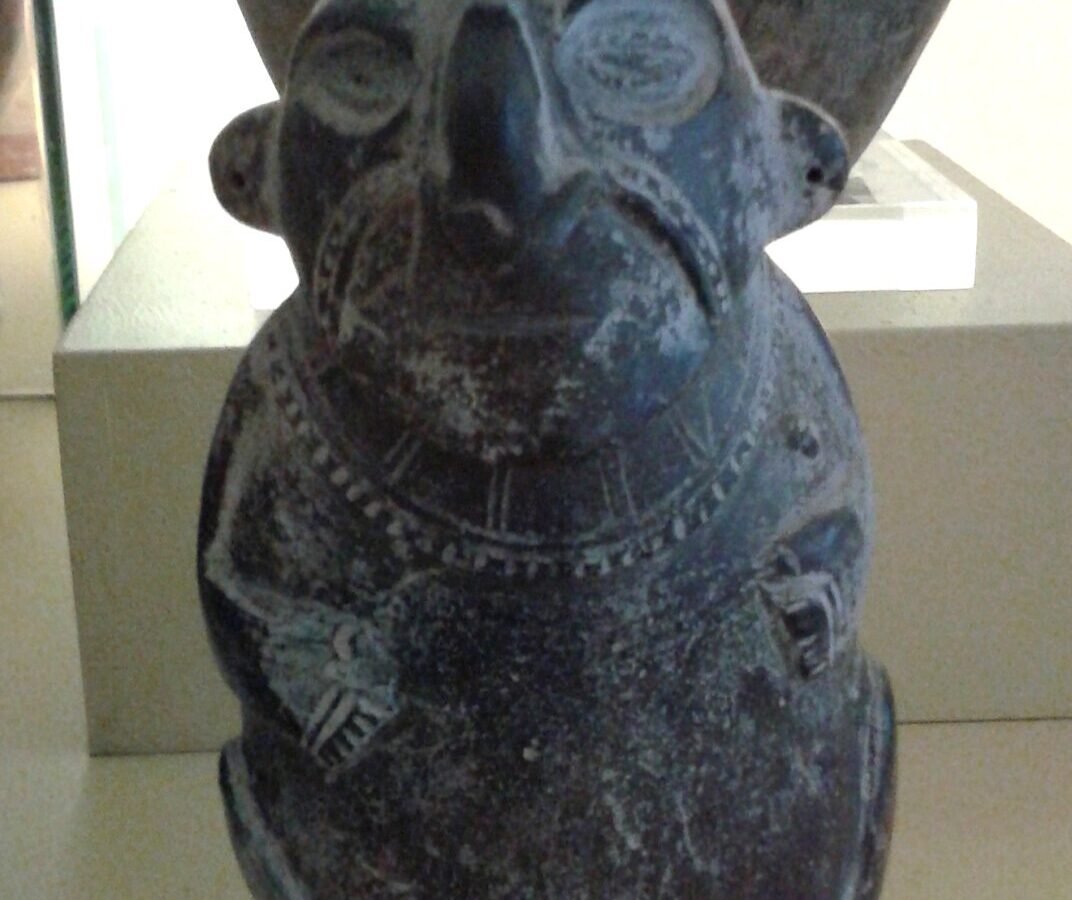
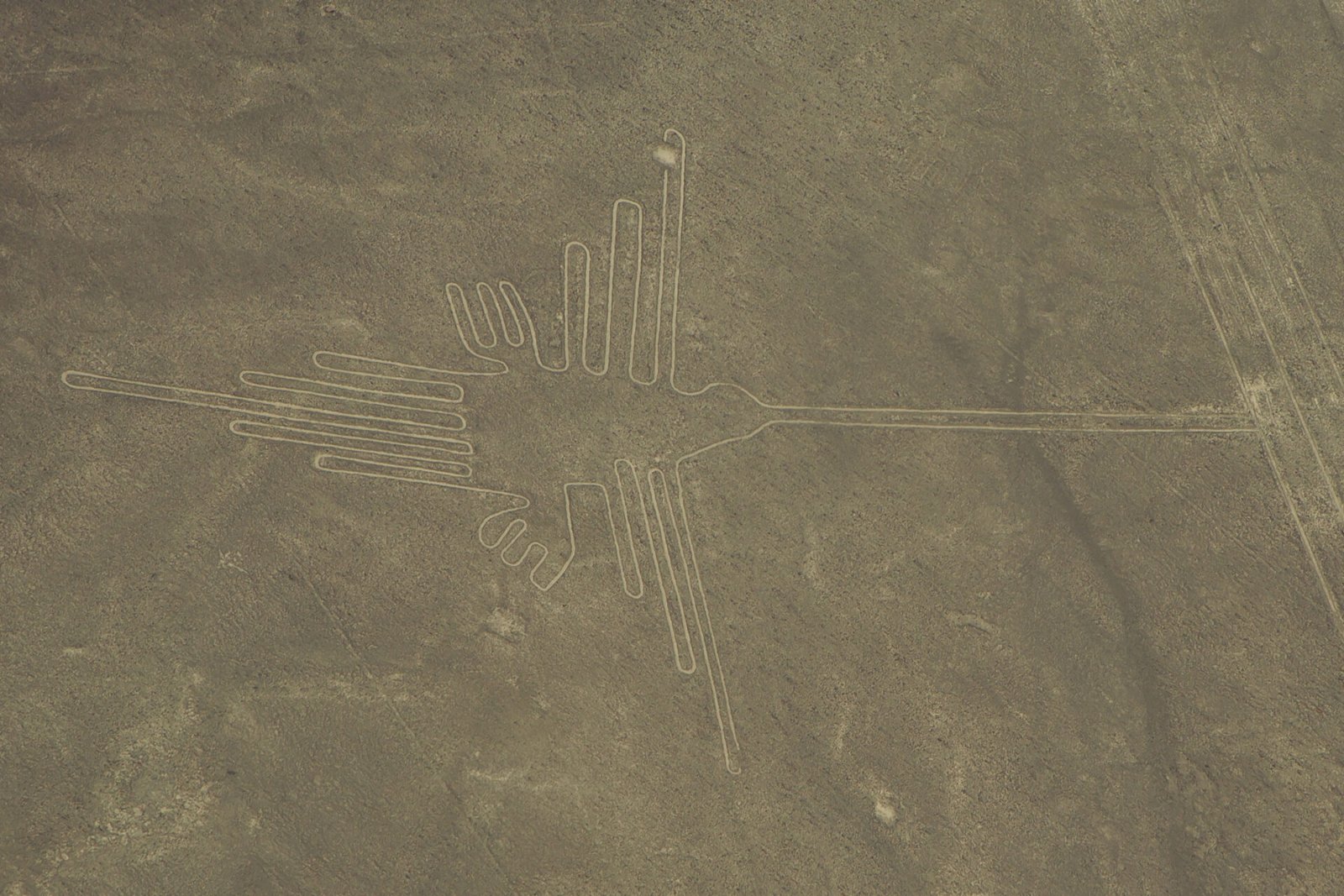
Image note: The featured Nasca ceramic vessel and the aerial Nazca Lines photograph are contextual images, not photographs of the Jauranga urn or excavation. The vessel image is credited to Dornicke, Wikimedia Commons, CC BY-SA 4.0; the aerial image is credited to Murray Foubister, Wikimedia Commons, CC BY-SA 2.0.