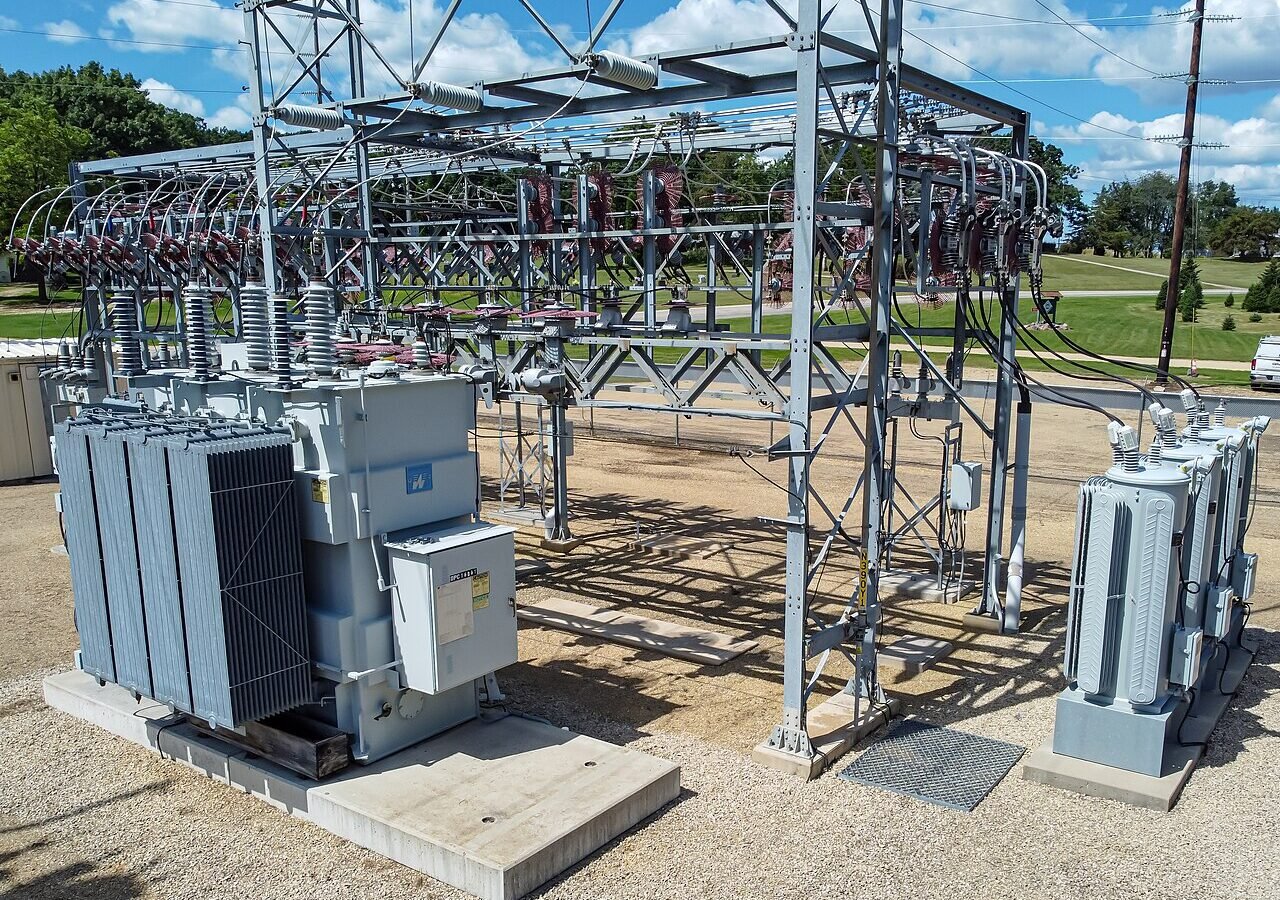
A peer-reviewed study identifies clock-synchronized battery-system checks as a source of electrical frequency disturbances measured in 12 power grids across five continents, including the United States.
Electrical grids around the world have been experiencing a small but remarkably regular disturbance: their operating frequency changes slightly in a pattern that repeats every 60 seconds. The phenomenon appears even in power systems that are physically disconnected.
Researchers now have direct evidence of an important source. A study published October 30, 2026, in Nature Energy links the pattern to clock-synchronized software routines in battery-based uninterruptible power supplies (UPS) and other digitally controlled energy equipment.
Led by scientists at Forschungszentrum Jülich in Germany, with collaborators at the University of Cologne and Karlsruhe Institute of Technology, the research found the one-minute pattern in measurements from 12 grids spanning five continents. It is a finding about engineering and timing—not evidence of a cyberattack or an imminent blackout.
The 60-second mystery, explained
Power-grid frequency reflects a constant balancing act. When electricity demand exceeds supply, frequency falls; when generation exceeds demand, it rises. Most U.S. grids operate at a nominal 60 hertz, or 60 electrical cycles per second. Many grids elsewhere operate at 50 hertz.
The new finding should not be confused with that normal operating frequency. Researchers detected a small variation in frequency recurring once every 60 seconds. The precision of the recurring signal suggested that something controlled by a clock, rather than ordinary unpredictable demand, was involved.
The researchers analyzed grid-frequency records from the United States, continental Europe, Britain, Scandinavia, Australia, South Africa, Malaysia, South Korea, Ireland, Iceland and other systems. The pattern was particularly pronounced in some large interconnected grids but also appeared in smaller and island networks. U.S. measurements in the study came from distribution-level instruments.
The clue came from backup batteries
The team turned to high-resolution measurements at Forschungszentrum Jülich’s research campus, where its electrical monitoring network tracks individual buildings and transformers. Four measured buildings showed a pronounced one-minute pattern in their electrical demand, and all four contained battery-based UPS equipment. The monitored buildings without UPS installations did not show the same clear pattern.
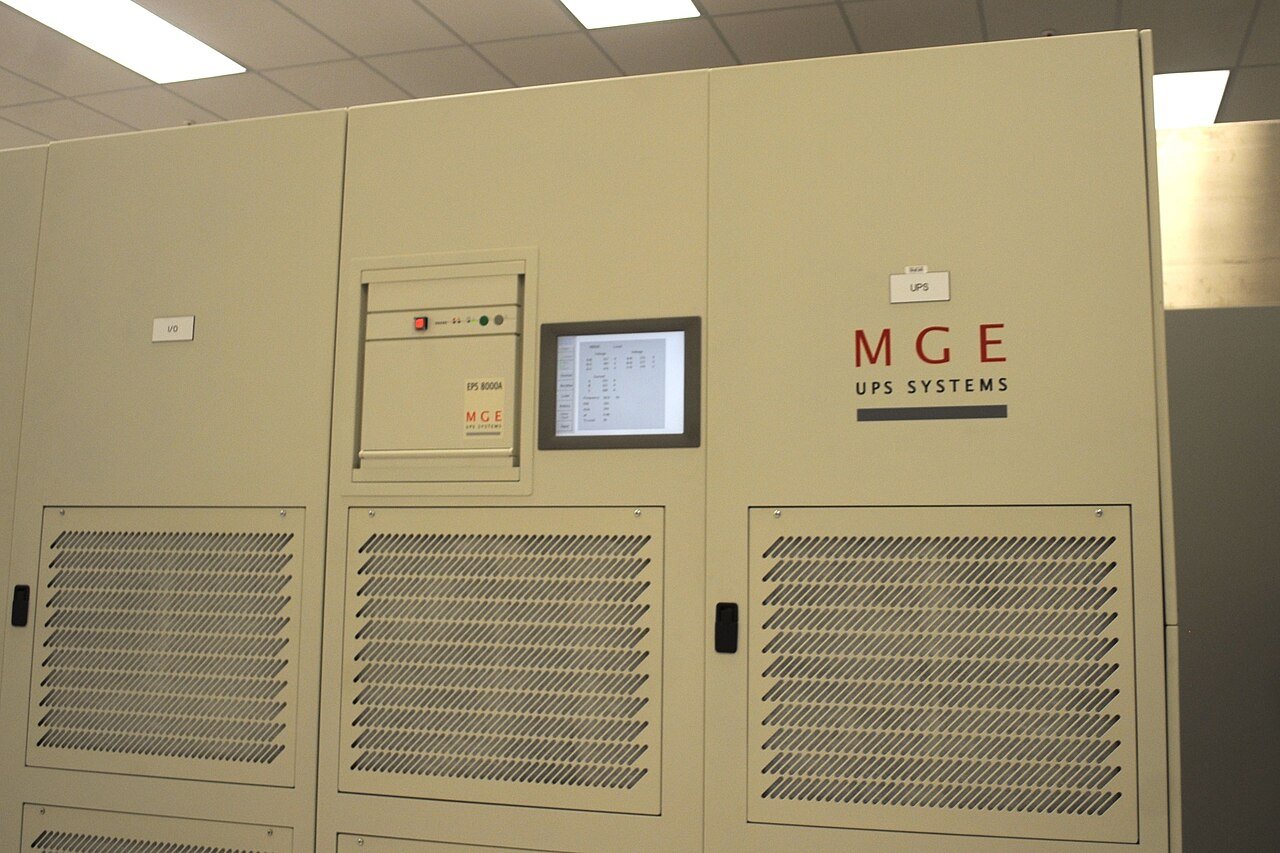
UPS systems keep critical facilities powered when normal electricity service is interrupted. They are common in data centers, laboratories and other facilities that cannot tolerate sudden outages.
In one UPS installation, researchers observed narrow battery-current peaks repeating every minute. They traced the associated electrical signal through the building’s power equipment and transformers to the connection with the public 110-kilovolt grid. The UPS manufacturer confirmed that the current peaks came from scheduled self-tests run by the battery energy-management system.
That direct investigation showed how a routine equipment check can propagate beyond an individual building. It does not prove that the same equipment model or manufacturer caused every disturbance measured worldwide.
Why synchronized software matters
The issue is not simply that backup batteries test themselves. It is that many digitally controlled devices can use a common external time reference and schedule electrical operations at almost exactly the same moment.
On its own, one battery system’s test may have little effect on grid conditions. But if enough devices briefly increase their power demand together, the combined effect can become measurable. Researchers also tested the effect of enabling and disabling clock synchronization on one investigated system, helping connect the timing of its electrical pattern to its software behavior.
As the scientists explain in Forschungszentrum Jülich’s announcement, other digitally controlled appliances may also show synchronized consumption patterns. Their specific contribution to the worldwide one-minute signal has not yet been established.
What the findings mean for American electricity customers
The United States is investing in battery storage, data-center capacity, renewable generation and advanced grid controls. These technologies offer important benefits, but the research shows that digital control software can also create unintended system-level effects.
American frequency measurements were part of the study, so the recurring signal is not confined to Europe. The most detailed identification of a UPS self-test as a source, however, took place in Germany. The paper does not identify an individual U.S. utility, data center or battery manufacturer as the source of the American measurements.
For U.S. grid operators, the practical lesson is to consider coordinated behavior across many devices, not just whether each unit operates correctly by itself. This is a reliability-design issue, distinct from allegations of hacking or deliberate interference.
Should Americans worry about blackouts?
The authors say the observed one-minute disturbance has not reached a safety-critical level. The pattern is generally small, measured in millihertz—thousandths of a hertz—and is not an announcement of an approaching grid collapse.
It can nevertheless matter operationally. In hydropower systems, recurring frequency fluctuations may prompt repeated turbine-governor adjustments and contribute to wear. Scandinavian grid operators tightened relevant frequency-control requirements in 2023, and the study reports that the largest amplitudes became less common afterward.
The team also found that the one-minute frequency drop in Ireland grew from around 3 to 12 millihertz between 2016 and 2021. More synchronized electricity demand, changes in system inertia and frequency-control behavior may all influence the magnitude; the paper does not attribute every change to one cause.
A possible solution may be software timing
One remedy is straightforward in principle: rather than having many UPS units check their batteries at the start of every minute, manufacturers could stagger their diagnostic routines. Randomized schedules, individual offsets or event-driven checks could prevent electrical demand from briefly rising across many devices at once.
After researchers contacted one equipment manufacturer, the company issued a software update that removed strict periodicity from some current peaks. According to the study, that intervention only partly resolved the underlying issue, but it showed that software design could reduce the problem at its source.
The bigger challenge is coordination among equipment makers, utilities and regulators as modern grids become more interconnected with software-dependent devices.
The larger lesson for grid resilience
The study adds a new dimension to electricity reliability: equipment may be working as designed, and yet collective behavior can produce an unintended disturbance. The researchers do not claim to have discovered a dangerous global conspiracy or a pending energy crisis. They have documented a repeatable physical effect and a credible, experimentally supported mechanism.
Future work will have to establish how much of the worldwide signal is attributable to particular classes of devices and which operating standards best reduce its impact.
Sources and further reading
- Hartmann, C., De Din, E., Carta, D. et al., One-minute frequency disturbances from unintended synchronization in cyber–physical power systems, Nature Energy (October 30, 2026) — peer-reviewed primary research, open access under CC BY 4.0.
- Forschungszentrum Jülich: Mystery of 60-Second Fluctuations in Power Grids Solved — October 30, 2026.
- Florian Dörfler, An extra beat every minute, Nature Energy — independent scientific perspective, October 30, 2026.
- ScienceAlert’s November 10, 2026 report.