Retail facial recognition is intended to help stores identify suspected offenders. But documented cases in Britain and a federal enforcement action against Rite Aid in the United States show how mistaken matches, flawed watchlists and staff errors can result in innocent customers being accused of theft.
The problem is not necessarily that every face-matching algorithm fails. A system may generate a false alert, a store may enroll the wrong person on a watchlist, or an employee may approach someone other than the person shown in a valid alert. For the wrongly accused customer, each failure can have serious consequences.
There is no reliable publicly established nationwide count of innocent Americans falsely accused by retail facial recognition. The reported incidents demonstrate a documented risk, not an independently measured U.S. epidemic.
A London shopper was removed after an alert
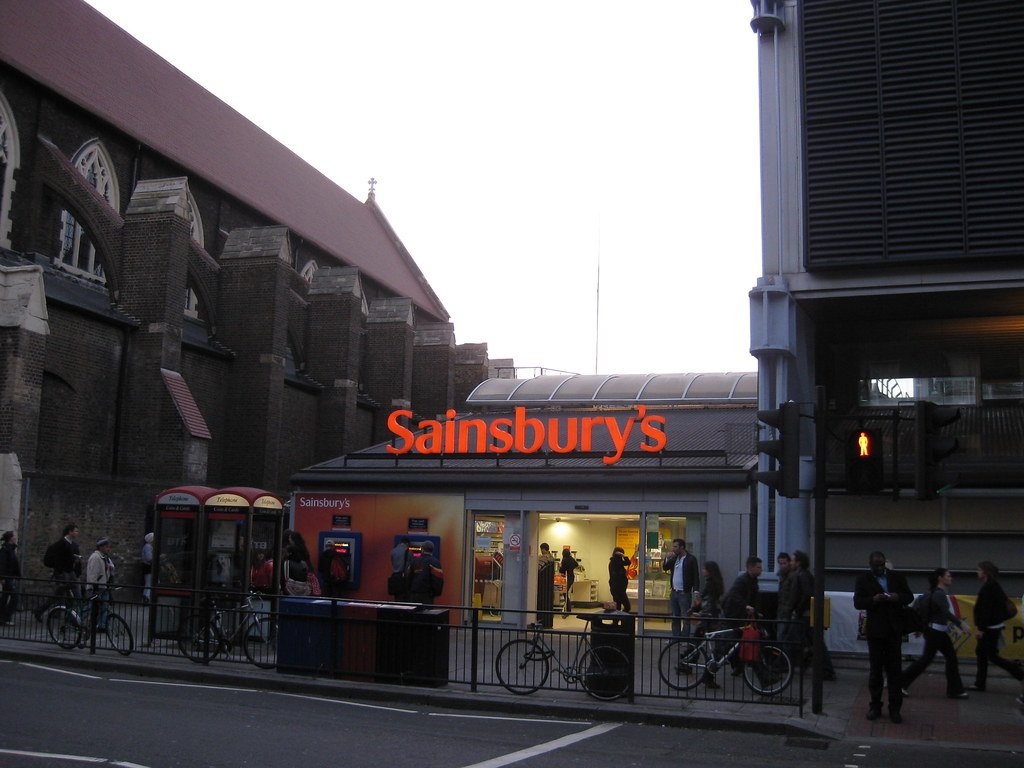
On August 6, 2026, Matt Arnold was shopping at a Sainsbury’s in East Dulwich, London, when staff confronted him over an alleged previous incident and asked him to leave. Sainsbury’s apologized and temporarily paused live facial recognition alerts at that branch. The retailer and its technology supplier, Facewatch, attributed the incident to how store employees handled an alert rather than to an incorrect facial match, according to The Guardian’s August 17 report and BBC coverage.
An earlier incident involved Warren Rajah, who was asked to leave a different Sainsbury’s in London. The retailer said staff had approached the wrong person after an alert, and later apologized. In another reported case, Ian Clayton was removed from a Home Bargains store in Chester after being incorrectly associated with an alleged shoplifting incident. Clayton obtained details through a data-access request, according to The Guardian’s May investigation.
The U.S. precedent: Rite Aid and the FTC
The most substantial public U.S. enforcement record concerns Rite Aid. In December 2023, the Federal Trade Commission alleged the pharmacy chain deployed facial recognition systems at hundreds of stores between 2012 and 2020 without taking reasonable measures to prevent customer harm. The FTC said the systems generated thousands of false-positive matches and employees sometimes followed, searched, confronted or removed customers after receiving alerts.
The agency said the watchlist included tens of thousands of images, some of them low quality, and that the company failed to adequately test accuracy, monitor false matches and train employees. The FTC also reported a disproportionate risk of false matches at stores in plurality-Black and Asian communities. These were the commission’s allegations, not independent findings about every individual encounter. See the FTC announcement.
A federal court entered a stipulated order on February 26, 2024, resolving the FTC complaint and imposing a five-year prohibition on Rite Aid using facial recognition for security or surveillance, alongside other safeguards. Rite Aid disputed the allegations and agreed to settle without admitting wrongdoing. The FTC case record provides the court documents.
Why a computer-generated match is not proof
Facial recognition compares features in an image with stored representations of other faces. A positive comparison is a lead to be checked, not proof that the person committed a crime. Image quality, watchlist accuracy, deployment conditions and staff judgment all affect what happens next.
In 2019 research, the U.S. National Institute of Standards and Technology found significant differences in false-match performance across algorithms and some demographic groups. The agency distinguished one-to-one verification from searches against large databases. Those findings do not measure the present-day error rate of Facewatch or every retail installation.
Companies defend the technology; customers seek accountability
Facewatch says its system can identify people reasonably suspected of involvement in crime and has cited a 99.98% accuracy rate. Sainsbury’s says alerts are reviewed by trained managers. Facewatch maintained that the August East Dulwich alert itself was correct but mishandled in the store. Those positions make it important to distinguish software errors from mistakes in watchlist management and human response.
Retailers have legitimate concerns about theft and violence toward employees. Yet safeguards need to be judged by what actually happens to people, including whether allegations can be promptly corrected and how long watchlist entries are retained.
What shoppers can do after a mistaken accusation
- Write down the date, store location and names or descriptions of staff involved, and preserve receipts and any available communications.
- Ask the retailer to explain the allegation, review its records and correct inaccurate information; keep a copy of any response.
- If a system provider maintains a watchlist, ask how to exercise relevant data-access or correction rights. Available rights and procedures vary by jurisdiction.
- In the United States, report suspected unfair practices through the FTC consumer reporting portal or the appropriate state consumer-protection office. Legal remedies depend on the facts and governing law.
The unresolved question
Retail facial recognition may help security teams identify possible risks, but an automated alert cannot replace independent verification. The cases in Britain and the FTC’s U.S. record show why retailers need documented procedures for checking matches, correcting false allegations and preventing wrongful confrontations.
Accountability begins with a basic principle: an alert is not evidence of guilt.
Related video and source documents
Video: Big Brother Watch’s account of a teenager wrongly accused in a Home Bargains store (September 27, 2024). This video is published by a civil-liberties advocacy organization and is identified as such; the original publisher’s video page is linked rather than embedding an unverified player.
- Federal Trade Commission: Rite Aid enforcement announcement, December 2023
- FTC: Rite Aid court record and order, 2024
- NIST: demographic effects in face recognition, 2019
- The Guardian: East Dulwich Sainsbury’s incident, August 2026
- The Guardian: shopper testimonies, May 2026
- Gadget Review: original report, November 2, 2026