History & Restoration | November 10, 2026
A researcher’s close reading of an 18th-century travel account reveals what Kant overlooked about Indigenous cultures. The record of Cahokia and Chaco Canyon offers a U.S. perspective on the claim.
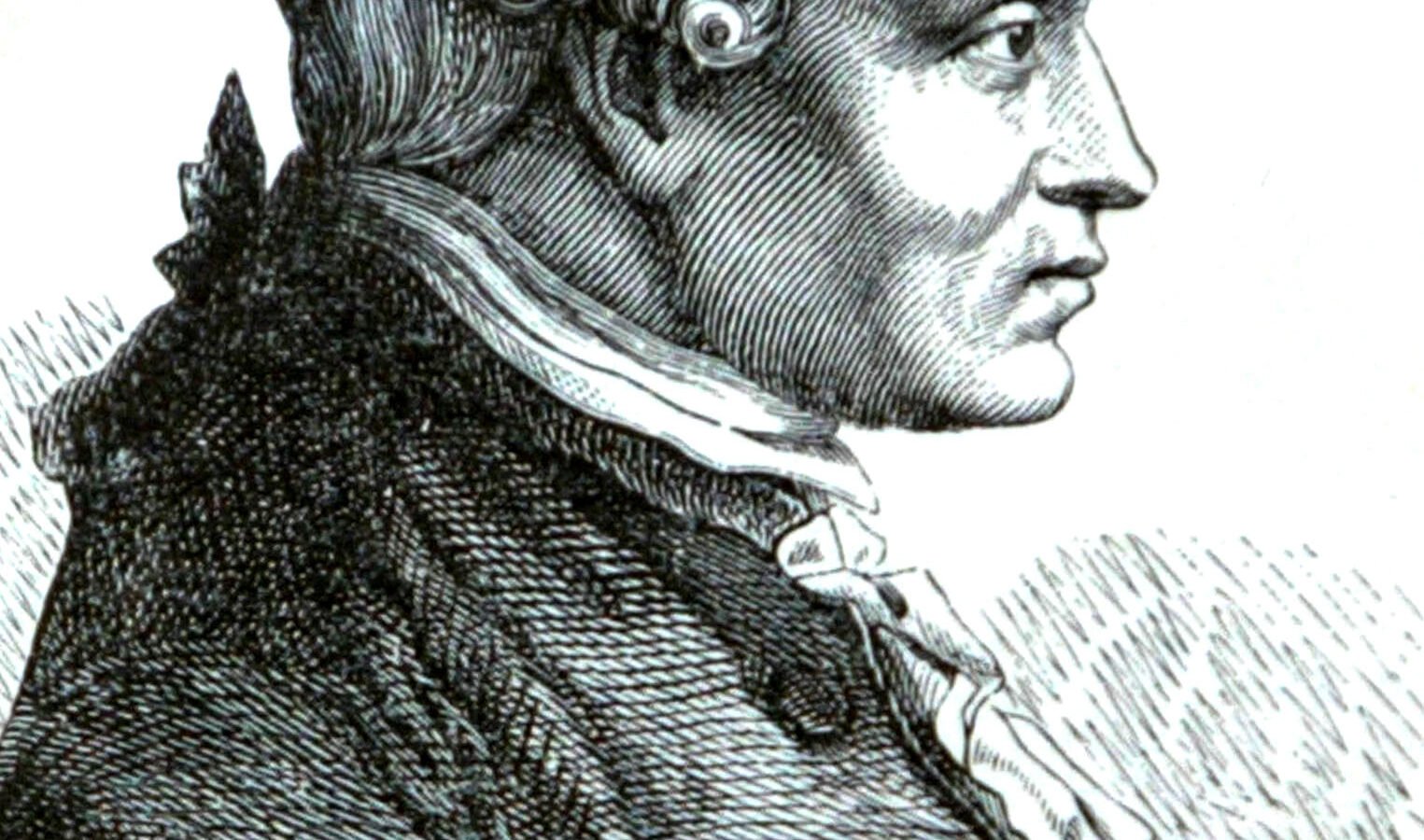
In a 1788 essay, German philosopher Immanuel Kant described Indigenous Americans as “incapable of any culture.” He placed them at the bottom of a racial hierarchy, despite developing a moral philosophy often associated with the dignity of humanity.
Now, a study by philosopher Arnaud Pelletier, published in 2025 and explained in an October–November 2026 article for The Conversation, highlights the traveler Kant cited as evidence: the Spanish naval officer Antonio de Ulloa. The older source included observations that complicate Kant’s sweeping judgment.
Kant’s racial classification was not supported by Indigenous history
Kant (1724–1804) identified four purported human “races” and attributed unequal cultural capacities to them. In On the Use of Teleological Principles in Philosophy (1788), he advanced a speculative theory that ancestral migration through changing climates had somehow limited the capacities of Indigenous Americans. The claim lacked empirical support.
The words “incapable of any culture” are part of Kant’s historical argument, not a description supported by modern anthropology. The passage is worth examining because Kant was also a central figure in European moral philosophy, whose writings emphasize treating persons as ends rather than merely as means.
The overlooked source: Antonio de Ulloa’s 1748 account
Antonio de Ulloa (1716–1795) spent approximately 11 years traveling in South America. His Relación histórica del viaje a la América meridional appeared in 1748 and was translated into German in 1751.
Ulloa wrote pejoratively about Indigenous residents of the Quito region, but he also acknowledged the political organization, laws, knowledge and monumental construction achieved by their ancestors. According to Pelletier, Ulloa was describing what he saw as a particular historical decline, whereas Kant drew a far broader conclusion about inherited racial incapacity.
Pelletier notes another discrepancy: in discussing Cartagena, Ulloa addressed the behavior of residents across racial categories, but Kant presented the account more narrowly. These comparisons raise questions about how Kant selected and interpreted the evidence available to him.
In writings published only in 1826, after both men’s deaths, Ulloa also blamed colonial abuse—including forced labor and dispossession—for the circumstances of Indigenous communities. Kant could not have read the 1826 publication. The key point is that the 1748 material he cited already acknowledged significant Indigenous accomplishments.
The historical record does not show whether Kant deliberately excluded contradictory details or simply read the account selectively. Pelletier cautions against presenting any one explanation as proven.
What Indigenous history in the United States shows
Examples from the United States demonstrate the weakness of any blanket claim that Indigenous people lacked culture, planning or scientific knowledge. These archaeological sites are not evidence of what Kant personally knew; they are evidence of actual Indigenous achievement.
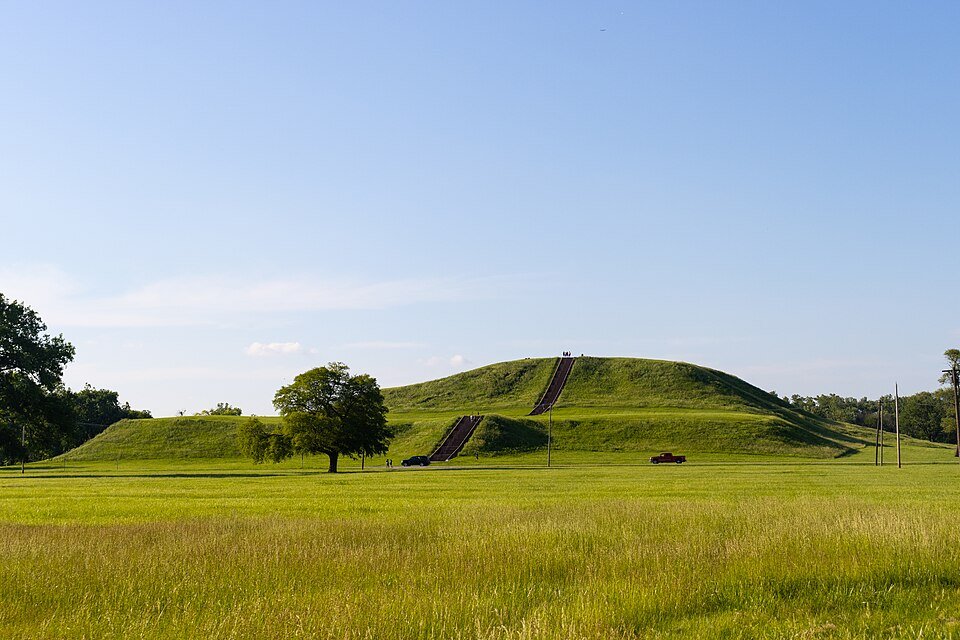
Cahokia, Illinois: Near present-day St. Louis, the Mississippian city of Cahokia flourished roughly a millennium ago. The UNESCO World Heritage Centre describes its monumental earthen mounds, planned ceremonial precincts and dense settlement. Monks Mound remains a striking example of large-scale engineering.
Chaco Canyon, New Mexico: Between approximately 850 and 1250 CE, ancestral Pueblo peoples developed multistory masonry buildings, elaborate road alignments, water-control features and architectural relationships to the movements of the sun and moon. The National Park Service documents the regional scale of the Chacoan world and its importance for ceremony, exchange and political activity.
Neither example defines Indigenous achievement solely through the size of monuments. Living languages, oral history, ecological knowledge, artistic traditions, agriculture, diplomacy and systems of government also reflect culture. Indigenous communities continue to preserve and renew these traditions.
How should scholars read Kant’s moral philosophy alongside his racism?
Scholars take different approaches. Some regard Kant’s racial arguments as prejudices of his period separate from the core of his philosophy. Others treat them as contradictions or as evidence of racial assumptions woven into his account of moral and historical development.
A 2025 study by University of Minnesota philosopher Michael Bennett McNulty argues that the racial claims had deep implications within Kant’s system. Pelletier instead stresses the danger of assuming an author’s work always expresses one internally consistent intention.
Kant criticized aspects of slavery and colonialism in some later works, but that later development does not erase his earlier statements. The strongest historical approach is to document both rather than excuse one or claim that every text says the same thing.
Why the evidence matters for Indigenous historical representation
The consequences for public history reach beyond one philosopher. When influential European authors were treated as authorities on societies they had not visited, their classifications could overshadow Indigenous accounts and material evidence. The direct relationship between Kant’s individual writing and specific U.S. policies would require separate proof; the existence of his ideas alone does not demonstrate causation.
Today, archaeological research, Indigenous scholarship and community-led preservation make a fuller historical picture possible. The question is not whether Indigenous societies possessed culture: their records, landscapes and living communities demonstrate that they did. It is how earlier interpreters dismissed evidence already available to them—and how readers can avoid repeating that mistake.
Documentary context: Chaco Culture
The following UNESCO/NHK short documentary concerns the architecture and ceremonial significance of Chaco Canyon. It illustrates Indigenous achievement and does not address Kant directly. Video copyright: NHK / UNESCO TV; linked from the official publisher.
Watch “Chaco Culture” (UNESCO/NHK) on YouTube.
Sources and further reading
- Arnaud Pelletier, “‘Incapable of any culture’ — Kant’s racism and a forgotten source on Indigenous Peoples,” The Conversation, November 8, 2026.
- Arnaud Pelletier, “Les Américains sont incapables de toute culture,” Klēsis, no. 59 (2025).
- Michael Bennett McNulty, “Race, Culture, and the Horizons of Agency,” Journal of the American Philosophical Association (2025).
- UNESCO World Heritage Centre, Cahokia Mounds State Historic Site.
- National Park Service, Chaco Canyon and the Antiquities Act.
- Historical Kant engraving, Wikimedia Commons (public domain); Monks Mound photo, Wikimedia Commons (CC BY 4.0).