Newly funded biotechnology research is testing whether genetically programmed bacteria can help immune cells penetrate solid tumors that resist treatment. The results are promising in mice, but there is no demonstrated benefit in humans yet.
Scientists are investigating a new way to address one of cancer immunotherapy’s most difficult obstacles: tumors whose surrounding tissue blocks immune cells and medicines from getting inside.
On November 10, 2026, Neobe Therapeutics announced a $6.8 million seed financing round to advance programmable bacteria designed to modify the dense material surrounding some solid tumors. Its lead program, NEO22, remains in preclinical development, with the company aiming for a U.S. Investigational New Drug application in 2028. That would be a request to begin clinical testing, not an approval to sell a treatment. Read the company’s funding announcement through Cancer Research Horizons.
The scientific foundation is a 2026 peer-reviewed study in Molecular Cancer Therapeutics, conducted with researchers at the University of Cyprus and Barts Cancer Institute. The experiments were conducted in mouse tumor models, not human cancer patients.
Why Some Tumors Resist Immunotherapy
Immune checkpoint inhibitors, including pembrolizumab (Keytruda) and nivolumab (Opdivo), help remove molecular signals that suppress immune-cell activity. They have changed treatment for some cancers, but effectiveness varies significantly across patients, tumor types and treatment combinations.
One reason for resistance is the tumor microenvironment: the cells, vessels and structural material around a cancer. Its extracellular matrix contains molecules such as collagen and hyaluronan. When this matrix becomes especially dense or stiff, it can restrict blood flow and make it harder for immune cells to infiltrate the tumor.
A 2024 review in Oncotarget by researchers affiliated with Texas A&M University, Rice University and MD Anderson Cancer Center examined how extracellular-matrix architecture influences tumor-immune interactions. The review describes a complicated relationship between tissue structure, T-cell behavior and cancer progression—not a single explanation for all immunotherapy failures.
How Researchers Program Bacteria to Alter the Tumor Environment
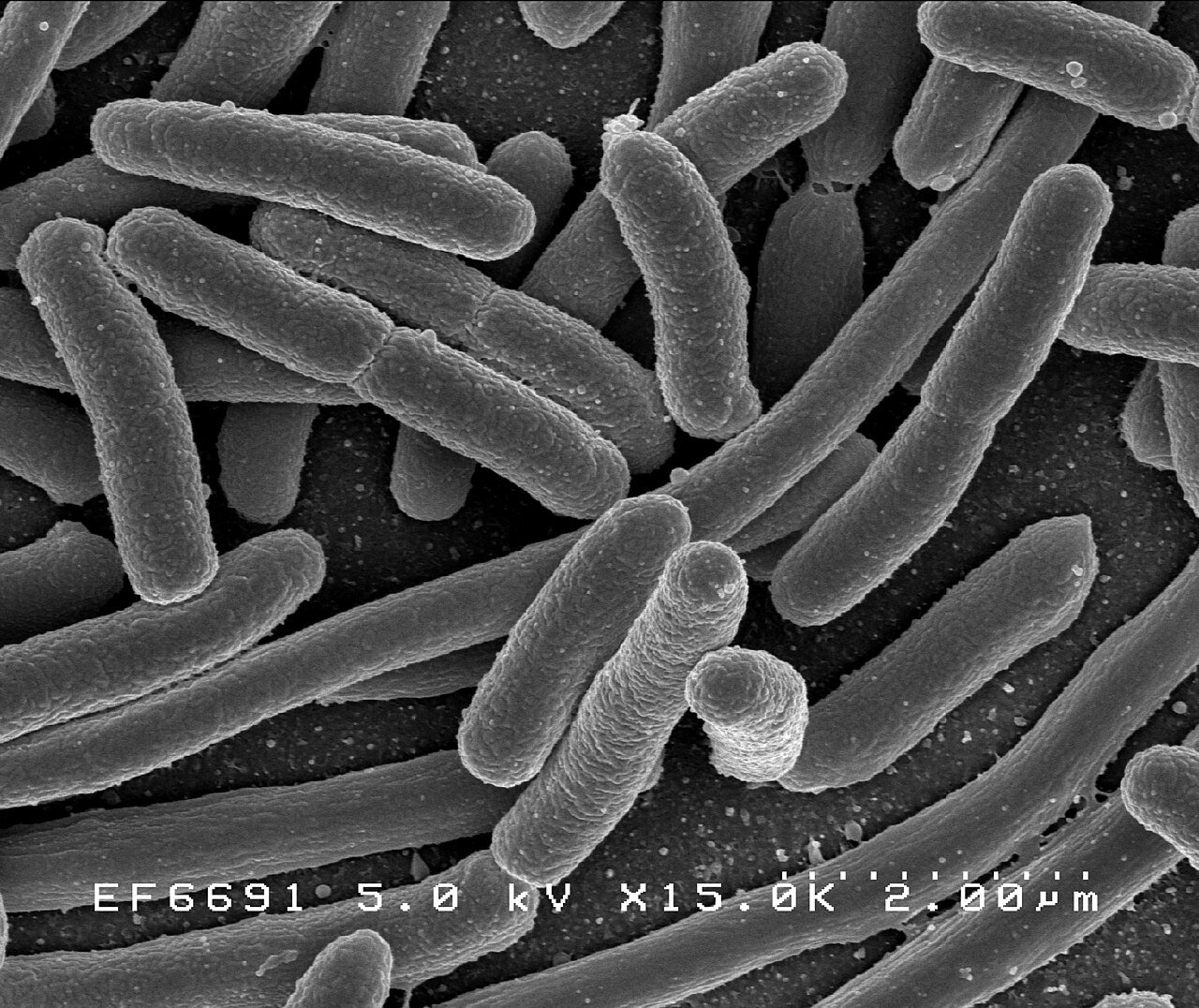
Neobe’s experimental system uses nonpathogenic, commensal-derived bacteria engineered with DNA-based control circuits. In the published research, the investigators modified Escherichia coli to produce the enzyme hyaluronidase under tumor-associated conditions, including low oxygen and acidity.
Hyaluronidase breaks down hyaluronan, a component of the extracellular matrix. In theory, delivering the enzyme in the tumor could reduce stiffness, improve blood-vessel function and make existing cancer medicines more effective.
The strategy is intended to support checkpoint inhibitors, not replace them. Making the matrix easier to penetrate would not necessarily solve other causes of treatment resistance, such as poor tumor-antigen recognition or suppressed T-cell function.
What the 2026 Mouse Experiments Found
The researchers tested engineered bacteria in different breast and colorectal tumor models. In relatively stiff breast tumors with substantial hyaluronan, bacterial treatment reduced matrix material, decreased tumor stiffness and improved vascular function.
When combined with immune checkpoint blockade, the intervention improved antitumor responses in resistant mouse models. In one 4T1 breast cancer model, one of nine mice receiving the combination achieved complete remission. The finding is notable, but it is a small preclinical result—not a success rate that can be applied to patients.
The team also tested a colorectal cancer model whose tumors had less hyaluronan and a softer matrix. There, adding the bacterial treatment did not improve outcomes beyond checkpoint inhibition alone. That limitation suggests this approach may need careful selection of tumors based on their physical characteristics.
The authors also explored potential markers of treatment response, but those findings do not establish a reliable clinical selection test. See the full research article and figures.
What About the Claim That Immunotherapy Misses 85% of Patients?
Some headlines have portrayed solid-tumor immunotherapy as failing 85% of patients. That is not an established, universal failure rate. Different studies measure eligibility, response and benefit in different ways, and outcomes vary widely among cancers, drugs, biomarker-defined groups and treatment stages.
Neobe has not demonstrated that its platform can treat 85% of patients, or that it can turn every resistant tumor into a responsive one. The published study supports a narrower conclusion: engineered bacterial delivery of an extracellular-matrix-remodeling enzyme can improve checkpoint-blockade activity in certain mouse tumors.
What This Could Mean for American Cancer Research
The research has direct implications for the United States, where checkpoint inhibitors are used across multiple cancer types and the Food and Drug Administration regulates experimental live biotherapeutic products. Neobe says it plans an Investigational New Drug filing in 2028 for its NEO22 program.
That proposed filing would be an early regulatory milestone. Before people could receive the experimental bacteria in a trial, developers would need to establish manufacturing quality, genetic stability, appropriate dosing and enough safety data to support human testing.
U.S. cancer researchers are also studying how to overcome resistance to immunotherapy through other approaches, including combinations of medicines and therapies using patients’ immune cells. Neobe’s concept addresses the tumor’s physical environment, an important but not exclusive source of resistance.
Safety and Scientific Questions Still Unanswered
Even bacteria characterized as nonpathogenic can present challenges when administered as living medicines. Researchers must establish where the organisms travel, how long they survive, how precisely the engineered genetic switches operate and whether they or their enzyme can affect healthy tissues.
The extracellular matrix serves essential functions outside cancer. Breaking down part of it in the wrong location could have unintended consequences. Long-term safety, repeat dosing and the behavior of the bacteria in human tumors remain unknown.
Mouse results frequently fail to translate into successful human treatments. The latest data justify continued research; they do not justify changing or discontinuing established cancer care.
Watch: Neobe’s Research Approach Explained
Stevenage Bioscience Catalyst, the research campus associated with Neobe, has published an interview with co-founder and CEO Pedro Correa de Sampaio explaining the company’s approach. This is a company representative’s explanation, not independent clinical evidence.
Original publisher and video reference: Stevenage Bioscience Catalyst.
What’s Next
The company’s $6.8 million funding will support preclinical work and development toward a potential U.S. regulatory filing. Whether the technology becomes useful cancer treatment will depend on future safety evaluations and carefully conducted human trials.
For now, the finding changes a scientific question, not a patient’s available options: could reshaping the physical environment around selected cancers help existing immunotherapies work more effectively? Researchers have shown that it can in certain mouse models. The challenge is determining whether that benefit can be reproduced safely in people.
Sources and Further Reading
- Panagi and colleagues, Molecular Cancer Therapeutics (2026) — original study.
- Fan and colleagues, Oncotarget (2024) — tumor extracellular matrix and immune interactions; CC BY 4.0.
- Cancer Research Horizons, November 10, 2026 — funding and NEO22 plans.
- U.S. National Cancer Institute — overview of immune checkpoint inhibitors.
- Stevenage Bioscience Catalyst — company and executive interview.
- Tech Times, November 10, 2026 — news report prompting this explainer; its broad 85% framing is qualified above.
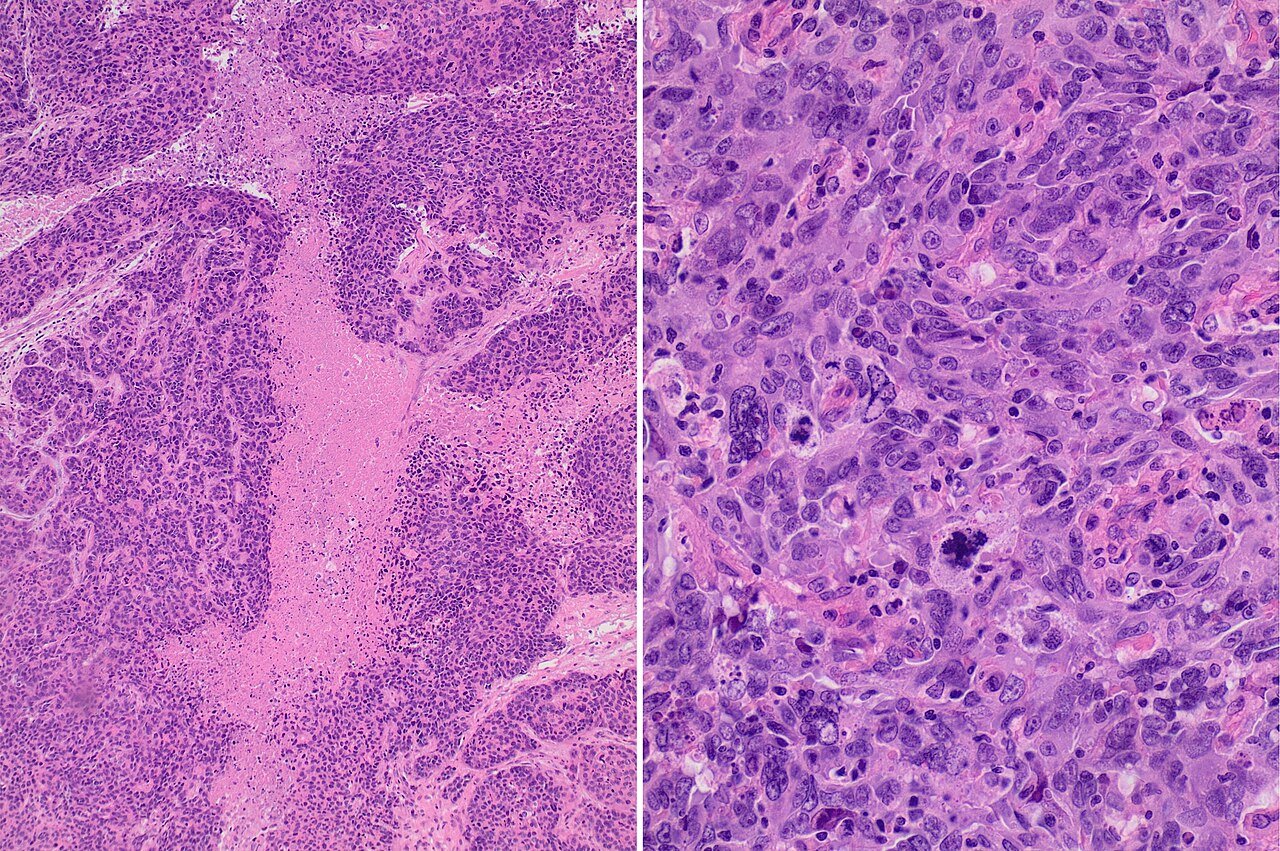
Image note: The featured breast-cancer photomicrograph is an archival human tissue image by Mikael Häggström, M.D. (CC0 1.0); it is not a sample from Neobe’s 2026 research. Image source and license.