BYD’s Yangwang Altior looks familiar to Rolls-Royce fans. A review of Chinese automotive history, verified prices and modern EV engineering reveals why the resemblance is only part of the story.
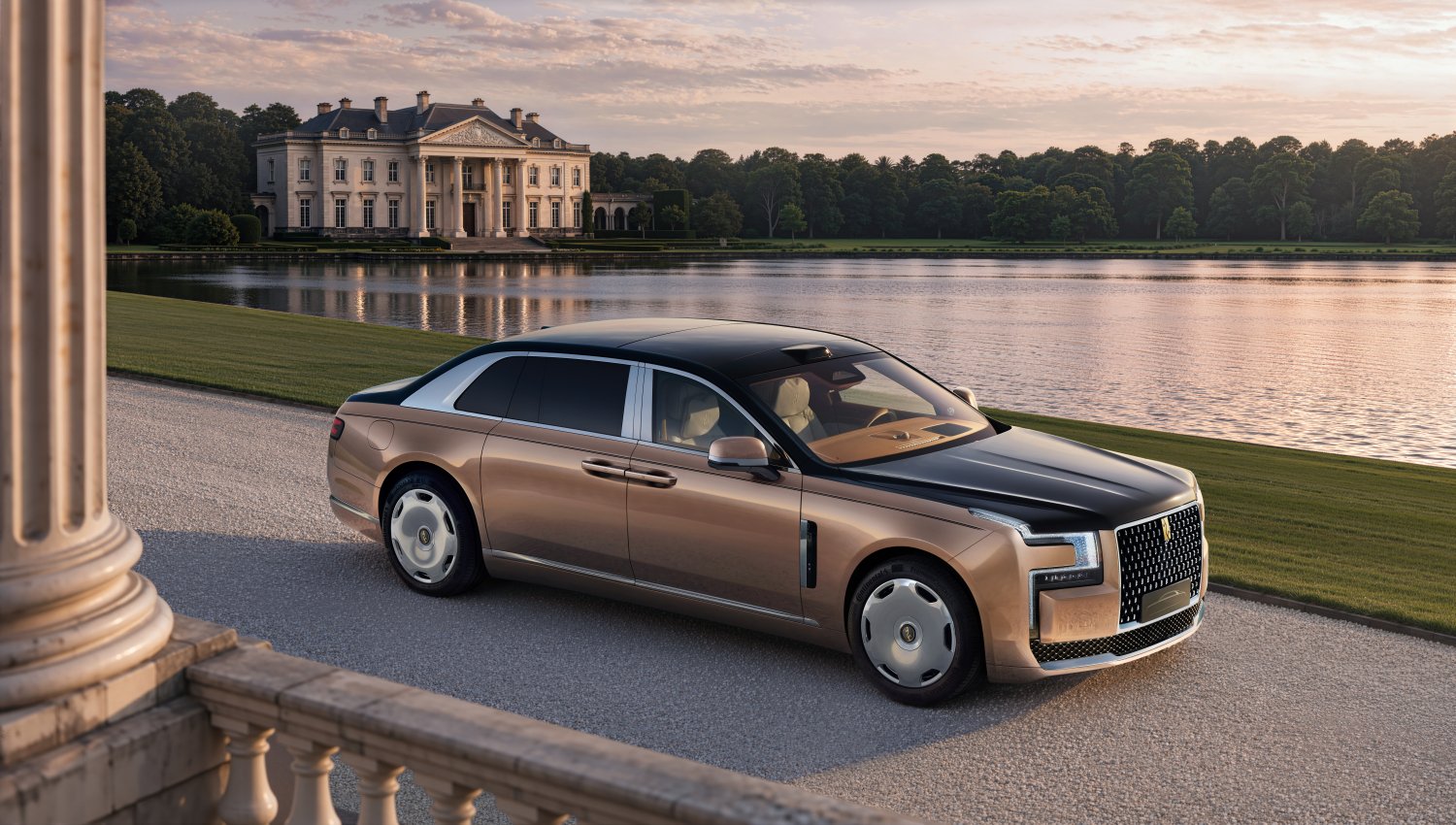
Chinese automaker BYD unveiled the Yangwang Altior on November 7, 2026, at an event in Abu Dhabi. The imposing electric sedan has a monumental front grille, two-tone finish, formal proportions, rear-hinged coach doors and door-mounted umbrellas—design choices that immediately drew comparisons with the Rolls-Royce Phantom. The first limited-edition reservation figure is 2.08 million yuan, roughly $311,500, according to CarNewsChina’s launch report.
The Altior is not simply a cheaper Phantom, however. It uses four independently controlled electric motors, active suspension, advanced electronics and an electric-vehicle platform unlike Rolls-Royce’s V12 gasoline architecture. And the 2.08-million-yuan figure applies to the Shanhe Dingyun limited edition’s pre-sale benchmark, not a confirmed base price for every Altior variant. Final retail terms and delivery plans are not yet fully established.
The real story extends far beyond one design dispute. Chinese automakers have produced conspicuous lookalikes for more than two decades. Some became the subject of lawsuits and judicial findings; others merely share styling cues. At the same time, China developed enormous battery, electronics and vehicle manufacturing capacity. The question for American automakers is no longer only whether a competitor has borrowed the shape of a luxury car, but whether it can now manufacture a technically credible alternative at a substantially lower cost.
Watch the original video: “Another Chinese Knock-off”

The short was the starting point for this investigation, alongside Carscoops’ Altior reporting. Its “four times cheaper” claim is defensible only as an approximate China-to-China comparison. It should not be read as a comparison with an American Phantom sticker price.
The Altior: familiar luxury styling, different mechanical foundations
BYD’s official November 7 announcement gives dimensions of 5,600 mm in length, 2,030 mm in width, 1,590 mm in height and a 3,500-mm wheelbase. The four-seat cabin includes reclining rear seats, a 21.4-inch overhead screen and a 39-speaker Dynaudio system. BYD says the grille draws inspiration from a ding, a traditional Chinese ritual bronze vessel, while the cabin incorporates Chinese jade, embroidery and other decorative craft techniques.
The visual comparison to the Phantom is unmistakable, but visual similarity does not establish that the Altior uses Rolls-Royce body tooling, chassis components, engineering data or proprietary manufacturing methods. No adjudicated design-infringement finding about the Altior was identified in the material reviewed.
The e⁴ electric platform sends torque independently to four motors, and BYD says its control system can revise wheel torque more than 100 times per second. The company advertises tight “tank-turn” maneuvering, assistance during a sudden tire-pressure loss, emergency flotation capability and a road-reading DiSus suspension system. The God’s Eye A driver-assistance system provides assisted-navigation functions; it is not proof that the car can operate without human responsibility.
Those functions are manufacturer claims, not a substitute for standardized independent safety results. The claimed driving range of more than 1,000 kilometers uses China’s CLTC test cycle, which cannot be equated directly with an EPA range figure. The final charging specifications and full independent test record remain important unknowns. Top Gear and Car and Driver have reported on the vehicle’s unusual combination of chauffeur-style luxury and electric engineering.
Actual prices: comparing vehicles in the same Chinese market
A Chinese domestic reservation price cannot honestly be compared with an American MSRP as though it were a final price available to U.S. buyers. Taxes, import duties, product specifications, dealer conditions, warranties and delivery status vary. The following examples use Chinese-market figures for both vehicles wherever they could be corroborated. These are prices from different historical launch periods; the paired vehicles are not necessarily mechanically equivalent.
| Chinese vehicle / styling reference | Lookalike price (yuan) | Original price (yuan) |
|---|---|---|
| Landwind X7 (2015) — Range Rover Evoque | 129,800 | 398,000 |
| Zotye SR9 (2016) — Porsche Macan | 109,800 | 558,000 |
| BAIC BJ80 (2016) — Mercedes-Benz G 350 d | 288,000 | 1,329,000 |
| Lifan 320 (2009) — MINI Cooper Cheer | 48,800 | 249,000 |
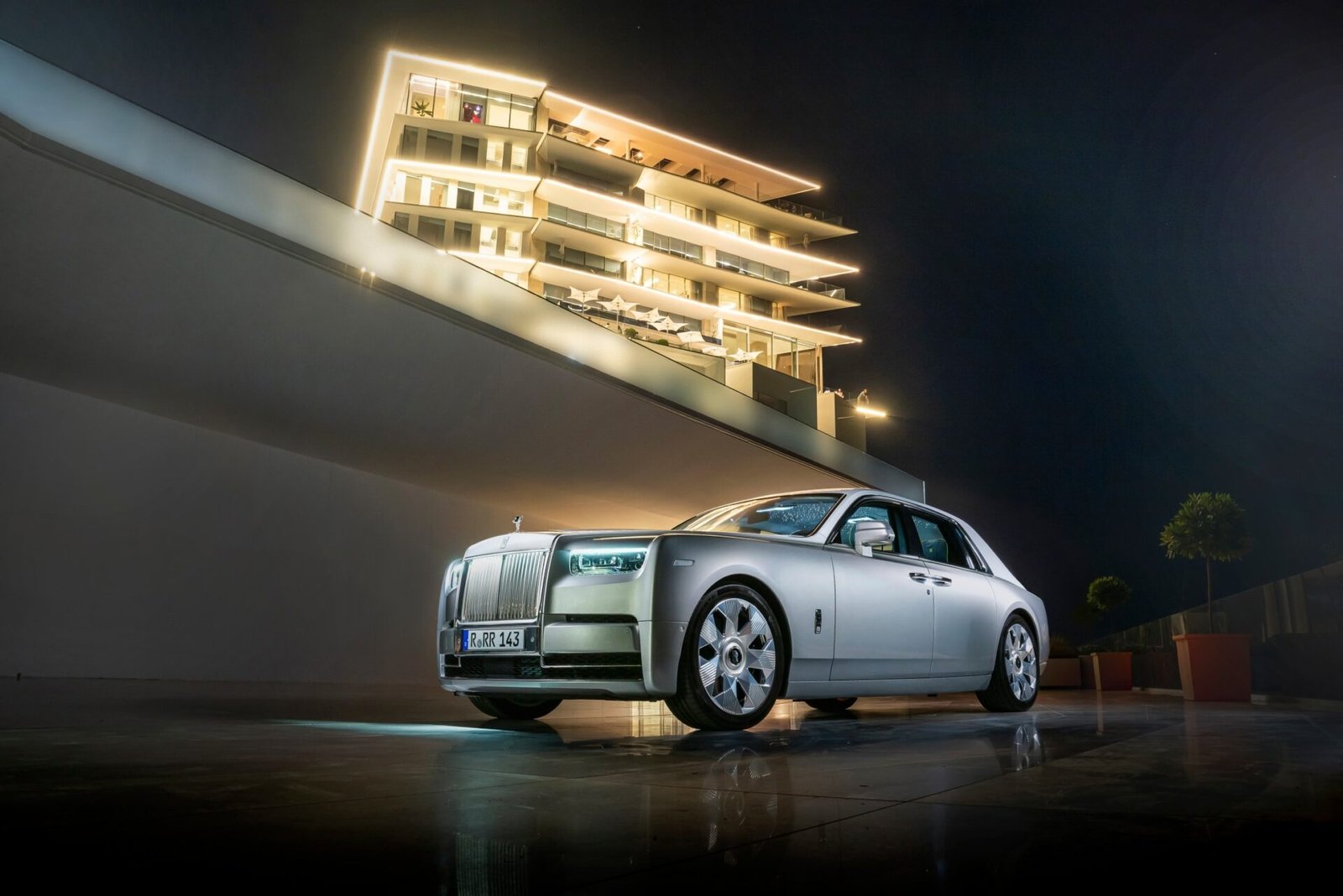
| Yangwang Altior (2026 limited edition) — Rolls-Royce Phantom Series II | 2,080,000 (pre-sale) | 8,470,000 (dealer listing) |
Method: launch/list-price benchmarks, not transaction prices or inflation-adjusted values. The Phantom figure is the advertised Chinese price of a standard-wheelbase Series II in a Shanghai dealer listing dated September 2026; the Altior figure is for the limited-edition pre-sale, so the two rows do not show two identical equipment levels. Source documentation: Landwind/Evoque; Zotye/Macan; BJ80; Lifan 320; BMW’s 2009 MINI launch; Phantom Shanghai dealer list.
At those quoted Chinese benchmarks, the Phantom is a little over four times the limited-edition Altior’s 2.08-million-yuan pre-sale benchmark. That is a real price disparity, but it says nothing by itself about comparative build quality, parts, safety, maintenance, depreciation or customer service.
For context, an American Phantom starts at substantially less than a dollar conversion of the Chinese dealer price. Comparing the Altior’s approximately $311,500 Chinese pre-sale benchmark with a U.S. Phantom MSRP in the $530,000–$550,000 range would suggest a much smaller difference—but even that mixed-market calculation is not an actual U.S. buying option. The Altior is not being marketed for U.S. retail delivery.
Two decades of Chinese automotive lookalikes and what actually happened
1. Chery QQ and Chevrolet Spark: the 2005 GM dispute
General Motors’ dispute with Chery predates the present electric-car era. GM Daewoo alleged that the Chery QQ resembled the Daewoo Matiz, marketed in China as the Chevrolet Spark, not merely in appearance but in design details and compatibility. The U.S. Congressional-Executive Commission on China recorded the settlement in November 2005 and discussed the allegations and the challenges of enforcing rights in the Chinese market. The companies settled; the existence of the settlement should not be described as a court verdict establishing every alleged act.
The QQ’s low price helped fuel debate, but the more important historical point is that the conflict involved alleged design and intellectual-property copying—not simply the adoption of fashionable styling. In this case, the evidence was contested, and the dispute closed without the kind of published judicial findings later seen in the Landwind litigation.
2. Geely GE and Rolls-Royce Phantom: the earlier luxury lookalike
Geely’s GE concept, shown in 2009, attracted attention for its upright grille, formal silhouette and Rolls-Royce-like presentation. The concept was later revised substantially. It illustrates a longstanding Chinese ambition to participate in the market for chauffeur-driven prestige vehicles, but a concept-car resemblance is not proof that a production car was manufactured with unauthorized Rolls-Royce engineering. See Auto Express’s historical survey.
3. Lifan 320 and MINI: familiar small-car styling at a budget price
Lifan introduced the 320 with rounded compact proportions and contrasting-roof cues familiar to MINI drivers. Contemporary reporting gave a price near 48,800 yuan; BMW’s Chinese-market MINI Cooper Cheer benchmark was about 249,000 yuan. That did not mean buyers were getting a MINI platform, German/British engineering or MINI’s production standards. The 320 used a different, less costly mechanical package. The resemblance was primarily visual.
4. Shuanghuan CEO and BMW X5: different outcomes across borders
Shuanghuan’s CEO SUV became entangled in European legal disputes over resemblance to the BMW X5. A German ruling affected sales and imports, while other proceedings did not necessarily reach identical conclusions. The case showed why a car considered legally problematic in one jurisdiction does not automatically have the same status everywhere. Auto Bild reported on the German dispute.
5. Landwind X7 and Range Rover Evoque: a landmark court decision
The 2015 Landwind X7 closely resembled the Range Rover Evoque, and the pricing was dramatically different: the Chinese-market X7 started at 129,800 yuan, while the Evoque started at 398,000 yuan according to contemporary reporting. The X7 used a Mitsubishi-sourced turbocharged engine and a different drivetrain arrangement. Similar appearance did not make the two vehicles mechanically identical.
This was also more than a magazine styling comparison. In 2019, a Beijing court ruled in Jaguar Land Rover’s favor in an unfair-competition case, identifying five copied design features and ordering relief. Bloomberg’s reporting carried by the South China Morning Post and Caixin detailed the ruling. An appeal was subsequently reported. It is one of the clearest examples of the difference between an editorial accusation of copying and a court’s specific finding.
6. Zotye SR9 and Porsche Macan: resemblance extended into the cabin
The Zotye SR9 was one of the strongest visual lookalikes of the 2010s. Published comparisons found similarities in the body shape, side details, cabin layout and even switch placement. In November 2016, its listed starting price was 109,800 yuan compared with 558,000 yuan for the Macan. But the Zotye’s 2.0-liter turbo engine came through a Shenyang-Mitsubishi joint venture, rather than using Porsche’s chassis and powertrain engineering. CarNewsChina documented the price and specifications at launch.
Some aftermarket sellers reportedly offered Porsche-style badges for the Zotye; those third-party badge sales are separate from the original manufacturer’s engineering and would raise their own trademark concerns. No comparable final court finding about the SR9 is established by the cited launch reporting.
7. BAIC BJ80 and Mercedes-Benz G-Class: familiar shape, different hardware
BAIC’s BJ80 borrowed the boxy visual language associated with the G-Class. It launched at 288,000 yuan in 2016, using a 2.3-liter turbocharged engine associated with legitimately acquired Saab powertrain technology, according to CarNewsChina’s launch report. Mercedes’ Chinese G 350 d benchmark was approximately 1.329 million yuan. BAIC’s licensing of Saab powertrain rights is a different question from the source of its exterior styling: a company can use legitimately licensed components in a car whose appearance others criticize.
The latest lookalikes: Xiaomi, Zeekr and the transition to electric luxury
The modern wave differs from the early era of inexpensive gasoline-powered imitations. Some new designs invite close comparisons with Ferraris, Porsches or Rolls-Royces while incorporating modern battery platforms, digitally controlled chassis systems and extensive in-house software.
| Chinese vehicle / styling reference | China starting price (yuan) | Engineering distinction |
|---|---|---|
| Xiaomi SU7, revised 2026 — Porsche Taycan | 219,900 | Both are EVs, but independently designed and engineered |
| Xiaomi YU7, 2025 — Ferrari Purosangue | 253,500 | Battery-electric SUV versus V12 gasoline Ferrari |
| Zeekr 9X, 2025 — Rolls-Royce Cullinan | 465,900 | Plug-in hybrid with electronic chassis systems |
| Yangwang Altior, limited edition, 2026 — Rolls-Royce Phantom | 2,080,000 (pre-sale) | Four-motor battery EV versus twin-turbo V12 luxury sedan |
The modern table lists Chinese-car prices, not paired same-year prices for the foreign reference models. Those vehicles differ drastically in performance, specifications and customer positioning; this is a styling-and-industry comparison, not an assertion that they are interchangeable. Sources include Reuters on the Xiaomi YU7, Zeekr’s 9X launch and Car and Driver on the Altior.
For example, the Xiaomi YU7 has a long hood and sweeping profile that have generated comparisons with the Ferrari Purosangue. But Reuters described its 253,500-yuan base price in the context of competition with Tesla’s Model Y in China—not as a direct commercial substitute for a Ferrari. The Xiaomi SU7, similarly, has been compared with Porsche’s Taycan, while Zeekr’s tall, chrome-heavy 9X invites comparisons with the Cullinan. A resemblance is a basis for further analysis, not a finding of infringement.
What “copying a car” actually means at a factory
Vehicle engineering is not a single design file. It is a layered industrial system. Journalists, buyers and courts must distinguish at least six different forms of similarity.
Exterior surfaces, body panels and stamping dies
An automaker may study another car’s shape to understand market expectations and proportions. But the original stamped panel cannot simply be put into production without the appropriate dies, materials, presses, fit tolerances and assembly processes. A company can generate a similar exterior from different computer-aided designs and tooling. It may still infringe a protected design, but the exterior shape alone does not prove theft of manufacturing blueprints.
Chassis architecture and crash engineering
Under the paint are structural load paths, collision zones, crossmembers, mounting points and platform-specific crash engineering. Two SUVs with similar rooflines can use completely different floorpans, suspensions and structural protection. Their crash-test results cannot be inferred from visual resemblance.
Powertrains and licensed components
Historically, some smaller automakers purchased engines or transmissions from existing suppliers to avoid the enormous cost of developing them from scratch. Supplier sourcing and licenses are common throughout the global industry. A legitimately purchased engine is not evidence that a similar-looking exterior is lawful, nor does an exterior dispute automatically mean the powertrain was stolen.
Batteries and high-voltage electronics
The latest competitive frontier includes cell production, battery chemistry, thermal management, high-voltage wiring, inverters, electric motors and fast-charging systems. These systems determine a vehicle’s performance, range, charging behavior and cost structure. Battery-electric platforms also eliminate some components associated with traditional transmissions and exhaust systems, changing both factory layout and supplier demand.
Software, suspension and vehicle control
Motor-control algorithms, traction systems, cameras, suspension actuators and driver-assistance computing can shape the experience behind the wheel. The Altior’s four-motor platform is a genuine mechanical distinction from the Phantom; whether all of BYD’s claimed emergency functions perform reliably in independent tests remains unproven.
Assembly quality and long-term reliability
None of those systems is adequately judged by photographs. Quality requires repeatable manufacturing, corrosion protection, reliable electronics, crash validation, efficient servicing, access to replacement parts and years of field performance. A cheaper car with similar design cues could be excellent value, but it could also have different compromises; a more expensive badge is likewise not an engineering test result.
Why China’s prices can be so much lower
Styling imitation cannot account for the entire difference. High-volume production, concentrated supplier networks, domestic battery capacity, purchasing power and intense price competition all affect prices. So do imported luxury-car taxes, distribution margins, handcrafted interiors, low production volumes and customization.
The International Energy Agency’s 2026 Global EV Outlook describes China as the dominant EV manufacturing center: it accounted for roughly 70% to three-quarters of electric-car production in 2025, depending on the exact measure used, and over 80% of battery-cell production. That supply chain gives domestic automakers structural advantages distinct from exterior design choices.
Rolls-Royce operates a low-volume bespoke luxury business, with labor-intensive customization, specialized materials, exclusivity and service expectations. The Chinese price of an imported Phantom also reflects market and tax conditions that do not apply identically to a domestic Chinese sedan. A large sticker-price gap therefore cannot be interpreted as proof that every function, material or assembly operation costs four times more.
When is a lookalike illegal?
A close resemblance does not automatically establish a violation of the law. A manufacturer may protect distinctive appearance through registered designs or design patents, and can protect logos and brand identifiers through trademark law. Courts may also apply unfair-competition rules where similar trade dress confuses buyers. The applicable rights depend on jurisdiction and registration history.
The 2005 GM-Chery settlement did not resolve the broader legal question in a public trial judgment. The 2019 Landwind X7 ruling, by contrast, identified particular copied features and required commercial relief. Those distinctions matter. A journalistic assessment of similarity is not the same thing as a judicial finding that protected intellectual property was used unlawfully.
What this means for the United States
For American manufacturers, workers and consumers, China’s transition from low-cost lookalikes to technologically sophisticated EVs has several implications.
Manufacturing competitiveness: American companies compete in battery costs, factory productivity, product-development speed, supplier relationships and software—not just styling. Employment: shifting from combustion engines toward motors, power electronics and battery packs changes the skills and components needed in U.S. plants. Trade policy: Chinese sticker prices are not equivalent to legal American retail prices; vehicles face U.S. safety and environmental rules, import barriers and distribution limitations. Consumer protection: drivers need reliable crash, warranty, repair and long-term quality data before declaring any vehicle an equal alternative.
The fact that BYD can build an imposing luxury sedan with a four-motor battery drivetrain is evidence of industrial capabilities worth examining. It does not demonstrate that an Altior meets U.S. vehicle standards, is available for sale here, or matches a Phantom over a decade of ownership.
The unanswered questions
As of November 13, several central questions remain: What will the Altior’s final non-limited-edition prices be? How will independent testers measure its real-world range and claimed emergency capabilities? What will long-term maintenance and repairs cost? How consistently can BYD produce the car at its promised level of finish? And will its styling retain such a strong connection to established European luxury design as the brand matures?
Those answers will matter more to consumers than any viral label. Earlier Chinese lookalikes sometimes offered mainly the appearance of a far more expensive car. The new generation can combine that appearance with substantial electric-vehicle engineering of its own.
The Altior’s grille may remind observers of a Rolls-Royce. The manufacturing challenge it represents is much larger than a grille.
Sources and further reading
- Original YouTube Short — Another Chinese Knock-off.
- Carscoops — Yangwang Altior reporting.
- BYD — Yangwang Altior official press release, November 7, 2026.
- BYD UK Media — Official press photographs and specifications.
- CarNewsChina — China reservation price and technical details.
- Shanghai Rolls-Royce dealer — Phantom Series II China list-price example.
- U.S. Congressional-Executive Commission on China — GM-Chery settlement.
- Caixin — Jaguar Land Rover’s 2019 court victory.
- CarNewsChina — Landwind X7 and Evoque prices.
- CarNewsChina — Zotye SR9 and Porsche Macan prices.
- CarNewsChina — BAIC BJ80 launch.
- Reuters — Xiaomi YU7 launch and competition.
- International Energy Agency — EV manufacturing and trade.
- Rolls-Royce PressClub — Phantom Series II editorial photo P90535394.