

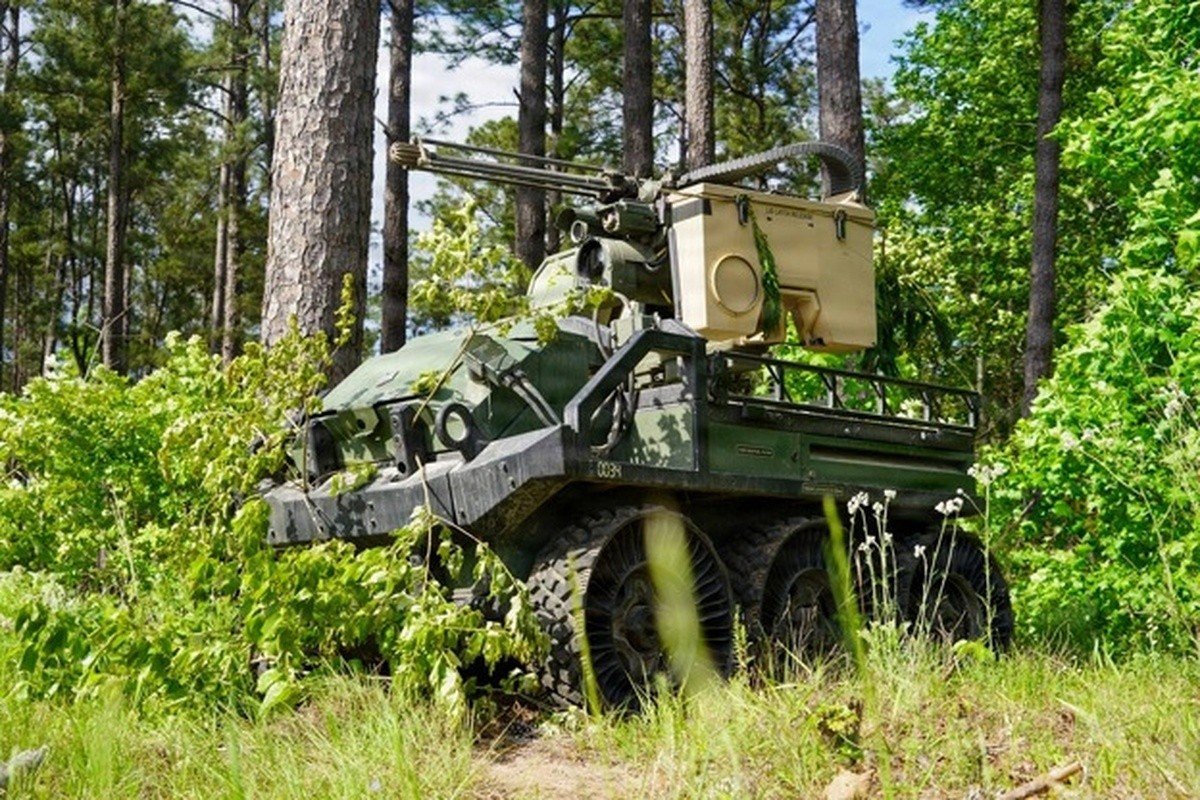
As militaries experiment with robotic ground vehicles, U.S. Army trials show how far autonomous movement has advanced—and why human judgment, reliability and the laws of war still matter.
By Lotta Goddess | Khemetic.News | November 15, 2026
Autonomous ground vehicles are moving from military experiments toward battlefield roles, but a fundamental engineering problem stands between today’s remotely operated robots and machines that can independently complete missions: battlefields lack the predictable roads, markings and traffic patterns that help self-driving cars navigate. A November 15 Business Insider report describes how this challenge is shaping military development amid the expanding use of ground robots in Ukraine.
For the United States, the issue is no longer theoretical. In an October 15 demonstration at Fort Knox, Kentucky, four unmanned ground vehicles operating under a Defense Advanced Research Projects Agency program navigated together and detected simulated threats. According to the Army’s October 22 account, the robotic vehicles performed movement and detection autonomously, but their human operator had to approve any engagement. It was a controlled test, not evidence that robots had been authorized to choose independently whom to kill.
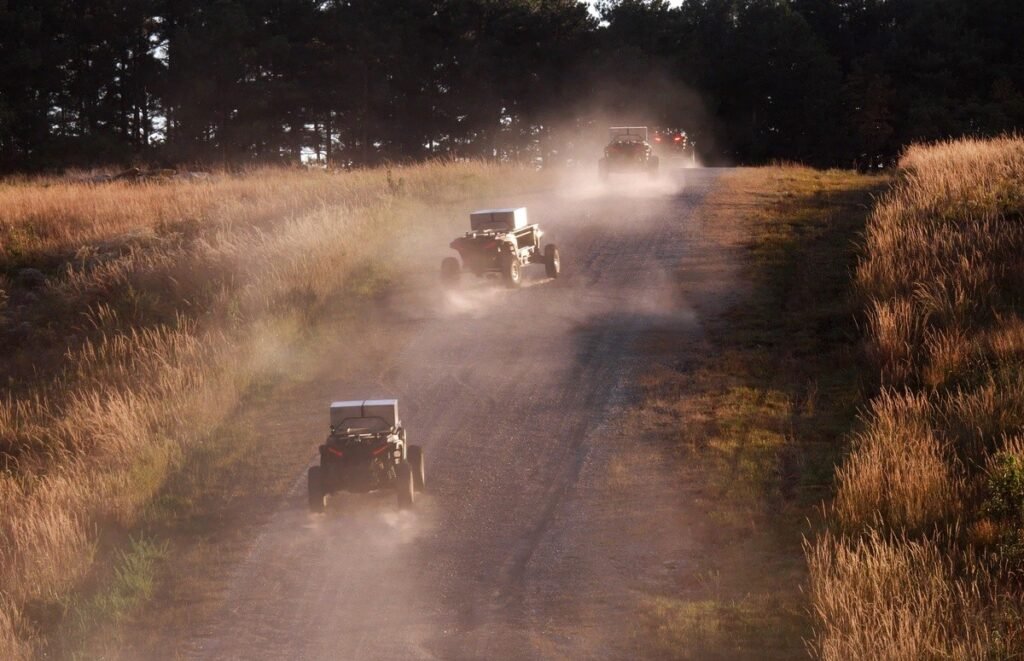
Why a battlefield is harder than a highway
Self-driving cars can use mapped lanes, signs, traffic patterns and infrastructure as important sources of information. A military vehicle might have to interpret tall grass, mud, wreckage, smoke or a person suddenly appearing in a field—all while communications are disrupted and other forces are actively trying to disable it.
Business Insider’s interviews with executives at ARX Robotics and Digital Concepts Engineering highlight the limits of today’s systems. Remote operation and narrower autonomous functions such as following waypoints, avoiding obstacles and stopping for hazards are not the same as independently understanding an entire combat mission. The report also describes why militaries want better autonomy: it could keep service members farther from danger and let fewer operators manage more vehicles.
What U.S. Army experiments actually demonstrate
The Fort Knox trial gives a concrete example of the distinction between autonomous navigation, automated detection and authorization to use force. Army officials reported that the vehicles could move and identify potential targets, while a human retained control over any simulated strike. That distinction matters when claims about “robot soldiers” blur the line between mobility technology and lethal decision-making.
Other American programs are developing different capabilities. In August, the Army named six vendors for its Infantry Last Tactical Mile initiative, aimed at robotic resupply, casualty evacuation support and communications near front lines. The announcement described anticipated demonstrations and assessments, not a completed fleet-wide deployment.
The Army also reported in August that an armed Hunter WOLF unmanned ground vehicle had been provided for a technical demonstration involving the 101st Airborne Division. Its weapon was remotely operated; that is different from a machine independently selecting and attacking a person.
And on November 9, the Army described a Fort Benning pilot of autonomous shuttles operating only on approved paved routes during a phased testing program. The controlled-road test underscores how different installation transportation is from operating in hostile terrain.
There are laws of war—even without road rules
The analogy with driverless cars should not be mistaken for a legal vacuum. Existing international humanitarian law still applies to weapons employing autonomous functions, including requirements to distinguish lawful military targets from civilians, avoid indiscriminate attacks and take feasible precautions.
The Pentagon’s Directive 3000.09, updated in 2023, requires autonomous and semi-autonomous weapon systems to be designed so commanders and operators can exercise appropriate levels of human judgment over the use of force. It also addresses testing, reliability and responsible employment. That directive governs weapon systems and should not be read as applying in the same way to every unarmed robotic transport vehicle.
Whether those existing obligations are enough remains disputed. In September, Reuters reported that the United States favored a guideline-based approach rather than a new binding treaty, while other governments argued for stronger international requirements to preserve human control.
A consequential diplomatic meeting begins November 16
Countries party to the Convention on Certain Conventional Weapons are scheduled to meet in Geneva from November 16 to 20, 2026. The United Nations says the future of international work on lethal autonomous weapon systems will be a central issue. The meeting could set the direction for negotiations; it is not itself proof that new rules have been adopted.
The International Committee of the Red Cross has called for binding prohibitions on some autonomous weapons and restrictions on others, particularly when unpredictable systems could expose civilians to serious harm. The debate is about both accountability and engineering: whether commanders can realistically anticipate what a weapon will do in a chaotic environment.
The unanswered questions
For American troops and the public, the central questions are practical. Can autonomous vehicles survive disrupted communications and unfamiliar terrain? Can they reliably recognize hazards without misidentifying civilians? Will commanders understand the basis for a machine’s warning? And who will be accountable if software or a human decision leads to an unlawful attack?
The latest Army demonstrations show meaningful progress toward robots that can move and sense with less direct assistance. They do not establish that fully independent lethal ground robots are safe, lawful in every circumstance or ready for widespread use. As technical trials continue, international discussions will test whether safeguards can keep pace with the machinery.
Watch: United Nations Explainer on Autonomous Weapons

Sources and further viewing
- Business Insider, November 15, 2026: military ground robots and autonomous navigation
- U.S. Army, October 22, 2026: Fort Knox DARPA ground-vehicle demonstration
- U.S. Army, August 21, 2026: Hunter WOLF technical demonstration
- U.S. Army, August 11, 2026: Infantry Last Tactical Mile initiative
- U.S. Army, November 9, 2026: Fort Benning autonomous-vehicle pilot
- U.S. Defense Department: Directive 3000.09 summary
- United Nations: November 16–20 review conference and official autonomous-weapons video explainer
- ICRC: Autonomous weapon systems and international humanitarian law
- Reuters, September 4, 2026: differing national positions on proposed rules


