Ford Motor Company is recalling 36,994 Lincoln Navigator SUVs after identifying a touchscreen-related defect that can cause the front passenger seat to move without warning. The recall covers certain 2025, 2026 and 2027 models equipped with Lincoln’s Chauffeur Seat Feature, according to an October 20, 2026, safety filing with the National Highway Traffic Safety Administration (NHTSA).
The feature allows a person in the second row to reposition the front passenger seat using a digital control panel. Ford found that residue left on that touchscreen can register as unintended finger input. In another failure mode, pressing the home button during a seat adjustment can cause the seat to continue moving even after the adjustment menu disappears.
How the seat-control defect was discovered
The problem came to Ford’s attention after an August 13 report from a second-row passenger who said the unoccupied front passenger seat reclined against their legs even though they had not touched the rear controls. Ford engineers inspected the vehicle the following day and reproduced the issue in other Navigators equipped with the feature.
Investigators later found that moisture or residue could produce so-called “ghost touches” that activated controls without a deliberate command. They also identified a software condition in which a seat movement request could remain active after the touchscreen returned to its home screen.
As of September 2, Ford had identified three warranty reports and one field report involving unexpected seat movement. In the October recall filing, Ford said it was not aware of any crashes or injuries associated with the condition.
Why unexpected seat movement poses a risk
Ford warned that uncommanded movement through the seat’s full adjustment range could contact a passenger seated behind it or force someone in the front passenger seat into a potentially unsafe position. This recall concerns powered seating controls, not autonomous driving or a vehicle driving itself.
The defect illustrates a growing vehicle-safety concern: when a touchscreen controls physical equipment, unintended inputs can produce effects beyond a simple software inconvenience.
What Ford will do
Ford’s remedy is to disable the Chauffeur Seat Feature through a configuration update to the Accessory Protocol Interface Module and Rear Audio Control Module. Owners are to take affected vehicles to a Ford or Lincoln dealer; the repair is free.
Ford’s original filing projected dealer notification on October 26 and owner notification by mail during November 2–6, 2026. Its internal recall number is 26S77; NHTSA’s campaign number is 26V691.
What owners should check
Owners can enter their vehicle identification number (VIN) at NHTSA’s recall lookup, call Ford at 1-866-436-7332, or contact an authorized Lincoln dealer to confirm whether the vehicle is covered and arrange the repair. Even without a noticeable seat-control malfunction, a VIN-specific recall check is advisable.
A reminder about digital convenience features
Automakers increasingly use touchscreens to manage in-cabin comfort, seating and other functions. The Navigator recall shows why software design and reliable input detection matter whenever those controls can move heavy components around vehicle occupants. For affected owners, the immediate fix is straightforward: have the problematic feature disabled.
Sources and additional context
Ford Part 573 Safety Recall Report (NHTSA campaign 26V691); NHTSA recall acknowledgment, November 6, 2026; Car and Driver reporting, November 10, 2026. Related commentary: “Self Driving Seats” video on YouTube (not a Ford or NHTSA safety notice).
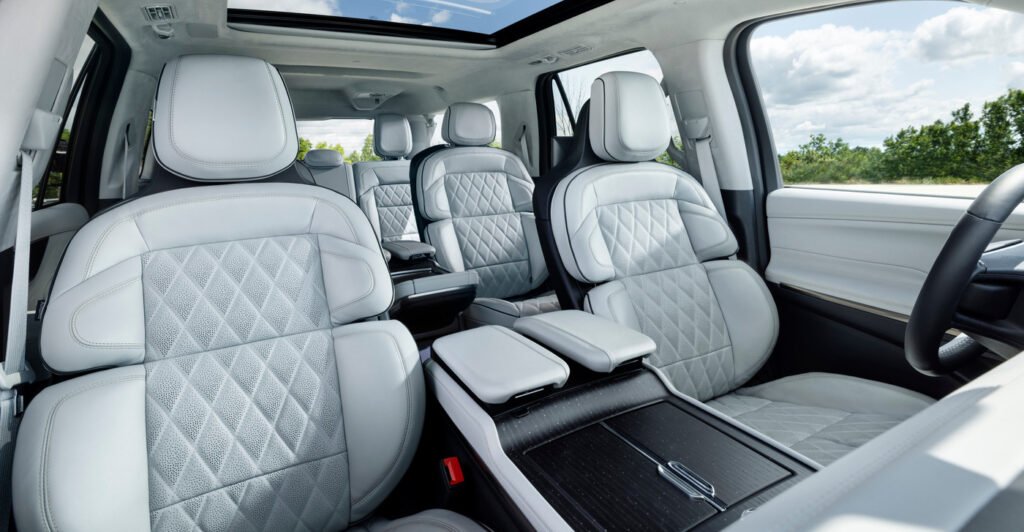
Featured photograph: Kevauto / Wikimedia Commons, CC BY-SA 4.0. Resized for publication; the vehicle pictured is a 2025 Lincoln Navigator, not an image of an actual recall incident.