INVESTIGATION & EXPLAINER | Updated November 20, 2026 (Central time) | By Lotta Goddess, Khemetic.News
MIDDLETOWN, Iowa — The U.S. Army’s plan to destroy approximately 9,500 pounds of deteriorating lead azide in two controlled detonations at the Iowa Army Ammunition Plant has been stopped for now by a federal appeals court. The November 20 operation was postponed by the Army to November 23, but an Eighth Circuit administrative stay now suspends the Environmental Protection Agency permit while judges examine a request for further relief. The blast had not taken place as of this reporting, and Monday is not a confirmed, legally cleared operating date. EPA emergency permit; Iowa Capital Dispatch, November 20; Reuters, November 20.
The immediate controversy is whether controlled destruction of an unstable explosive is safer than transportation, chemical neutralization or continued storage—and how the government can protect downwind communities if toxic lead-containing particles escape. The larger story is familiar to Americans who have lived through chemical releases, unsafe drinking water, contaminated farmland and decades-long Superfund cleanups: who identifies the hazard, who chooses the emergency response, who independently checks the result, and who carries the cost afterward?
The examples below do not show that a future Iowa detonation would cause the same health outcomes as other disasters. They document what can happen when hazardous substances reach people’s air, water, land or homes—and why a declaration of “cleanup completed” is not always the end of medical, economic or environmental consequences.
1. What is actually happening in Iowa—and why now?
The planned operation involves 68 drums of lead azide, a lead-containing primary explosive used in ammunition components—not 68 barrels of loose elemental lead and not an aerial attack on a city. The Army says deterioration and recrystallization have made the material unusually sensitive to movement, friction and shock. Plant personnel found its degraded condition during a March 2026 inspection. EPA issued an emergency permit effective November 13, 2026, authorizing storage and in-place treatment; a federal court subsequently put that permit on hold. EPA permit explanation; Associated Press, court ruling.
According to the Army and EPA, opening the containers for chemical treatment, moving the drums to a different range or transporting them elsewhere would expose explosives specialists to an unacceptable chance of accidental detonation. Army plans called for earth berms, wetting of the surrounding soil and water mist to suppress particles. Those measures may reduce—but cannot be assumed to eliminate—lead-bearing emissions. Environmental groups say regulators did not sufficiently test or publicly compare less polluting alternatives. Army assessment and dispute reported by Iowa Public Radio.
This is not a choice between “safe” and “dangerous.” Every option carries potential hazards. The independent question is whether the government documented those hazards with comparable methods, shared its uncertainty and gave affected communities a meaningful opportunity to understand the tradeoffs before an irreversible release. The Iowa Environmental Council and Sierra Club Iowa Chapter sought review of the permit; the Justice Department has argued that emergency waste-treatment regulations may allow some activity without a permit in a qualifying immediate threat. That argument has not resolved what will occur. Plaintiffs’ emergency motion; Friday legal update.
2. Two different maps: airborne exposure is not the same as deposited lead
The Army’s advisory presented modeled zones for possible airborne lead-containing particulate matter and for lead dust that might settle on surfaces. These are distinct pathways. An airborne plume raises questions about concentration, breathing rate, duration and who is downwind at the time. Deposition raises different questions about playgrounds, windowsills, garden soil, animal feed and the later resuspension of settled dust. A model is a forecast, not a measurement of what will happen.
The projected boundaries can shift with wind direction, precipitation and atmospheric stability. Public discussion has included communities along the Mississippi River, western Illinois and areas reaching toward Cedar Rapids. Earthjustice cited models in which a potential plume could extend roughly 100 miles under certain conditions. That does not establish that every person within a broad modeled area would receive a dangerous dose. Conversely, a projected boundary cannot substitute for actual monitoring after any operation. Army November 15 advisory and initial maps; Reuters on farmer and plume concerns.
What is needed before and after any blast: documented baseline air and soil measurements; monitors positioned using forecast and worst-case conditions; publicly disclosed detection limits and chain-of-custody methods; post-event soil, surface and water sampling; a plan for properties beyond the forecast zone; and understandable notification when results exceed applicable health-based criteria. Sampling at a few points cannot prove that every yard is clean. A detected particle does not, by itself, establish a person’s dose or diagnose disease.
3. What lead can do—and what has not happened
There is no known safe level of lead exposure for young children. Lead can affect the developing brain, learning, attention, hearing and growth; adults can experience effects involving blood pressure, kidneys, nerves and reproductive health. Exposure can happen by breathing dust or swallowing it after contaminated hands touch the mouth. Children under six, pregnant people and some workers may need particular precautions. Many lead-exposed people have no immediate symptoms. CDC, childhood lead effects; WHO, June 2026 lead factsheet.
But the word toxic is not evidence that all people downwind are poisoned. Actual consequences depend on exposure. No one can attribute cancers, future developmental problems, poisoned crops or polluted rivers to an Iowa detonation that has not occurred. Pre-event testing is especially valuable because it separates longstanding background contamination from any new release.
Iowa Department of Health and Human Services advises residents to follow updated official forecasts and local instructions if the operation is rescheduled. Contingent advice for potentially affected areas includes sheltering indoors, keeping windows closed, limiting entry of outdoor air, using effective filtration and wet-cleaning surfaces after an official all-clear. Residents should not treat a social-media map or a canceled Friday schedule as a live evacuation order. Iowa HHS lead azide updates; Linn County emergency-management notice.
4. The older contamination beneath the new emergency
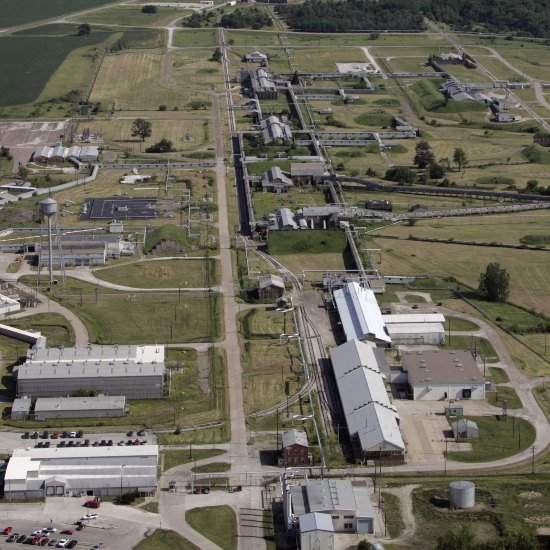
The Iowa Army Ammunition Plant is already a federal Superfund site. Its approximately 19,000 acres have been used since World War II for ammunition manufacturing and related federal activities. Historical operations released substances including explosive compounds such as RDX and TNT, plus other contaminants into portions of soil, groundwater and surface water. EPA records describe multiple cleanup units, including off-site groundwater work. That fact does not show that the current lead azide drums caused those older releases or that all surrounding drinking water is unsafe; it does mean regulators have an established environmental baseline and an existing obligation to protect the surrounding watershed. EPA site cleanup profile; EPA history and case studies.
There is also a second Iowa concern circulating alongside the detonation story: a University of Iowa research team detected pesticides in surface water, leaf samples and household dust. The sampling included a pilot study of 28 homes, and researchers explicitly describe important limits and a need for additional research; their early synthesis has not yet undergone formal peer review. These findings are about pesticide pathways, not evidence that military lead azide created the detections. University of Iowa research summary.
An American Cancer Society analysis published November 9 says Iowa has the nation’s second-highest rate of new cancer diagnoses and is among a small number of states with increasing rates. The state registry and researchers are investigating multiple possible contributors, including screening, demographics and environmental exposures. Neither the cancer figures nor the pesticide sampling establish a connection to the specific 2026 Army stockpile. American Cancer Society, November 9; Iowa Cancer Registry, 2026 report.
5. East Palestine, Ohio: when a supposedly necessary chemical release proved avoidable
On February 3, 2023, a Norfolk Southern train derailed in East Palestine after a wheel bearing failed. Fires and hazardous-material releases followed. On February 6 responders vented and burned vinyl chloride from five railcars, producing a dramatic plume and forcing residents to confront uncertainty about air, water and soil. The decision was portrayed at the time as a way to prevent a more catastrophic tank failure.
The National Transportation Safety Board’s June 2024 investigation reached a crucial conclusion: the vent-and-burn operation was unnecessary and was approved after the incident commander received incomplete and misleading information about the likelihood of a dangerous reaction. NTSB did not find that the railroad intentionally sought to poison residents. Its finding shows why independent technical review, full disclosure of dissenting expertise and a transparent alternatives analysis matter before emergency responders deliberately release hazardous chemicals. NTSB final findings.
What remains in 2026? EPA says excavation of known contaminated soil at the derailment site was completed and restoration has progressed, but groundwater, surface water and drinking water continue to be sampled quarterly. That is a materially different condition from an uncontrolled, unremediated disaster zone. Long-term monitoring and persistent community concerns nevertheless remain. A 2026 exposure-and-immunity study reported biological differences among sampled residents, but an observational study does not prove which illnesses were caused by the derailment or predict any individual’s future cancer risk. EPA September 2026 site update; 2026 peer-reviewed immune-marker study.
Norfolk Southern agreed to a $600 million class settlement; settlement administrators reported distributing final property-related payments in June 2026. A settlement can compensate eligible people but is not a medical diagnosis, a guarantee of recovery, or proof that every future illness has been accounted for. The distinction between property payments, individual injury releases and independent environmental obligations is central to what residents should understand. Official settlement administration site.
6. Flint, Michigan: the water system improved, but exposure cannot be taken back
Flint’s drinking-water emergency began after the city switched water sources in 2014 without adequate corrosion control. Corrosion allowed lead to leach from service lines and household plumbing. Residents complained about discolored water and health symptoms while officials took too long to respond. The water emergency also overlapped with a Legionnaires’ disease outbreak; the bacteria involved are a separate health hazard from lead. Flint became a national case study in how public institutions can lose trust when they discount residents’ direct observations. EPA’s Flint drinking-water history.
A critical 2026 update deserves attention. Flint and Michigan announced that the last known active lead service line was replaced or otherwise taken out of service by July 31/August 3, 2026. The state says about 11,600 lines were replaced after inspections at nearly 32,000 properties, with some lines permanently disconnected when access was not granted. Flint’s water system has tested below applicable Lead and Copper Rule action levels since 2016, and EPA lifted its 2016 emergency order in May 2025. It is therefore inaccurate to report that Flint’s entire municipal water network is still operating under the original lead emergency. A systemwide action-level result also does not certify that every fixture in every home contains no lead. City of Flint, August 2026 milestone; Michigan EGLE, 2026 update; EPA, lifting emergency order.
The lingering human burden is different: children exposed years ago cannot revisit their early development without lead; families may need developmental support, medical follow-up and reliable household testing. Residents who spent years buying bottled water, replacing filters or distrusting official assurances may not regain trust merely because pipes are replaced. The lessons for Iowa concern baseline samples, public communication and the difference between repairing infrastructure and documenting harm.
7. Camp Lejeune, North Carolina: decades between exposure and its consequences
At Marine Corps Base Camp Lejeune, drinking-water systems were contaminated with volatile organic compounds, including trichloroethylene (TCE), tetrachloroethylene (PCE), benzene and related compounds, beginning in the 1950s. The most contaminated wells were closed in 1985 and the historical exposure period ended decades ago. Yet the Agency for Toxic Substances and Disease Registry continues to study former Marines, workers, military families and children who may have been exposed.
ATSDR concludes that past exposure likely increased the risk of several cancers, adverse birth outcomes and other health conditions. This does not mean every former resident developed illness or that contamination at Camp Lejeune is still present in today’s supplied drinking water at the historic levels. The ongoing burden is epidemiological research, support and legal accountability for disease that may emerge long after an exposure ends. ATSDR’s Camp Lejeune assessment; ATSDR health-effects research.
8. Navajo Nation: abandoned uranium mines and the cost of federal resource extraction
EPA identifies more than 500 abandoned uranium mines on and around the Navajo Nation, where roughly 30 million tons of uranium ore were extracted from 1944 to 1986, in part for the United States nuclear program. Mine waste can expose people and livestock to hazardous materials and restrict the safe use of land, water and culturally significant places. Many locations require site-by-site investigation, removal, containment, replacement water sources and tribal consultation. This is neither a single accident nor a newly discovered 2026 plume: it is a multi-generational legacy of industrial extraction.
EPA’s 2025–2026 progress report documents continued assessment and remediation, while the Navajo Nation government reported active cleanup in the Lukachukai Mountains and renewed calls for resources to address all 523 identified mines. Some sites have received major settlements and removal work; the overall problem is not finished. For affected families, risk may also mean the loss of traditional grazing, gardening, access and confidence in nearby springs and wells. EPA abandoned mines overview; Navajo Nation, March 2026 update.
9. Tar Creek, Oklahoma: lead, zinc, relocation and a cleanup measured in generations
In northeastern Oklahoma, a century of lead and zinc mining generated enormous piles of contaminated waste rock known as chat. The Tar Creek Superfund site includes polluted soils, water, mine workings and sediments near tribal lands. Oklahoma’s environmental agency says cleanup of more than 30 million tons of chat remains ongoing. Communities including Picher experienced relocation and significant social and economic disruption. Remediation now includes complex watershed work coordinated among states, nine tribal nations and federal authorities.
Tar Creek shows why “remove the pile” may be only one part of a recovery: metals persist in soils and sediments, contaminated groundwater can need monitoring, and displaced families cannot always rebuild a lost community. This is a much closer long-term comparison to an Iowa lead-deposition concern than a case involving a rapidly dissipating gas, while the actual scale, dose and exposure history would still differ. Oklahoma DEQ Tar Creek site status.
10. Cape Fear, North Carolina: PFAS in private wells and a contested cleanup
PFAS compounds from chemical manufacturing at the Fayetteville Works facility contaminated portions of the Cape Fear watershed and surrounding private wells. Residents have faced decisions about using well water, installing filters, connecting to municipal systems and seeking health information for substances that can persist for long periods. The chemical behavior differs from lead, but the question is the same: how can ordinary families verify that a necessary resource is safe to use?
In November 2026 North Carolina regulators said Chemours had stopped discharging highly contaminated wastewater, built a more-than-mile-long subsurface barrier and treatment system, and offered clean-water filtration to approximately 10,500 households with contaminated wells. However, state regulators also directed the company to correct deficiencies in additional cleanup plans following a September 2026 settlement. Chemours has disputed certain regulatory characterizations of the risk and scope of its responsibility. The actions show real progress alongside unresolved cleanup questions. North Carolina DEQ, November 9, 2026; State settlement explanation.
11. Vernon and Southeast Los Angeles, California: lead in the soil around homes
The shuttered Exide lead-acid battery recycling plant in Vernon left lead contamination across surrounding neighborhoods. This is a direct comparison for Iowa’s concerns about settled lead dust: contamination can accumulate in yards, parks, schools and roadside soil, making cleaning and exposure prevention more complicated than just closing windows for a day. In some neighborhoods, residents have demanded broader testing beyond the initial mapped boundary.
California reported in November 2026 that it had invested more than $700 million since 2016 to clean nearly 6,500 residential properties and 7,800 parkways; state officials described roughly 80% of eligible properties with owner access as completed at the time of their update. Work on additional properties and the former facility itself continues. This is neither “no cleanup” nor “all pollution gone.” It shows the number of years, homes, permits and public dollars that a widespread lead-soil problem can require. California DTSC, November 2026 status; State remediation milestone.
12. West Lake Landfill, Missouri: radioactive waste and unresolved remediation
In Bridgeton, Missouri, radioactive waste associated with the country’s nuclear-weapons history was deposited at West Lake Landfill. EPA selected a remedy involving excavation of the more highly contaminated material, off-site disposal at a licensed facility and engineered containment for remaining radioactive material. In March 2026 the agency reported completion of pre-excavation sampling—preparation for remedial work, not proof that remediation had been completed.
This case helps explain how an environmental hazard can remain controversial through decades of assessment, plan revisions and negotiations about what should be removed versus contained. Residents also must understand the difference between a measured exposure, a potential pathway and the fear created by prolonged uncertainty. EPA West Lake Landfill dashboard; EPA, March 2026 pre-excavation update.
13. Anniston, Alabama: PCB contamination that outlived the original industrial activity
The Anniston PCB site covers areas where decades of industrial production and disposal left polychlorinated biphenyls in soils, sediments, groundwater and surrounding waterways. PCBs persist and can bioaccumulate in food chains. EPA has overseen residential removal actions and remediation agreements involving Solutia and successor entities. In 2026 design and fieldwork continued for other parts of the site, including contaminated areas around Choccolocco Creek.
Anniston illustrates the practical distinction between reducing immediate exposure in a particular yard and rehabilitating a broad environmental system. Fish-consumption concerns, creek sediment, land-use restrictions and monitoring can persist even as individual properties are remediated. EPA Anniston site profile; 2026 cleanup design updates.
14. Libby, Montana: asbestos cleanups and diseases that can take years to appear
Mining and processing of asbestos-contaminated vermiculite in Libby and Troy exposed workers and residents to dangerous fibers. EPA declared a public-health emergency with federal health officials in 2009. Many residential and other cleanup actions have been completed; long-term operation and maintenance continue, and some areas have different remediation statuses.
The consequence is not limited to whether a backyard has been excavated. Asbestos-related illness can have a long latency period, making health care, screening and exposure records vital long after physical cleanup. It is inaccurate to describe every part of Libby as untouched, just as it is inaccurate to suggest a completed soil project reverses a previous inhalation exposure. EPA Libby site profile; Montana DEQ long-term oversight.
15. Hinkley, California, and Gold King Mine: two very different water stories
Hinkley: Groundwater containing hexavalent chromium associated with PG&E’s compressor-station operations has been subject to decades of cleanup and regulation in the Mojave Desert. The Lahontan Regional Water Quality Control Board still maintains monitoring and cleanup orders; in 2026 it required a new feasibility study of cleanup levels. This is a continuing groundwater-plume problem, not merely a historical Hollywood story. California Water Board’s 2026 Hinkley project record.
Gold King Mine: On August 5, 2015, EPA-associated mine investigation work accidentally released about three million gallons of acidic, metals-contaminated water near Silverton, Colorado, sending a visible plume into the Animas and San Juan rivers through areas used by the Navajo Nation. EPA and other agencies monitored impacts afterward; the 2015 plume is not still moving downstream in its original form. But the wider Bonita Peak mining district remains an abandoned-mine cleanup challenge, and EPA reported further biological and watershed monitoring work in 2026. This example is especially relevant to the question of federal responsibility when a government-supervised operation itself produces a release. Arizona DEQ’s incident record; EPA 2026 river biological report.
16. Other instructive examples: East Chicago, Jackson and Love Canal
East Chicago, Indiana: Industrial lead and arsenic pollution led to contamination of residential soils near the USS Lead Superfund site and relocation from the West Calumet Housing Complex. The EPA continued implementing and revising cleanup plans for affected zones; nearby Northwest Indiana had additional sediment-remediation work announced in January 2026. This is another example of lead risks and land access becoming linked to housing security. EPA West Calumet site history.
Jackson, Mississippi: Chronic water-system underinvestment and equipment failures culminated in a major drinking-water crisis in 2022. Federal court-supervised management and large infrastructure investments have improved the system, but November 2026 reporting documented renewed main breaks and localized boil-water notices. This is an infrastructure and microbial-safety comparison, not proof of a lead or industrial-toxin exposure equivalent to Iowa. EPA Jackson water response; Mississippi Today, November 17, 2026.
Love Canal, New York: Buried industrial chemicals prompted evacuations, litigation and the rise of the federal Superfund program. EPA says the main cleanup was completed in 1999 and the site continues under operation, maintenance and monitoring. It is useful history, but it should not be represented as a site where no cleanup ever occurred. EPA Love Canal cleanup status.
A national comparison: what “still not cleaned up” actually means
| Location / event | Documented exposure | Cleanup and lasting issue as of Nov. 2026 |
|---|---|---|
| East Palestine, Ohio (2023) | Vinyl chloride and other derailment-associated chemicals | Major soil excavation and restoration completed; quarterly long-term water monitoring and health questions continue |
| Flint, Michigan (2014 onward) | Lead leached from water infrastructure | Last known active lead line addressed in 2026; historical exposure, household vigilance and trust remain |
| Camp Lejeune, N.C. (1950s–1980s) | Solvents in drinking water | Historical contaminated wells closed decades ago; research, delayed disease and claims continue |
| Navajo Nation (1944–1986 mining) | Uranium-mine wastes | More than 500 abandoned mine locations; remediation remains active and unequal across sites |
| Tar Creek, Oklahoma (20th century) | Lead/zinc mining waste | More than 30 million tons of chat; continued cleanup, monitoring and community loss |
| Cape Fear, N.C. (ongoing) | PFAS from chemical manufacturing | Many households supplied filtration; river and groundwater remediation and disputed plans ongoing |
| Vernon / Southeast L.A., Calif. (legacy) | Lead from battery recycling | Thousands of properties cleaned; additional affected properties and site work remain |
| West Lake, Missouri (legacy) | Radioactive landfill material | Pre-excavation investigation progressed in 2026; major remedy is not yet complete |
| Anniston, Alabama (legacy) | PCBs in land and waterways | Residential and industrial work underway or completed by area; creek/sediment projects remain |
| Libby, Montana (legacy) | Asbestos fibers | Multiple cleanups completed; remaining area-specific work and long-term maintenance |
| Hinkley, California (legacy) | Hexavalent chromium in groundwater | Continued state-directed plume monitoring and cleanup studies |
17. A different but relevant event: Philadelphia’s 1985 MOVE bombing
A social-media commentary video also draws a parallel with the MOVE bombing. On May 13, 1985, Philadelphia police dropped an explosive device onto a row house occupied by members of MOVE. Eleven people, including five children, died and 61 houses were destroyed in the resulting fire. A city commission condemned the decision-making and response. That was a documented state-directed attack on an occupied residential building, unlike the Iowa Army’s proposed disposal of unstable explosives on an existing military installation. The two incidents must not be described as the same kind of event. Their narrow shared question is how authorities protect civilian life when they authorize a high-risk operation. Philadelphia investigative records; PBS FRONTLINE retrospective.
18. Louisiana’s industrial corridor: when exposure is chronic rather than explosive
The Mississippi River industrial corridor in Louisiana, often called “Cancer Alley,” presents a different pattern from a one-day emergency. Communities have challenged long-term industrial air releases and cumulative exposure near petrochemical facilities. In a 2023 complaint, the Justice Department and EPA alleged that chloroprene emissions from Denka’s LaPlace neoprene facility presented a serious public-health danger; the company disputed key claims and regulatory interpretations. Allegations, risk-model estimates and findings about actual individual cancers are different forms of evidence and must not be conflated.
The case underscores why independent monitoring and clear long-term exposure records matter. It does not support the claim that data centers, the Iowa stockpile or every factory release is responsible for a particular cancer diagnosis. DOJ’s 2023 complaint and allegations.
19. The repercussions that can last years—or generations
Health and development
A high exposure may cause immediate symptoms; lower or intermittent exposures can be harder to recognize. Lead can impair neurological development before a family sees an obvious problem. Asbestos-related diseases may manifest long after exposure; certain solvent exposures are linked to increased risks of particular cancers. Population-level association does not permit an observer to diagnose the cause of an individual’s illness. Keeping baseline and follow-up medical records, consulting clinicians about testing, and protecting pregnant people and children are practical responses where exposure is plausible. CDC lead-health guidance; ATSDR Camp Lejeune evidence.
Water, soil, crops and ecosystems
Metals such as lead do not biodegrade into harmless material. They can remain in soil and sediments until removed, isolated or otherwise managed. Wind and ordinary yard work may redistribute contaminated dust. Other pollutants behave differently: some volatile chemicals dissipate, persistent organic pollutants bioaccumulate, PFAS can move with water, and radioactive or asbestos-containing materials require specialized controls. In Iowa, potential effects on feed, pasture, food gardens, waterways and livestock warrant actual sampling, not an assumption that a forecast plume equals confirmed crop contamination.
Housing and household finances
When a neighborhood gains a contamination designation, homeowners may face concerns over property value, sales disclosures, access to loans, repairs, insurance, and remediation work. Renters may have fewer choices about installing filters or testing soil. Displacement destroys community networks as well as buildings. Economic research has found short-term losses in property values near some environmental enforcement sites, though the effect varies by incident, location and cleanup progress. 2026 peer-reviewed study on EPA enforcement and property values.
Stress, trust and uncertainty
Families can feel trapped between official assurances, social-media predictions and the cost of leaving home. Environmental-health researchers are studying how historical contamination can produce community-wide stress and ongoing worry even after exposure has been reduced. That anxiety is a meaningful health and social burden but is not proof that an undetected pollutant remains at hazardous concentrations. 2026 study on collective trauma and contamination.
The long invoice
Costs can include environmental contractors, laboratory testing, emergency housing, medical appointments, lost wages, legal fees, water filters, special education, property restoration and years of monitoring. Settlements often address some costs but may not reimburse every household or guarantee coverage for a condition diagnosed decades later. The time to decide who will pay is before a predictable release when possible—not after residents are required to prove loss without access to the original sampling data.
20. The five accountability questions residents are entitled to ask
- Independent alternatives review: Which qualified engineers outside the Army and EPA compared in-place detonation, chemical neutralization, encapsulation, relocation and continued storage on the same assumptions? Which options were rejected, by whom, and why?
- Monitoring with public data: Where are the baseline air, dust, soil, groundwater, surface-water and farm sampling locations? What laboratories, detection limits, quality checks and public timelines are planned?
- Prevention and oversight: When were the 68 drums last inspected, who was responsible for storage conditions, what warnings existed before March 2026, and which lessons will change the management of other stockpiles?
- Cleanup and exposure response: Who will test playgrounds, gardens, private wells, livestock feed and homes if monitoring indicates a release, and who will pay for qualified remediation? Will independent sampling and retesting be available?
- Compensation and long-term care: What is the process for documenting property damage and potential exposure, which legal deadlines apply, and who funds follow-up health assessments when appropriate? A possible claim process is not a substitute for clear prevention and monitoring.
These questions mirror the concerns voiced by an Iowa father in one of the circulating videos. They are serious accountability questions, not proof that the government has chosen to injure residents. A fair investigation should publish the Army’s answers, the affected communities’ evidence and the independent scientific basis for each conclusion.
21. What happens next in Iowa
As of this article’s November 20 update, the Eighth Circuit had placed an administrative hold on the EPA emergency permit and the planned Friday blasts had not taken place. The Army had identified Monday, November 23, as a possible replacement date, but further court and agency decisions were required. A forecast of cold weather was part of the Army’s safety explanation; it does not by itself invalidate the court order. Iowa Capital Dispatch’s latest legal update; Iowa Public Radio’s November 20 reporting.
Residents should rely on the Army’s Iowa ammunition plant notices, Iowa HHS lead advisory page and county emergency-management announcements for current timing and protective guidance. If an operation occurs, its environmental sampling should be compared with pre-blast conditions and released promptly so people can act on evidence rather than rumor.
The national lesson: An environmental cleanup can succeed technically while families continue to bear the consequences of an earlier exposure. Conversely, a feared exposure should not be treated as an established injury before measurements exist. The public deserves both rigorous hazard prevention and a transparent accounting afterward—with consequences and costs tied to documented evidence, not political allegiance or viral speculation.
Videos: original reporting and public records
CBS News Chicago’s report on the Iowa court delay (publisher-hosted video). The user-provided commentary video and Iowa father’s TikTok account of his concerns are treated as public commentary and questions, not independent verification of contamination or disease. A video thumbnail/embed has not been tested and should not be inserted as a blank or broken player.
Primary documents and further reporting
- EPA emergency permit for Iowa lead azide
- Army public advisory, original November 15 maps
- Iowa environmental groups’ emergency motion
- Iowa Public Radio: court and Justice Department response
- Iowa Capital Dispatch: Friday court update
- Iowa HHS: lead exposure and local precautions
- NTSB: East Palestine final investigation
- EPA: East Palestine restoration and monitoring
- City of Flint: lead-line replacement completion
- ATSDR: Camp Lejeune drinking-water exposure
- EPA: uranium cleanup on Navajo Nation
- Oklahoma DEQ: Tar Creek cleanup
- North Carolina DEQ: November 2026 PFAS cleanup order
- California DTSC: Exide neighborhood cleanup
- EPA: West Lake Landfill cleanup dashboard
- EPA: Anniston PCB cleanup
- EPA: Libby asbestos cleanup
- California Water Board: Hinkley chromium plume
- EPA: Gold King Mine response
- Philadelphia MOVE commission archive