Ancient American Technology 2026 · Series Finale, Part I of II
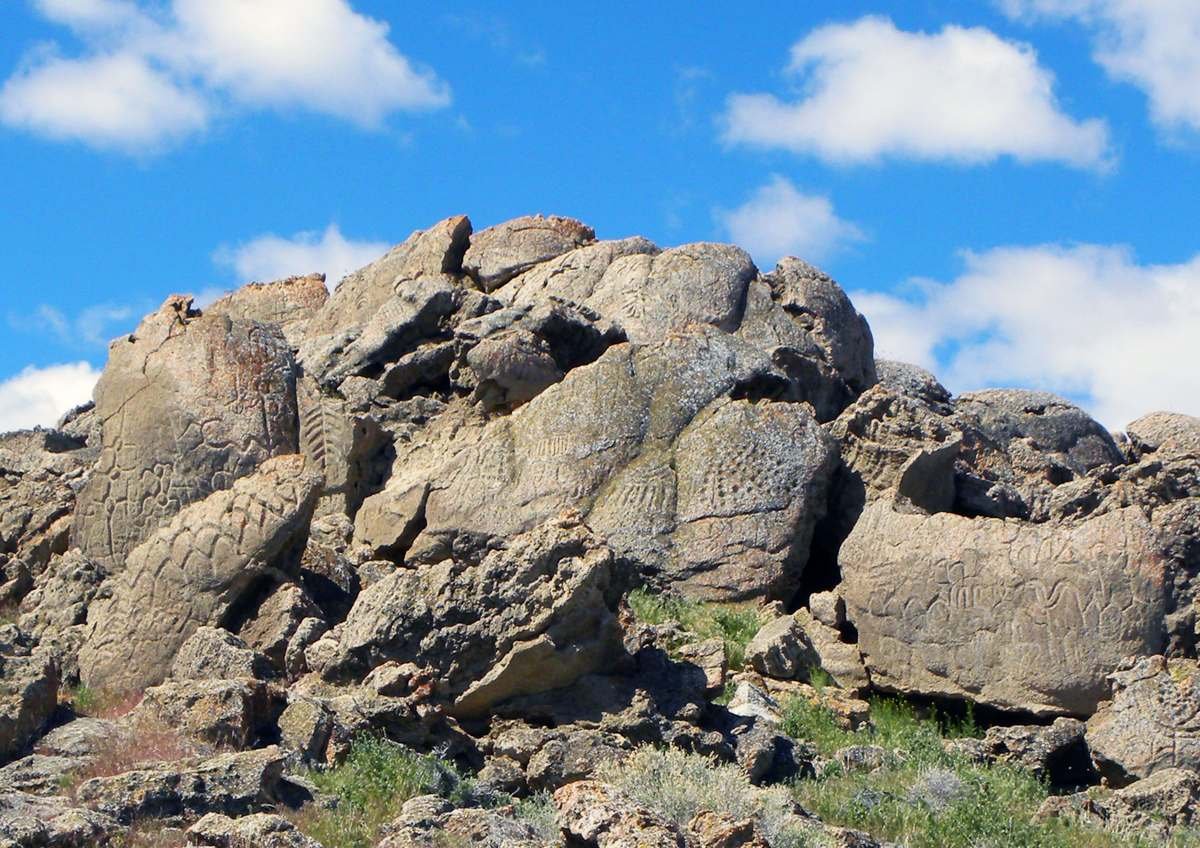
On the edge of a dry lake basin in western Nevada, grooves run across great blocks of pale rock. Some join in patterns that resemble branching stems. Others run alongside rows of rounded pits. In places, a younger white crust overlaps the lower portions of the cuts. That crust and the stone beneath it explain why the Winnemucca Lake carvings have been widely cited as the oldest dated petroglyphs in the United States.
The dating comes from a 2013 study in the Journal of Archaeological Science by Larry V. Benson, Eugene M. Hattori, John Southon and Benjamin Aleck. The team reported two periods when the base of the carved mound was likely exposed. The oldest possible window begins around 14,800 years ago. The ages come from mineral deposits and evidence about the lake, so they place limits on the carving without yielding the year anyone made a mark.
The lake laid down a surface and later covered the cuts
Winnemucca Lake and neighboring Pyramid Lake occupy subbasins within Nevada’s larger Lake Lahontan system. The late Ice Age lake expanded and contracted, at times connecting the two basins. In the course of those changes, calcium carbonate precipitated from the water and accumulated as tufa. At Winnemucca Lake, the carved surfaces belong to a partially collapsed mound of that material. The stone had to form and become accessible before people could work it.
The researchers examined branching tufa into which motifs had been cut and a younger carbonate crust that crosses some grooves near the mound’s base. The youngest dates for the branching tufa are around 14,800 calibrated years before present. Dates from the later crust span about 10,200 to 9,800 years before present. Where the crust covers a groove, the groove was already there. The USGS research summary describes the measured elevations and the resulting age limits.
How researchers narrowed the possible carving windows
The mound’s base would have been underwater when the joined lakes were high enough to spill across Emerson Pass, at about 1,207 meters above sea level. To estimate when the lower surfaces would have been exposed, researchers compared radiocarbon dates from layered algal tufa across the basin with inorganic carbon in a Pyramid Lake sediment core and strontium isotope evidence. The records provide different ways to infer changes in the lake system. Together they point to two intervals when people could have reached the lower panels.
| Evidence | Approximate calibrated age | What it constrains |
|---|---|---|
| Branching tufa | 14,800 years BP | The surface was in place by about this time. |
| Earlier low-water window | 14,800–13,200 years BP | The mound’s base was likely accessible. |
| Later low-water window | 11,300–10,500 years BP | An alternate model puts this interval at 11,500–11,100 years BP. |
| Crust over lower grooves | 10,200–9,800 years BP | The covered grooves predate the material deposited over them. |
Where the uncertainty comes from
Lake carbonates can contain carbon inherited from older material, making a sample appear older than its deposition. Later exposure can introduce younger carbon into porous crust. The researchers evaluated both possibilities and tested how different levels of laboratory pretreatment affected dates for a porous sample. They also compared the carbonate dates with the independent lake-core chronology. The agreement between these lines of evidence supports the broad timing, while the two possible windows remain unresolved.
Artifacts from the broader Lahontan Basin give the later window archaeological context, according to the University of Colorado Boulder’s account of the study. The earlier window remains possible. The chronology applies most directly to the studied surfaces and their relation to the carbonate crust. Individual motifs could have been made at different times. Part II looks at what researchers can read directly in the stone: the depth of the grooves, the placement of the pits and the choices the carvers made across the panels.
Featured photograph: Larry V. Benson / USGS, public domain, resized.