
KNN Technology Desk | October 21, 2026
NASA researchers say a thinner, optimized rotor-blade shape could help future Mars helicopters fly considerably farther than the pioneering Ingenuity aircraft. In an October 20 research update, the agency described an experimental airfoil called roamx-0201, developed using computer models and tested in wind tunnels that simulate Martian conditions.
What engineers changed
Mars has a much thinner atmosphere than Earth, limiting the amount of lift that a rotor can generate. NASA Ames and university collaborators explored how changing an airfoil’s cross-sectional shape influences lift, drag and stall. Their redesigned profile is thinner and more asymmetrical than Ingenuity’s. According to a published engineering comparison, the roamx-0201 design delivered approximately 19%–43% better lift-to-drag performance than the reference airfoil across the conditions studied.
NASA also says model-based vehicle studies suggest future aircraft fitted with optimized designs might extend certain single-flight distances from Ingenuity-scale values around 0.7 kilometer to as much as 18.7 kilometers. That larger figure is a prediction based on models and testing, not a distance already flown by a Mars helicopter.
From Ingenuity to new missions
Ingenuity completed 72 flights from 2021 to 2024, demonstrating that controlled powered flight is possible on another world. NASA is working on additional aerial-exploration ideas, including its SkyFall concept. The new roamx-0201 research addresses possible aircraft beyond that initial generation; it is not an announcement that these specific blades have already been installed on a flight-ready spacecraft.
The results matter because longer flights could allow robotic explorers to examine terrain, carry specialized instruments and access sites that surface rovers might struggle to reach. Further design validation and mission-specific testing would still be necessary.
Watch: NASA demonstrates next-generation rotor testing
NASA/JPL video from May 7, 2026, illustrating related Mars rotor research. It does not document the October roamx-0201 study itself.
Watch on NASA/JPL’s official video page.
Sources and image credit
NASA research update, October 20 · NASA technical report and AIAA Journal paper · NASA/JPL research video.
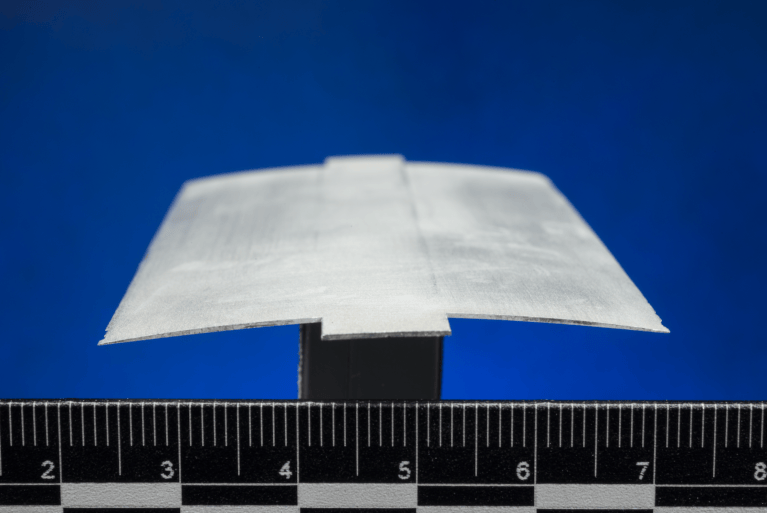
Featured image: NASA photograph of an experimental rotor-blade cross-section. Credit: NASA.