Indigenous Citizenship Investigations | Part III
Khemetic News Network — History & Restoration Desk | October 26, 2026
In 1825, federal officials obtained a treaty purporting to transfer extensive Muscogee (Creek) lands. The United States ratified it. Creek leaders challenged the authority of its signatories, William McIntosh was killed under Creek law, and Congress’s treaty-making partners replaced the agreement the following year. The surviving treaty texts reveal a dispute not merely over acreage, but over who had the authority to speak for a nation.
Before the signatures: a Creek council said no
In December 1824, U.S. commissioners Duncan G. Campbell and James Meriwether sought a major land cession from the Creek National Council. According to historian Christina Snyder’s account in the Encyclopedia of Alabama, the council declined. Creek leaders pointed to earlier treaties and a Creek law prohibiting further unauthorized land sales under penalty of death. The commissioners subsequently negotiated with a smaller faction associated with Lower Creek leader William McIntosh.
This history matters because the Creek Confederacy was a political community with its own governing institutions. The English name Creek was used in U.S. treaties, while Mvskoke/Muscogee also identifies a people and a language. The Muskogean language family is broader still. None of these designations should be used to erase distinct Yamasee/Yamassee identities or assume that every constituent town spoke with a single voice.
What the 1825 treaty actually said
The Treaty of Indian Springs, signed February 12, 1825 (7 Stat. 237), began by announcing the U.S. government’s desire to relocate Indigenous nations west of the Mississippi River. Article 1 purported to cede Creek lands within Georgia and other specified territory. Article 2 proposed a western land exchange and payments totaling $400,000 to the emigrating party. Article 5 directed the negotiating commissioners to make and distribute the initial payment.
The treaty’s preamble represented that Creek town chiefs had agreed to the proposed removal, with an exception noted for Tokaubatchee. Yet the later official record directly contested that claim. A lengthy list of names on the treaty is evidence of recorded signatures, not by itself proof that the signatories held authority from the Creek National Council to surrender the nation’s territory.
A February 14 supplementary article also concerned McIntosh’s claimed reservations at Indian Springs and on the Ocmulgee River, with $25,000 specified for their transfer. That payment is documented in the treaty text. Whether other compensation arrangements were improper requires examination of additional financial records rather than inference from the existence of payments alone.
The United States ratified the treaty on March 7, 1825. Ratification established the federal government’s acceptance; it did not settle the Creek National Council’s objection to the signatories’ authority. The original instrument and related ratification documents are preserved in the National Archives-linked Indigenous Digital Archive treaty collection.
McIntosh, Menawa and the meaning of “treason”
McIntosh’s role remains historically contested. Some accounts emphasize the advantages he expected from the agreement; others examine whether he believed territorial loss and relocation had become unavoidable. These interpretations do not eliminate the documented fact that a major Creek faction disputed his authority to make the cession.
In late April 1825, Creek forces led by Menawa killed McIntosh and other signatories. The National Park Service biography of Menawa describes the action as an execution ordered by the Creek National Council for the illegal land cession. The Encyclopedia of Alabama dates the killings to April 30, 1825.
The episode is often called the “McIntosh treason affair.” That phrase describes the alleged violation of Creek political law and loyalty; it was not a prosecution for treason under the U.S. Constitution. Calling the episode merely a personal feud would also obscure the central legal dispute: the power to alienate collectively held national land.
1826: The United States acknowledged the authority dispute
The strongest documentary evidence appears in the replacement Treaty of Washington of January 24, 1826 (7 Stat. 286). Its preamble states that a great majority of Creek chiefs and warriors protested the 1825 treaty and argued that its signatories lacked sufficient authority to make land cessions.
Article 1 declared the 1825 treaty “null and void” and canceled claims arising from it. This was not simply a later historian’s characterization: it was the operative language of a new treaty between the United States and Creek representatives, including Opothle Yoholo and Menawa.
But Article 2 of the 1826 agreement also ceded substantial Creek territory in Georgia. Article 3 provided $217,600, and Article 4 provided a perpetual annuity of $20,000. Article 5 addressed the restoration of privileges to supporters of the 1825 treaty; Article 9 separately contemplated payments to McIntosh’s followers connected with relocation. Article 13 promised U.S. protection for Creek country not ceded under the agreement.
The outcome was therefore double-edged. Creek representatives succeeded in overturning the contested instrument and obtaining federal acknowledgment of the authority problem, but they did not recover all the land at issue. Nullification of a treaty did not end the pressure for territorial cessions.
From treaty controversy to federal removal
The 1825–1826 conflict preceded the Indian Removal Act of May 28, 1830 (4 Stat. 411). The statute authorized the president to negotiate exchanges of Indigenous lands east of the Mississippi for territory farther west. Its language described negotiated exchanges, but the policy operated amid state pressure, encroachment, and coercion.
On March 24, 1832, a new Creek treaty (7 Stat. 366) declared in Article 1 that the Creek people ceded their remaining lands east of the Mississippi. Article 2 contemplated individual land selections. These measures accelerated the transformation of territorial relationships that had been contested at Indian Springs.
Later, the federal allotment era imposed new administrative mechanisms for distributing land and recording eligibility. The Dawes Commission’s Creek enrollment system did not create Indigenous identity; it was a federal process with powerful legal consequences for landholding and recognition. Tribal citizenship, U.S. citizenship, voting rights and title to land remained separate questions, even when government records used overlapping terminology.
Why this history still matters in federal law
In McGirt v. Oklahoma (2020), the U.S. Supreme Court held that Congress had not disestablished the Muscogee Reservation for purposes of the Major Crimes Act. The Court distinguished individual allotments and changes to tribal governing authority from the legal act required to terminate a reservation.
McGirt concerned the reservation established in Indian Territory, not a judicial reversal of the 1825 or 1832 land cessions in the Southeast. Its relevance here is methodological: treaties, land titles, citizenship rules and political jurisdiction cannot be treated as if they were identical.
The unresolved question behind every signature
The McIntosh affair forces a question that should accompany the reading of any federal treaty: Who authorized the negotiators to act for the people whose land was being ceded?
The 1826 treaty itself recorded the objection that the 1825 signatories lacked that authority. That evidence warrants close attention to Creek law, council proceedings, the federal commissioners’ conduct and the interests of the state of Georgia. It also cautions against treating colonial and federal documents as complete accounts of Indigenous political identity.
For Yamasee/Yamassee communities and other peoples historically connected with southeastern confederacies, the same research principle applies: linguistic relationships, political alliances and a nation’s own identity must be investigated separately. A reported contemporary oral-history account about the use of the term Muskogee remains under verification and is not presented here as an authenticated quotation.
The central lesson is not that a signature lacked consequences. It is that the authority behind a signature could itself be the central issue.
Original records and further reading
- Treaty with the Creeks, 1825, 7 Stat. 237, including supplementary article.
- Indigenous Digital Archive / National Archives: Ratified Indian Treaty 125, scanned treaty and ratification materials.
- Treaty with the Creeks, 1826, 7 Stat. 286, especially preamble and Articles 1–5, 9 and 13.
- National Park Service: Menawa, historical biography.
- Christina Snyder, “Treaty of Indian Springs (1825),” Encyclopedia of Alabama, updated February 2026.
- Indian Removal Act, 1830, 4 Stat. 411.
- Treaty with the Creeks, 1832, 7 Stat. 366.
- U.S. Supreme Court, McGirt v. Oklahoma, decided July 9, 2020.
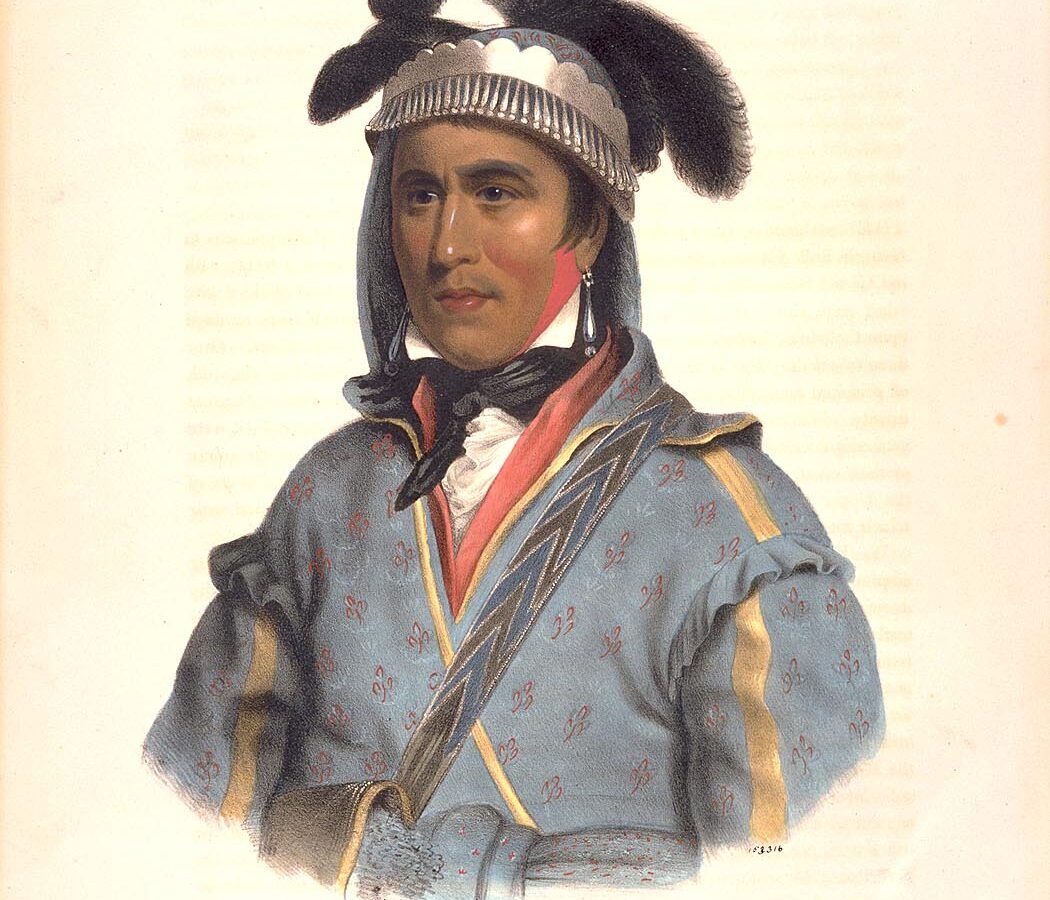
Image credit: Public-domain 1837 lithograph of Muscogee leader Opothle Yoholo, after Charles Bird King, reproduced from the Library of Congress collection via Wikimedia Commons. The portrait was published after the events of 1825–1826 and is historical artwork, not a contemporary photograph.
Editorial disclosure: This is a historical document analysis, not a new interview with tribal representatives. Disputed motives are identified as interpretations. A privately reported Yamassee oral-history lead has not been authenticated or directly quoted.