
A gut microbial molecule reduced artery plaque in experimental mice, but the finding does not establish a heart-disease treatment for people.
Researchers in China have identified a fatty acid produced by the gut bacterium Bacteroides uniformis that reduced atherosclerotic plaque in mice. The study, published in Nature on October 7, 2026, points to a possible route for future cholesterol research.
The molecule, pentadecanoic acid—also called PA or C15:0—reduced plaque burden by approximately 50% in the experimental model. That is a measurement of arterial plaque in mice, not evidence of a 50% reduction in human heart attacks.
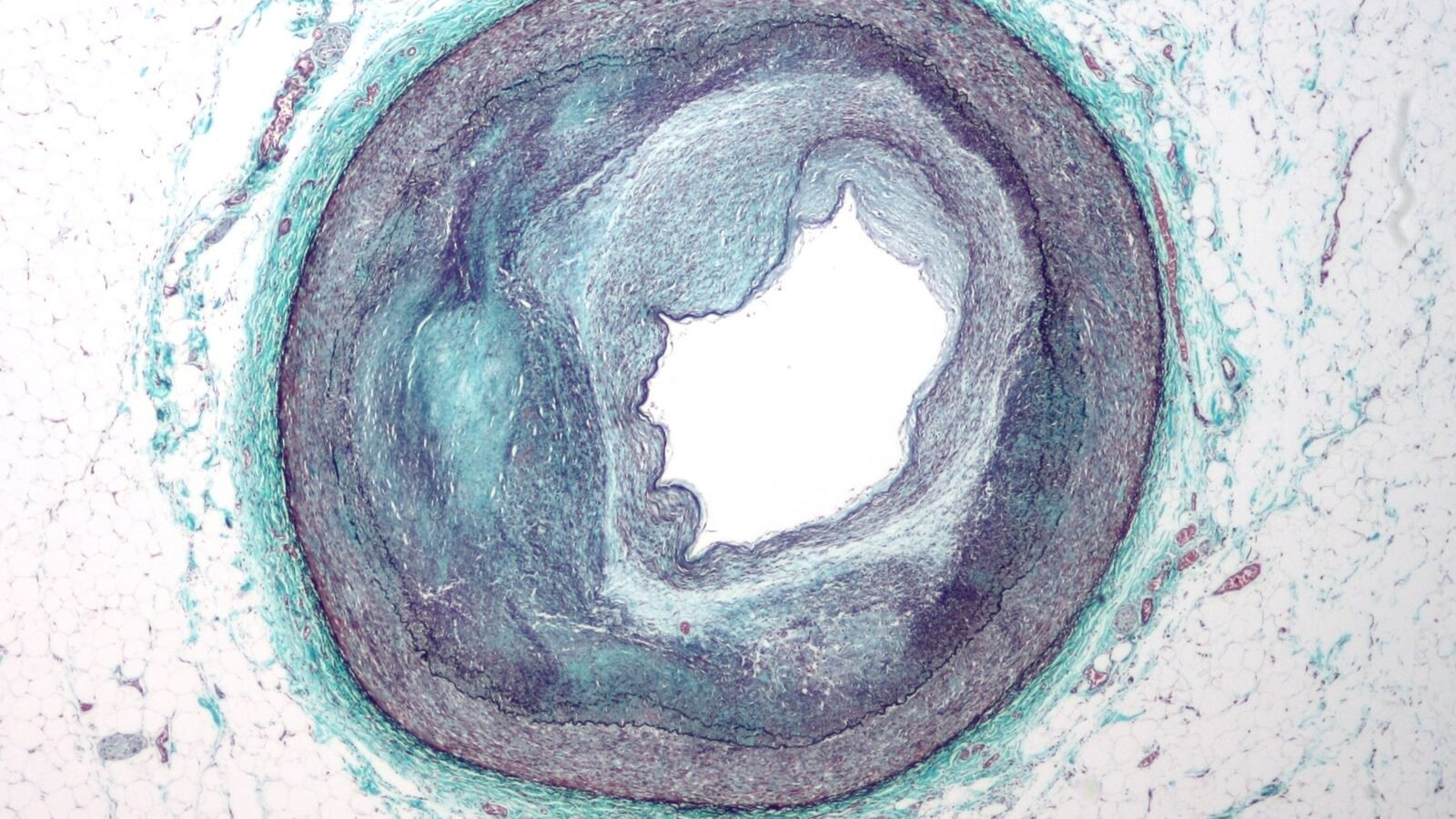
Featured image: Archival scientific micrograph of a right coronary artery narrowed by atherosclerosis; not a specimen from the 2026 mouse study. Photo: Nephron / Wikimedia Commons, CC BY-SA 3.0. Resized for web.
How the molecule affected cholesterol
According to the published abstract, PA directly inhibited HMG-CoA reductase, an enzyme involved in making cholesterol. The researchers also found increased liver LDL-receptor expression, helping remove LDL cholesterol from the blood.
HMG-CoA reductase is also targeted by statins. Sharing that target, however, does not demonstrate equivalent effectiveness or safety in patients.
What the experiments can—and cannot—show
Medical Xpress’s account of the research reports that the team used male mice predisposed to atherosclerosis. Live bacteria improved outcomes, while heat-killed bacteria did not. Bacterial strains engineered to produce less PA offered weaker protection.
These experiments help connect a microbial product to a biological effect. They cannot establish how treatment would perform across people with different diets, gut microbes and medical histories.
Human evidence remains uncertain. Medical Xpress reports that a small earlier dietary trial found an LDL benefit, while a separate analysis of two long-running studies found no association between higher circulating PA and lower cardiovascular-disease incidence. Neither result settles whether this proposed treatment prevents heart attacks.
The paper also discloses that co-author Xiangyu Mou has a pending patent application covering PA’s use against atherosclerosis.
What this means for U.S. readers
For Americans managing cholesterol, the immediate implication is a research development, not a change in care. The National Heart, Lung, and Blood Institute recommends individualized treatment combining heart-healthy habits with medicines when appropriate.
NHLBI also advises patients to take prescribed medicines and discuss changes with their clinician. This mouse study provides no basis for replacing a statin with a probiotic or C15:0 supplement.
The next essential step is human research establishing effective doses, safety and whether any cholesterol changes translate into fewer cardiovascular events.
Watch: how cholesterol contributes to artery disease
This background animation from the U.S. National Library of Medicine’s MedlinePlus explains cholesterol and plaque. Published in 2018, it does not describe or validate the 2026 mouse study.
Video credit: MedlinePlus, U.S. National Library of Medicine. Watch with transcript on the official MedlinePlus page.
Sources
- Yin and colleagues, Nature: A gut microbial odd-chain fatty acid alleviates atherosclerosis in mice — October 7, 2026; PubMed abstract and conflict-of-interest disclosure.
- Medical Xpress: Study reporting and limitations — October 14, 2026.
- NHLBI: Atherosclerosis treatment and living with atherosclerosis.
- MedlinePlus: Cholesterol Good and Bad, video and transcript.