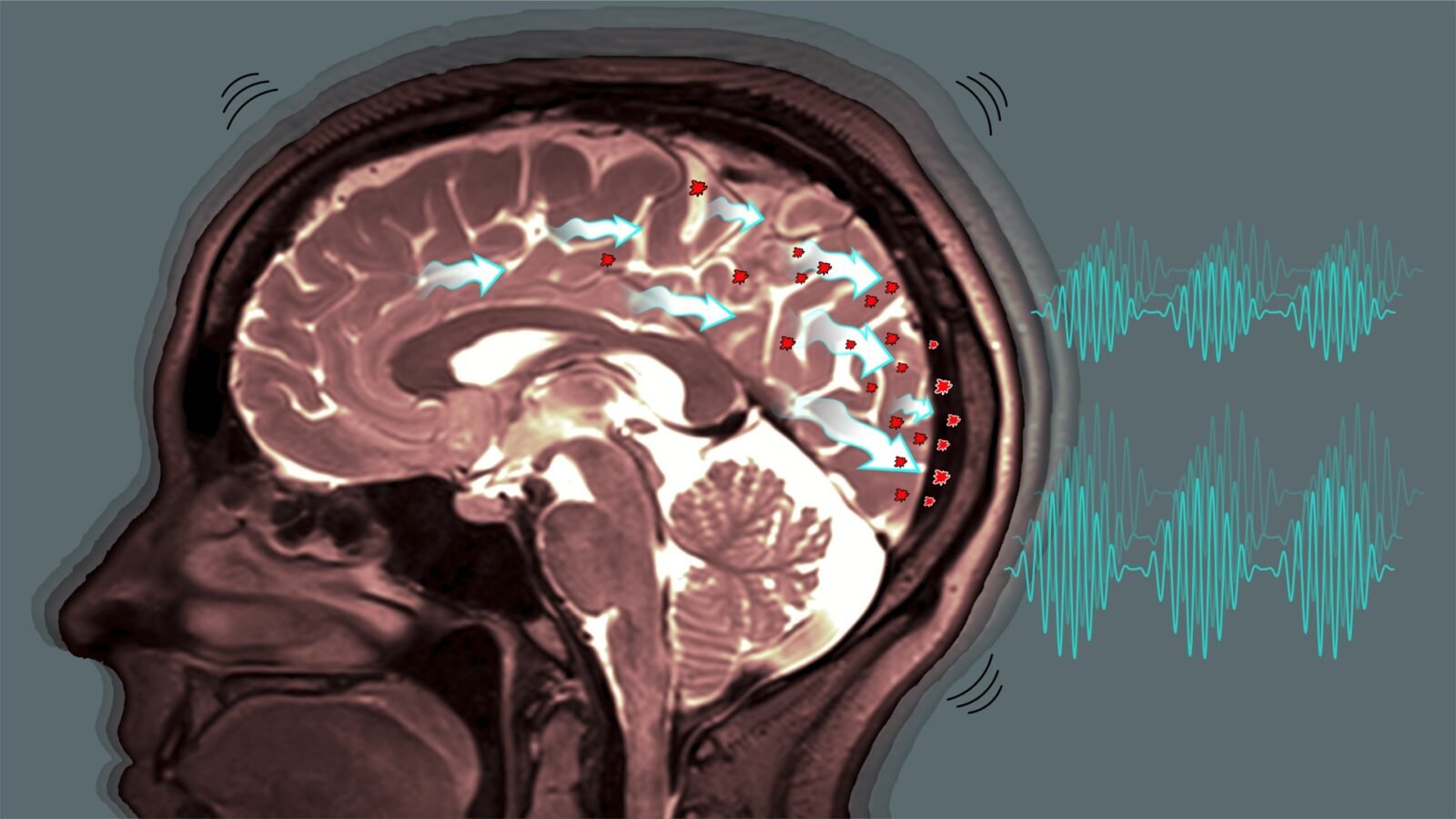
New research from Finland suggests that gentle whole-body vibration combined with a nitric-oxide-releasing drug may affect how soluble proteins move out of the brain. The experiment involved healthy volunteers, however, and did not show that Alzheimer’s disease was treated or prevented.
Researchers at the University of Oulu and Oulu University Hospital reported the findings in Nature Communications on November 3, 2026. Their experiment combined a vibrating mattress with nitroglycerin, a prescription medication that dilates blood vessels, and measured short-term changes in brain-fluid dynamics and blood biomarkers. Read the peer-reviewed study.
What the researchers tested
The study enrolled 29 healthy adults aged 27 to 61. Twenty-six participants completed the combined nitroglycerin-and-vibration protocol, while researchers also examined vibration alone and an exploratory nitroglycerin-only session in smaller groups. The team used magnetic resonance imaging, blood measurements and physiological monitoring to study brain-fluid movement.
The mattress delivered carefully controlled whole-body vibrations intended to engage mechanically sensitive Piezo1 signaling. Nitroglycerin was given under medical supervision to briefly dilate blood vessels and lower blood pressure. These mechanisms may influence the fluid movements involved in transporting waste products out of brain tissues.
What changed in the blood and brain scans
Following the combined intervention, researchers measured higher blood concentrations of soluble amyloid-beta 40, amyloid-beta 42 and GFAP, a protein associated with astrocytes. In the subset with amyloid-beta 42 measurements, its average blood concentration rose from about 2.6 to 3.5 picograms per milliliter after correction for blood dilution—roughly a 35% increase. MRI measurements also showed changes in fluid-related signals, including around large veins.
The results are consistent with a possible temporary shift of soluble brain-derived proteins toward the bloodstream. But the authors cautioned that the precise pathways remain incompletely understood. Blood concentrations alone cannot establish that established amyloid plaques have been removed from the brain.
Why this does not establish an Alzheimer’s treatment
No participants in the human experiment had a diagnosis of Alzheimer’s disease. The study did not show plaque removal, improved memory, slower cognitive decline or a reduction in dementia risk. A separate mouse experiment offered supporting mechanistic evidence, not proof of a clinical benefit in people.
Alzheimer’s is associated with abnormalities involving amyloid-beta and tau proteins. Scientists are studying whether the brain’s fluid-transport and waste-clearance mechanisms could become useful treatment targets, but benefits must be demonstrated in carefully designed patient trials.
Safety matters: nitroglycerin is not a home remedy
During the combined treatment, blood pressure fell by about 15% on average at its lowest measured point. Four participants reported headaches, three reported nausea, and one session was discontinued following vomiting. There were no serious adverse events reported in the controlled study.
Nitroglycerin is a prescription medicine used for certain heart conditions. It can cause dangerous drops in blood pressure, particularly when taken with medications such as sildenafil or tadalafil. A vibrating mattress and nitroglycerin should not be combined at home to attempt to treat Alzheimer’s or improve brain clearance. See the U.S. National Library of Medicine’s safety guidance.
What the findings mean for American families
Alzheimer’s places enormous demands on patients, families and caregivers across the United States. This experimental approach is fundamentally different from therapies that have undergone clinical trials in people with early Alzheimer’s, including amyloid-targeting medications. It is not an approved dementia treatment.
The next meaningful test is whether repeated, carefully monitored interventions can improve outcomes for people with early memory impairment, while remaining safe. Until those results exist, this is a preliminary human physiology finding—not a cure.