

Indigenous Citizenship Investigations — Part VI | Khemetic News Investigative Research Desk | November 5, 2026
Editor’s note: This installment investigates the records behind enrollment rather than repeating Part V’s examination of the 1866 treaty and current Creek Freedmen litigation. Historic labels are reproduced as archival terminology, not as definitive descriptions of identity.
When a federal roll became a gatekeeper
In the late nineteenth century, the United States began transforming collective Indigenous landholding in Indian Territory into individual allotments. Federal enrollment records became central to determining who could receive land and payments. More than a century later, those records remain important evidence in citizenship disputes. But the categories chosen by federal administrators should not be confused with a complete record of Indigenous kinship, community history or self-identification.
The General Allotment Act of February 8, 1887, often called the Dawes Act, authorized allotment on many reservations and linked certain allotments or residence choices to United States citizenship. Crucially, the Five Tribes in Indian Territory were not simply placed under that law’s original allotment mechanism: their later enrollment and allotment systems were shaped by separate legislation and negotiated agreements.
The Curtis Act changed the federal machinery
The Curtis Act of June 28, 1898 (30 Stat. 495) expanded federal authority over the Five Tribes, including the Creek Nation, and strengthened the Dawes Commission’s enrollment work. The Supreme Court later summarized provisions directing the Commission to prepare Creek citizenship rolls and authorizing it to examine evidence, remove improperly included names and submit rolls for federal approval. See United States v. Wildcat, 244 U.S. 111 (1917).
That process was not a neutral census of everyone who ever belonged to a community. Enrollment involved deadlines, documentary requirements, interviews, classifications and administrative decisions. Federal recognition on a roll had legal consequences, but it did not create the histories of the families being recorded.
What the Dawes records actually contain
The National Archives identifies several distinct record groups: final rolls, census cards, enrollment applications, testimony packets, allotment jackets and maps. Applications may include testimony from relatives, variant spellings, residence information and disputes over eligibility. Approved and rejected applicants can both appear in surviving records. A rejected applicant ordinarily would not have the same approved allotment paperwork.
The enrollment categories included Creek citizens listed as “by blood” and Creek Freedmen. Those administrative categories did not reliably describe every individual’s complete ancestry, especially in families with both African and Indigenous ancestry. Researchers should examine testimony and family networks, not assume that a single column captures a person’s full heritage.
Citizenship, allotment and voting were different questions
Tribal citizenship concerns belonging to a sovereign nation under its governing law and applicable treaties. U.S. citizenship is a distinct legal status; the 1887 Act extended it to some Indigenous people under specified conditions, while the Indian Citizenship Act of 1924 later extended U.S. citizenship broadly to Native people born in the United States. Land allotment concerned rights in parcels or distributions under particular statutes and agreements. Voting involved separate rules: U.S. citizenship did not by itself eliminate every state barrier to voting, and voting in tribal elections depends on the nation’s laws and effective recognition of citizenship.
These distinctions matter in contemporary litigation. In Citizenship Board v. Grayson (July 23, 2025), the Muscogee Nation Supreme Court held that applicants tracing qualifying ancestry through either the Creek By-Blood Dawes Roll or Creek Freedmen Dawes Roll must be considered under the 1866 treaty. The court’s decision did not mean that every descendant automatically possessed an issued card or could immediately vote. Subsequent disputes over implementation were reported in 2025 and 2026; these are separate from the archival question of what the rolls recorded.
What about the Yamassee and the language names?
The English term “Creek” historically referred to a confederated political world encompassing multiple towns and communities. “Mvskoke” names a language and also functions as a people’s self-designation; “Muskogean” names a broader language family. Yamasee or Yamassee refers to a historically distinct southeastern Indigenous identity with documented relationships to Muscogee communities. The terms should not be treated as interchangeable merely because communities migrated, intermarried or allied.
SaKm has supplied an oral-history research lead: he reports that Mico Hadjo, whom he identifies as a current Mico of the Yamassee, explained that Muskogee was the language name rather than the Yamassee nation’s proper name. This remains an unverified attributed account, not an authenticated quotation. Before publishing a direct attribution, the research desk must confirm the precise wording, identity and title, consent to publish, and independent historical or linguistic corroboration. The account cannot, by itself, establish that Mvskoke has no function as a people’s self-designation.
How to investigate an ancestor responsibly
A researcher should start with known relatives and locations, compare surname variants, inspect census cards and application jackets, identify witnesses and family connections, then compare those materials with tribal, church, land and oral-history records. A missing or rejected Dawes entry should not be treated as proof that an ancestor lacked Indigenous identity. Conversely, a family tradition by itself does not establish present-day citizenship eligibility, which is determined under the relevant nation’s laws and applicable legal decisions.
Conclusion
The Dawes records are indispensable evidence of a specific federal enrollment system. They are not a timeless dictionary of identity. The central historical question is how federal classification interacted with Indigenous sovereignty, kinship and the power to define citizenship. That requires reading the documents closely—and listening to living communities without replacing their testimony with untested assumptions.
Primary and reference sources
- National Archives: Dawes Act (1887), text and background
- National Archives: Dawes Commission records and research guide
- United States v. Wildcat, 244 U.S. 111 (1917), discussing Curtis Act enrollment provisions
- Muscogee Nation Supreme Court: Citizenship Board v. Grayson (2025)
- U.S. Government Accountability Office: Tribal Programs—Information on Freedmen Descendants of the Five Tribes
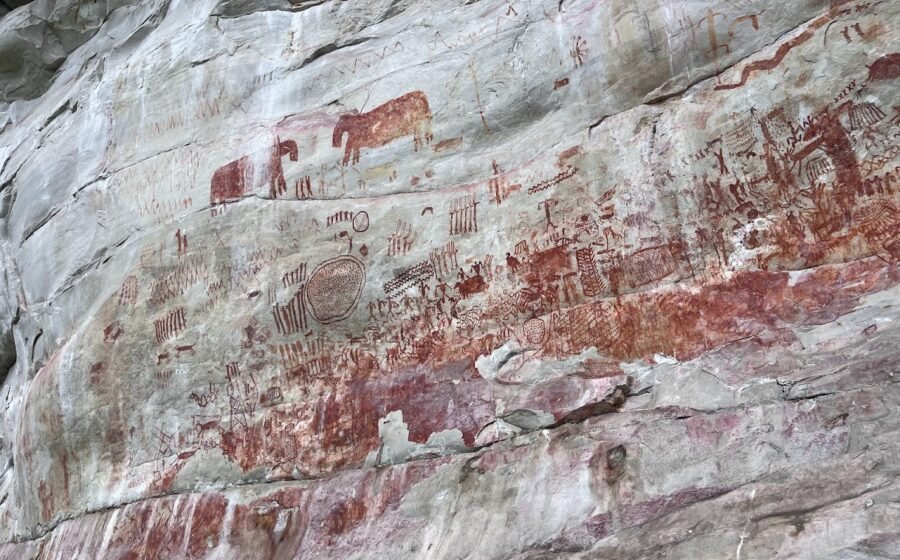
Illustrative featured image, if supplied, depicts a generic historical ledger and is not an actual Dawes enrollment record.