

Science retrospective | Originally published September 7, 2020.
A collaboration involving Arizona State University and Shanghai Jiao Tong University developed a method for assembling DNA into larger programmable structures. The peer-reviewed findings appeared in Nature Chemistry in 2020. Although the work has been recirculated online, it is not a new 2026 discovery.
Scientists call the strategy meta-DNA: a bundle of DNA helices acts like an enlarged DNA strand, allowing researchers to build new structures by arranging these larger components.
From DNA origami to meta-DNA
Conventional DNA origami takes advantage of predictable complementary DNA base pairing. Short strands guide a longer DNA strand into a planned nanoscale shape. But producing much larger arrangements while preserving control is difficult.
In the 2020 experiments, researchers built six-helix DNA origami bundles in the submicrometre range that behaved as enlarged analogues of single strands. Components carrying complementary ‘meta-base pairs’ formed double helices whose handedness and helical pitch could be programmed.
What the experiments showed
Using these building blocks, the team constructed branching multi-arm junctions, three-dimensional polyhedral structures, and organized one-, two- and three-dimensional lattices. The team also demonstrated a hierarchical DNA strand-displacement reaction, establishing a way for the structures to reconfigure rather than remain permanently fixed.
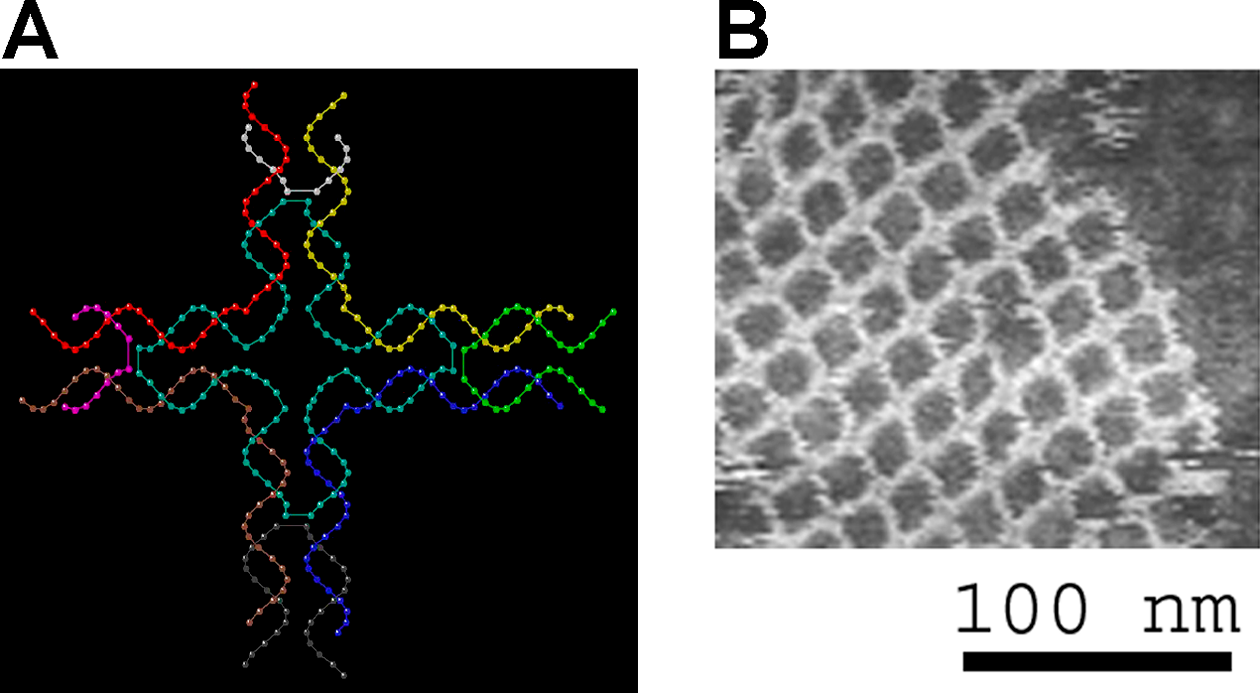
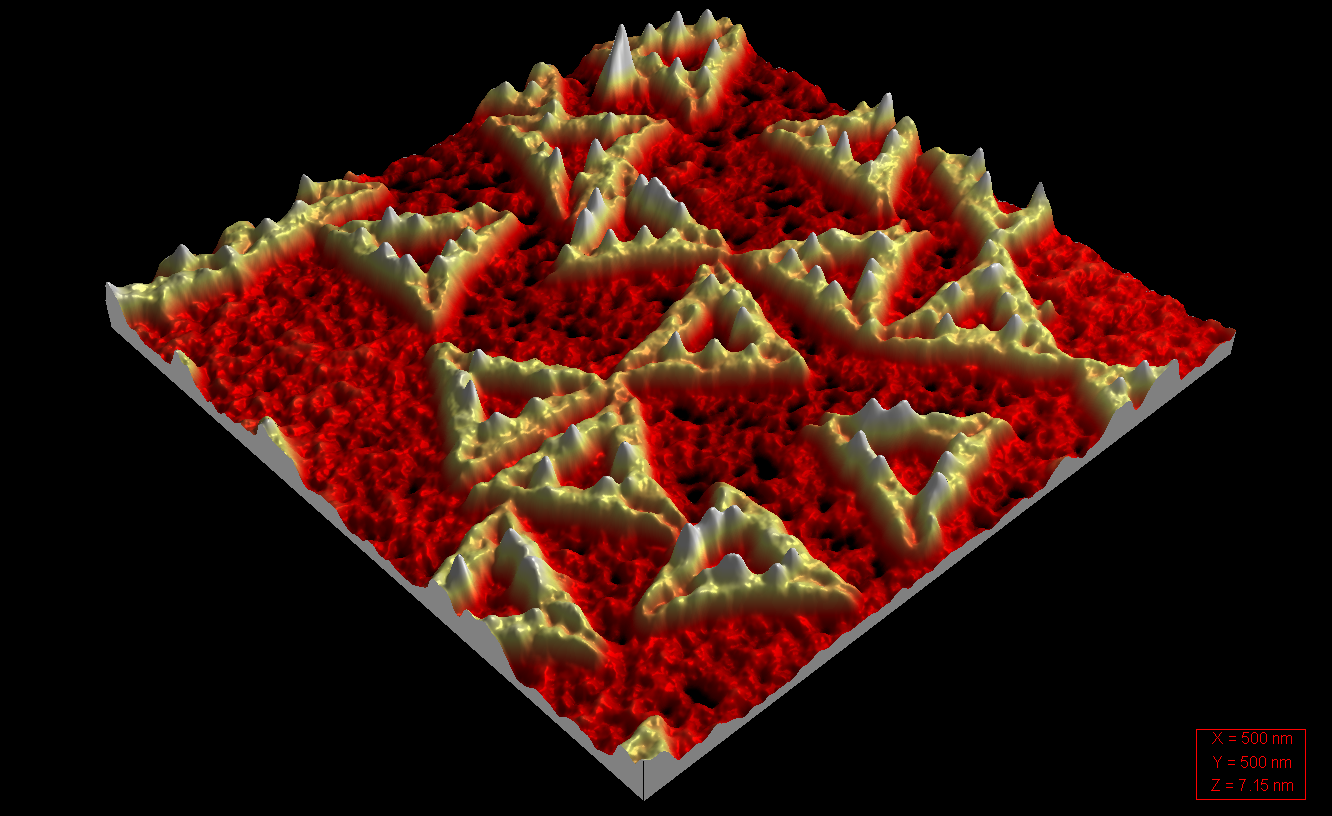
The research combined molecular design, experimental imaging and computational modeling. The original 2020 meta-DNA diagrams and microscopy images are available in the Arizona State University report and the journal article. The Creative Commons–licensed images reproduced here document related earlier DNA nanotechnology research; they should not be mistaken for figures from the 2020 experiment.
Why this research matters in the United States
Researchers at ASU’s Biodesign Institute and School of Molecular Sciences contributed to the work. The journal acknowledges U.S. National Science Foundation support alongside other funding sources.
Large and programmable DNA assemblies could eventually support fundamental research on molecular computing, biosensors, advanced materials and devices. These are potential applications. The paper did not establish a working human treatment, a device capable of repairing genes inside the body or a commercial molecular computer.
Questions for future research
Challenges include manufacturing scale, assembly efficiency, long-term stability and integration with other useful components. A successful laboratory demonstration does not prove a method is ready for industrial or clinical use.
The journal published an author correction on November 24, 2020, adding citations and context. The correction is not a retraction of the experiments.
Sources and image credits
- Yao et al., ‘Meta-DNA structures,’ Nature Chemistry (2020).
- Arizona State University — A new twist on DNA origami (September 7, 2020).
- U.S. National Library of Medicine — publication record.
- Nature Chemistry — Author Correction (2020).
- Featured image: 2004 DNA nanogrid and tile figure, Thomas H. LaBean and Hao Yan, CC BY 2.5 (unaltered). This figure predates the 2020 study.
- Inline microscopy image: triangular DNA origami, Matthias A. Fenner, CC BY-SA 4.0 (unaltered).
Media note: The original journal article contains supplementary research animations. Readers can view them through the publisher; no third-party video is embedded or reuploaded without permission.