Forty million people depend on the Colorado River. Its immense reservoirs have fallen to levels that raise difficult questions about water deliveries, electricity, farmland, Tribal rights and the health of a river that rarely reaches the sea. Two technologies—desalination and cloud seeding—are often presented as solutions. Both deserve serious consideration, but neither can replace the need to match water consumption to a warmer, less predictable river.
More than a local drought story, the Colorado River is a test of how an industrial society manages a water system transformed by dams, population growth, irrigation and climate change. The U.S. Geological Survey estimates that the river delivers water to approximately 40 million people, supports about five million irrigated acres and flows through a landscape connected to 30 Tribal Nations. USGS, Colorado River Basin (2026).
The white ring around Lake Mead is a warning, not a clock
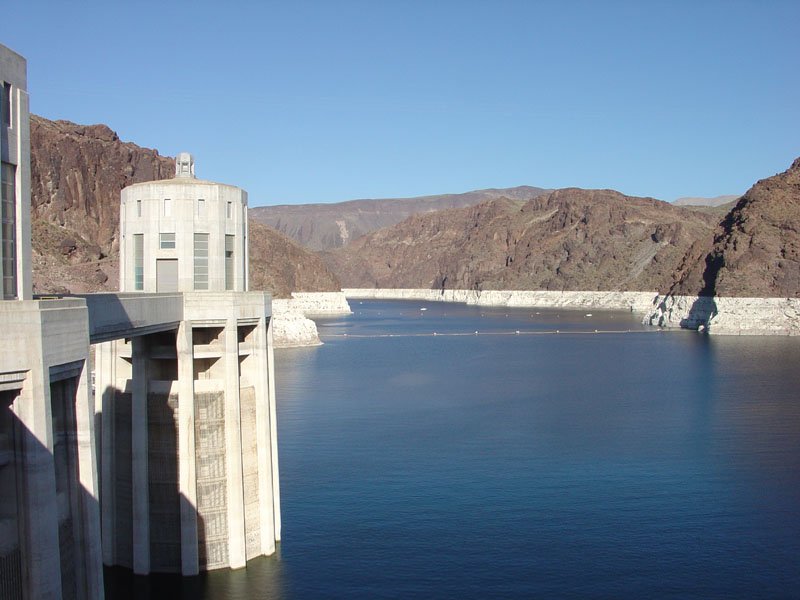
Visitors to Lake Mead can see a pale mineral “bathtub ring” on canyon walls high above the water. It traces an earlier waterline. As reservoir storage declines, managers face pressure on hydropower generation, downstream releases, marinas, water intakes and emergency planning.
Reservoirs do not suddenly become unusable only when they are empty. Minimum power-pool elevations can interfere with generation, while still lower elevations can complicate gravity-fed releases. Because each dam has different outlet works, the precise threshold and risks depend on the facility. Data on reservoir elevation and storage must always be dated. Bureau of Reclamation, Lower Colorado River operations.
After the record-low snowpack of winter 2025–2026, the federal government said combined Lake Powell and Lake Mead storage had fallen below the level seen since before Lake Powell began filling in 1963. That history matters more than any one social-media snapshot. Bureau of Reclamation, 2026 decision documents.
How the reservoir system was built—and why
Before its giant dams, the Colorado River was characterized by spring snowmelt floods, shifting sediment, variable seasonal flows and a large delta at the Gulf of California. Settlers, agricultural districts and growing cities wanted water that would arrive when they needed it. Engineers proposed storing winter and spring runoff for summer irrigation, regulating floods and producing electricity.
The 1922 Colorado River Compact
The seven basin states signed the Colorado River Compact in 1922, dividing the river into Upper and Lower Basins and apportioning 7.5 million acre-feet a year to each in the compact’s legal framework. Subsequent laws, court decisions, contracts, operating rules and the 1944 U.S.–Mexico water treaty shaped the wider system now called the “Law of the River.” The compact did not by itself assign every state’s eventual full entitlement, and legal allocations are not identical to the water nature delivers each year.
The central weakness was a planning assumption that the river could reliably sustain extensive withdrawals. Shorter streamflow records, growing agricultural demand and later climate warming exposed the gap between legal expectations and physical supply.
Hoover Dam and Lake Mead
Congress authorized the Boulder Canyon Project in 1928. Workers began building Hoover Dam in 1931, diverting the river through tunnels and erecting a monumental concrete structure between Arizona and Nevada. Construction included foundation excavation, cooling massive concrete pours, power facilities, transmission lines and a new town—Boulder City—to serve the workforce.
Lake Mead began impounding water on February 1, 1935; President Franklin D. Roosevelt dedicated the dam on September 30 that year, and generating units entered operation in 1936. Thousands of workers endured difficult and sometimes dangerous conditions during the Great Depression. The project ultimately supported reliable water deliveries, flood control and power across the Southwest. Bureau of Reclamation, Hoover Dam chronology; National Park Service, Hoover and Davis Dams.
Glen Canyon Dam and Lake Powell
Congress authorized the Colorado River Storage Project in 1956. Glen Canyon Dam was designed to store Upper Basin water, regulate releases and generate electricity. At 710 feet high, its construction required river diversion, extensive rock excavation, concrete placement, a bridge and power transmission facilities. The first water entered Lake Powell on March 13, 1963. The reservoir took until June 22, 1980 to fill for the first time. Bureau of Reclamation, Glen Canyon Dam.
Lake Powell inundated canyon landscapes and archaeological places while creating recreation and water-storage capacity. The reservoirs became pillars of a regional economy, but they also trapped sediment, changed water temperatures and altered downstream ecology.
Why the river is under pressure
Water demand exceeds sustainable runoff
One of the clearest assessments of water use was published in Communications Earth & Environment in 2024. For the period studied, irrigated agriculture accounted for 74% of direct human consumptive use; cattle-feed crops, including alfalfa and other hay, made up 46% of direct consumption. These percentages should not be mistaken for all losses in the watershed: reservoir evaporation and riverbank vegetation were also considered in the study’s overall water budget. Peer-reviewed Colorado River water accounting.
The finding does not make farmers the sole cause of the crisis. Western agriculture feeds cities across North America, employs workers and anchors rural economies. It does show why household conservation alone cannot close a basin-wide deficit. Any substantial plan needs agricultural participation, fair compensation, transparent measurement of consumptive use and safeguards for workers and communities.
Warming reduces snow-fed flow
Snowpack in the Rocky Mountains acts as a natural reservoir: snow accumulates in winter and releases water as weather warms. Rising temperatures change snow cover, soil moisture, runoff timing and evaporation. A USGS modeling analysis estimated a 9.3% reduction in annual mean Colorado River discharge per additional 1°C of warming under its modeled conditions. That number is a model-derived sensitivity, not a forecast that each year will decline by exactly that percentage. USGS, warming and Colorado River flow.
Earlier snowmelt, thirsty soils and continued withdrawals can leave reservoirs short even when mountain storms do arrive. Open-water evaporation at desert reservoirs adds another loss. This is why a single wet winter cannot by itself repair a multidecade imbalance.
The environmental costs already being paid
At the mouth of the Colorado, natural freshwater flows into the Gulf of California have been radically reduced by upstream storage and diversion. Wetlands, floodplain forests, native fish habitats and groundwater-dependent ecosystems have been altered or fragmented. Sediment trapped behind dams cannot naturally replenish many downstream beaches and sandbars. Cooler and warmer water released under different operating conditions can favor different species and affect native fish, including the humpback chub in the Grand Canyon.
These are not abstract losses. Migratory birds cross international boundaries, while Tribal communities and other residents value river landscapes as places of cultural history, subsistence, recreation and identity. Lands submerged by reservoirs also included archaeological and ancestral places, making cultural-resource protection part of the water-management debate.
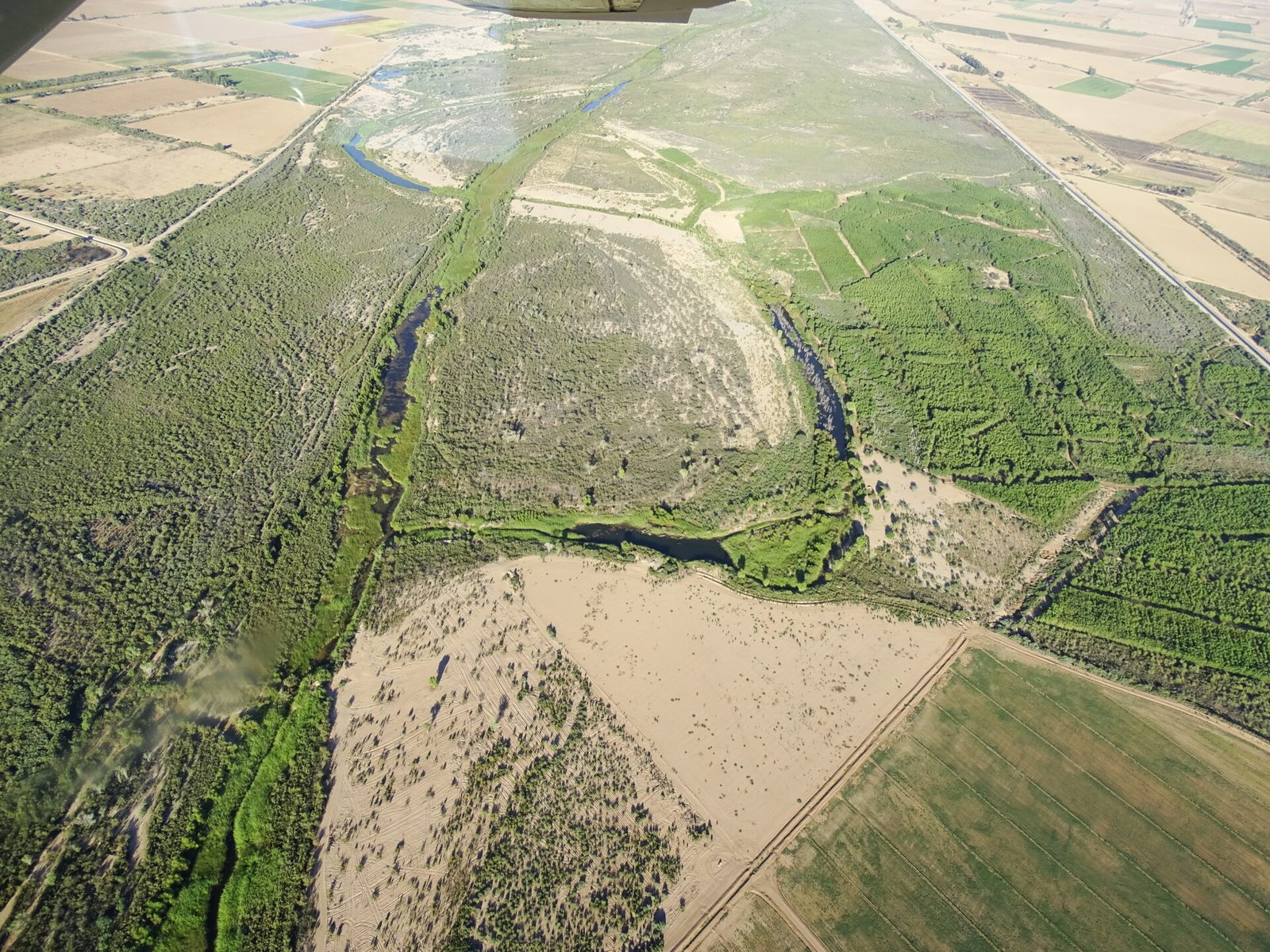
Restoration is possible. A 2026 scientific review of environmental water deliveries to the delta reported 1,381 acres of restored riparian vegetation, improved groundwater, flowing reaches and local community benefits during the 2014–2025 study period. Scientists emphasized that those gains require continued water deliveries and restoration funding. University of Arizona, July 2026 findings.
The human consequences: Who goes without water?
Water insecurity is not equally distributed. Cities can invest in sophisticated water recycling and backup supplies, while some rural and Tribal communities still lack dependable household plumbing and adequate treatment. In September 2026, the Government Accountability Office reported that the estimated national infrastructure need for safe water access in Tribal communities was about $6 billion as of the preceding November. GAO, Tribal access to safe drinking water.
Tribal water rights can be legally senior yet remain difficult to use without pipes, treatment plants, capital and resolution of outstanding claims. Basin-wide policies should therefore include meaningful Tribal participation and actual infrastructure investment, rather than reducing water justice to paper entitlements.
Farmers and agricultural workers face different risks. Mandatory cutbacks can reduce production, employment and rural tax revenue; more costly replacement water can raise operating costs. City residents may face higher utility bills as agencies pay for treatment plants, storage, emergency pumping and new energy-intensive supplies. Low-income families may be less able to absorb rate increases. Health risks rise when water quality, sanitation or access fail.
Desalination: Turning saltwater into drinking water
Desalination removes dissolved salts from seawater or brackish groundwater. The principal modern approach, reverse osmosis, forces water through membranes at high pressure, allowing water molecules through while excluding most salts. Thermal desalination uses heat to evaporate and condense freshwater, a method historically common in some Gulf countries.
Advantages
- Drought resilience: Coastal plants can produce treated water even when snowpack and river runoff decline.
- Supply diversification: Using desalinated water in coastal cities may reduce their withdrawals from rivers and aquifers.
- Proven infrastructure: Reverse-osmosis technology operates commercially at large scale, with predictable design capacities.
- Potential integration with lower-carbon power: Renewable electricity and energy-recovery equipment can reduce emissions and energy costs.
Disadvantages and environmental risks
Electricity: The International Energy Agency estimates that seawater reverse osmosis commonly requires roughly 2.5–6 kilowatt-hours per cubic meter of freshwater produced. Pumping that water hundreds of miles inland or thousands of feet uphill adds energy consumption beyond treatment. IEA, desalination and energy (2026).
Brine: Concentrated saltwater remains after freshwater is separated. Poorly designed discharge can create localized high-salinity conditions affecting marine life. Discharge mixing, chemical management and site-specific monitoring are essential.
Marine organisms: Seawater intakes can entrap or entrain fish, eggs, larvae and plankton. Subsurface intakes and carefully designed discharges can reduce, but not always eliminate, such effects.
Cost and affordability: Construction, membranes, electricity, maintenance, financing and delivery pipelines make desalinated water costly relative to many conventional sources. Water affordability must be considered alongside engineering feasibility.
Inland waste: Brackish groundwater desalination can be attractive where supplies are saline, but the leftover concentrate needs safe disposal. An inland city cannot simply pipe concentrated brine into the ocean without an expensive transport network and environmental review.
What the scale means for the Colorado River
The Carlsbad plant near San Diego can produce about 50 million gallons per day. Replacing one million acre-feet annually would require roughly 18 Carlsbad-sized facilities running near rated output, before accounting for maintenance, conveyance, power delivery and environmental constraints. The energy for seawater reverse osmosis alone would be on the order of 3.1–7.4 terawatt-hours a year at the IEA’s range, excluding major inland pumping. These are calculations illustrating scale, not a proposal to build 18 plants.
Arizona also has the Yuma Desalting Plant, constructed to treat saline agricultural drainage associated with international Colorado River water-quality obligations. Its history shows that desalination can recover usable freshwater from inland sources but does not guarantee economical continuous operation.
Cloud seeding: Can scientists increase mountain snowfall?
Cloud seeding places particles—often silver iodide—into suitable existing clouds to encourage supercooled droplets to freeze and grow into precipitation. Some warm-cloud approaches use salt particles. Material may be released from aircraft or ground generators.
Cloud seeding does not make water vapor from nothing or manufacture a rainstorm in a clear sky. It is an attempt to influence precipitation efficiency in clouds that already contain moisture and meet particular physical conditions.
Potential advantages
- It may be less expensive to operate than building and powering major desalination and conveyance systems.
- Additional snow in useful mountain watersheds can potentially join existing streams and reservoir infrastructure.
- Scientific radar observations have demonstrated that some seeding operations can produce measurable snowfall under favorable conditions.
Limits, uncertainty and environmental questions
In a December 2024 assessment, the GAO found that reviewed studies estimated additional precipitation ranging from 0% to 20%. But it emphasized major measurement limitations, the need for appropriate clouds and uncertainty about effectiveness at different places and times. The GAO said available research did not indicate significant health or environmental concerns from silver iodide at current levels of use, while noting that effects of much broader deployment remain less certain. GAO, Cloud Seeding Technology (2024).
Even a credible precipitation increase does not equal the same percentage increase in river runoff. Some snow evaporates or sublimates, infiltrates soil or supports plant growth. A good public program must measure not only snowfall near seed generators but added water actually reaching streams and storage reservoirs.
Cloud systems also cross political boundaries. Transparent reporting, independent measurement and consideration of downstream jurisdictions are essential. It is inaccurate to claim either that cloud seeding can end drought or that it inevitably steals rain from neighboring areas. Both outcomes require evidence, not speculation.
Which technology offers the better investment?
| Measure | Desalination | Cloud seeding |
|---|---|---|
| Water produced | Predictable treatment capacity when source water, electricity and plant are available | Uncertain additional precipitation, dependent on suitable clouds |
| Primary benefit | Diversifies drinking-water and some industrial supplies | May supplement mountain snowpack and runoff |
| Capital requirement | Usually high | Generally lower |
| Energy | Significant electricity and possible conveyance energy | Comparatively low direct energy, but variable yields |
| Key ecological risk | Brine discharge and seawater-intake impacts | Deposition and uncertain impacts of wider weather-modification use |
| Can it cure over-allocation? | No | No |
Desalination is a stronger choice when a community needs a relatively dependable new supply near saline water and can finance adequate environmental controls. Cloud seeding is best treated as a measured supplement for favorable mountain conditions rather than a replacement for structural conservation.
Global lessons: The Middle East, Singapore and Australia
In the Middle East, large-scale desalination supports arid coastal cities with limited renewable freshwater. It also creates dependence on power, coastal infrastructure, treatment chemicals and industrial maintenance. Drought does not stop seawater desalination, but grid failures, conflict or damage to facilities can interrupt it. IEA, global desalination trends.
Singapore illustrates a more diversified approach: captured rainwater, imported water, treated recycled wastewater and desalination are managed as complementary supply systems. This is especially relevant to Western U.S. cities already investing in reuse and aquifer recharge. Singapore PUB, national water strategy.
Australia offers a parallel lesson. Water restrictions, efficiency improvements, wastewater recycling and desalination can work together, but constructing a plant should not become an excuse to let wasteful consumption grow unchecked.
Worldwide, the distributional question remains: who can afford high-energy water production and who is left with untreated water, costly household bills or damaged ecosystems? Infrastructure financing, public-health standards and protections for vulnerable communities are as important as the membrane technology.
A better strategy for the Southwest
First, bring consumption into line with realistic runoff. Conservation must be based on reductions in actual consumptive use, not merely water diverted. It should include compensated agricultural programs, modern water accounting, reduction of urban leaks and regionally appropriate landscaping.
Second, invest in recycled water and aquifer management. Advanced wastewater treatment can produce a dependable supply for many nonpotable uses and, with rigorous safeguards, potable reuse. Groundwater recharge can help store water with less direct surface evaporation, but does not create additional river water.
Third, deploy desalination selectively. Coastal replacement supplies may allow more river water to remain available inland; brackish groundwater applications could provide local benefits where their concentrate can be safely managed.
Fourth, test cloud seeding transparently. Independent monitoring should determine what precipitation is additional and how much reaches rivers—not merely whether a seeded storm produced snow.
Fifth, protect ecosystems and Tribal rights. A workable water budget includes environmental flows, native-fish conservation, cultural landscape protection and meaningful participation by sovereign Tribal governments.
What changed in 2026—and what remains unresolved
On August 21, 2026, the Department of the Interior issued a new Colorado River operating decision framework for 2027–2036, together with guidelines specifically covering 2027 and 2028. The Bureau of Reclamation said the seven states did not reach consensus on a durable long-term plan. The federal framework permits later adjustments rather than pretending uncertainty has been eliminated. Bureau of Reclamation, Post-2026 Operations.
The international dimension also moved forward. The U.S. and Mexico signed Minute 334 on September 2, 2026, establishing cooperative measures through December 31, 2028, including shared reductions, salinity management and continued evaluation of additional water sources such as desalination. International Boundary and Water Commission, Minute 334; Interior Department statement.
The outstanding questions are how water reductions will be shared, how infrastructure will cope with prolonged shortages, what durable investment Tribal and rural communities will receive and how the river’s damaged ecosystems will be restored.
Conclusion: Technology cannot replace a sustainable river
Hoover Dam and Glen Canyon Dam demonstrate how engineering can transform a region. Their declining reservoirs now demonstrate the limit of building demand around water that may not reliably arrive.
Desalination is a proven technology capable of producing dependable freshwater, at significant energy, economic and ecological cost. Cloud seeding has shown promise under specific conditions, but its effect on total river supply is still uncertain. Neither can independently solve a water budget in which withdrawals chronically exceed supply.
The Colorado River’s future depends on using technology alongside credible science, conservation, ecological restoration, public accountability and water justice. The goal is not simply to preserve a spectacular reservoir view. It is to sustain a living river and the communities that depend on it.
Watch and investigate
Original short video: 40 Million People. One River. Almost No Water Left. The video is a starting point for the investigation; historical percentages and specific reservoir readings require dated verification.
Additional government documentary: USGS, Smallmouth Bass Expansion Downstream of Glen Canyon Dam.
Primary sources and research
- Bureau of Reclamation — Post-2026 Colorado River Operations.
- Bureau of Reclamation — 2027–2036 decision framework.
- Bureau of Reclamation — Lake Mead operational levels.
- Bureau of Reclamation — Hoover Dam chronology.
- Bureau of Reclamation — Glen Canyon Dam history.
- Communications Earth & Environment — Colorado River consumptive water-use study.
- USGS — Colorado River warming sensitivity.
- Government Accountability Office — Cloud seeding technology assessment.
- International Energy Agency — Desalination energy analysis.
- University of Arizona — Delta restoration report.
- Government Accountability Office — Tribal water infrastructure.
- International Boundary and Water Commission — Minute 334.
Reporting and analysis for Khemetic.News. Image note: the USGS images are archival documentary photographs and should not be represented as depicting conditions on November 5, 2026.