Scientists studying autism-linked genetic conditions say monkey models can reveal aspects of brain development that mice cannot fully reproduce. Funding pressures, animal-welfare concerns and federal research priorities are changing how this work may continue.
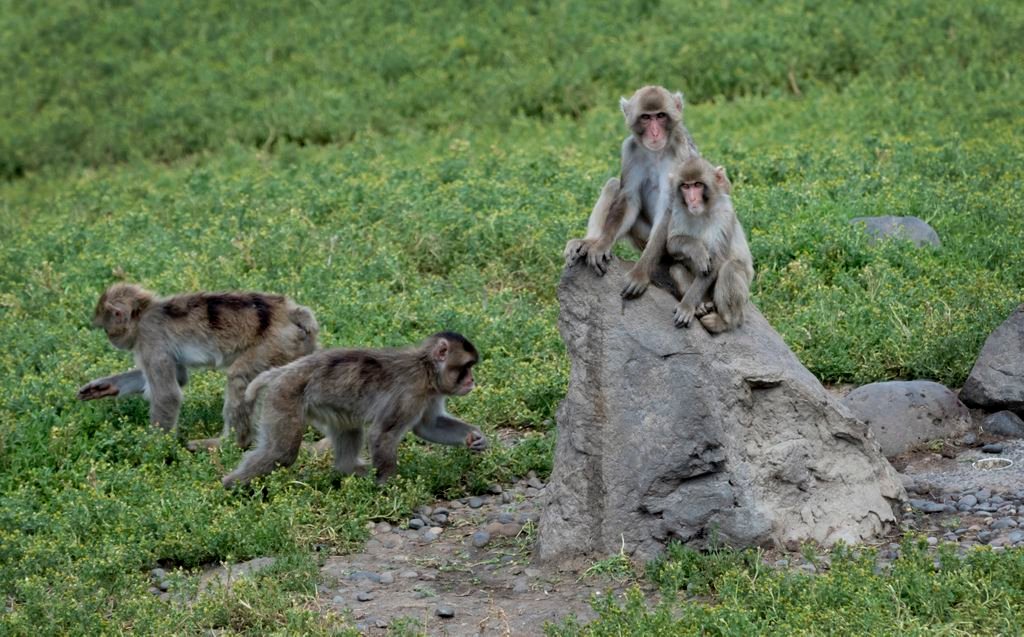
Featured photograph: Japanese macaques at the Oregon National Primate Research Center, photographed for a 2020 OHSU story about maternal diet and brain development. This archival image does not depict the CHD8 or SHANK3 research animals. Photo: OHSU/Kristyna Wentz-Graff. Original source.
American neuroscience researchers face a difficult transition as federal agencies encourage alternatives to animal experiments and one of the nation’s largest primate research centers plans to reduce its monkey population.
A November 2 investigation by The Transmitter documents concerns among researchers working on autism-linked genes at the University of California, Davis, Massachusetts Institute of Technology and collaborating laboratories. Their central question is whether specialized facilities and years of scientific expertise can be preserved as the United States expands research methods that do not require animals.
A Genetic Experiment Years in the Making
In September 2025, a research team led by UC Davis professor David Amaral celebrated the birth of its first macaque carrying a variant in CHD8, a gene linked to autism and, in some people, intellectual disability and unusually large brain size.
The project, developed with the Oregon National Primate Research Center since 2020, aims to investigate how changes in CHD8 affect brain development. Researchers have been conducting genetic tests, behavioral observations and repeated magnetic resonance imaging scans. The team hopes to expand the research population, but its future partly depends on continued access to Oregon’s specialized reproductive and animal-care facilities.
These are early-stage animal experiments. They have not established a treatment for autism, nor do they imply that one animal model can reproduce the diverse experiences of autistic people.
What Monkey Studies Have Revealed
Another research program focuses on SHANK3, a gene associated with Phelan-McDermid syndrome, a rare genetic condition that can involve developmental disability and autistic characteristics.
A 2026 study published in Neuron examined genetically modified macaques carrying SHANK3 variants. Researchers documented differences involving sleep, exploration, social interaction, repetitive behavior, brain connectivity and certain learning tasks.
Scientists say primates can answer some neuroscience questions that mice cannot, particularly where brain regions and social information processing differ. But differences observed in monkeys should not be treated as a complete model of human autism or as proof that an experimental therapy will work in people.
Oregon’s Research Center Faces Major Changes
The Oregon National Primate Research Center has become a focal point of the national debate. On July 27, 2026, the Oregon Health & Science University Board of Directors approved the outline of a plan to gradually reduce its research colony and expand work on alternatives to animal experiments, according to Oregon Public Broadcasting.
The decision followed discussions about converting the facility into a sanctuary. That option did not proceed because of unresolved long-term funding requirements. The university did not order an immediate end to all primate studies, and the board set no specific reduction target or deadline.
Researchers worry that losing breeding facilities, trained personnel and specialized laboratory infrastructure could interrupt projects built over many years. Animal-welfare advocates support reducing primate experimentation and have urged more substantial changes.
Federal Investment in Alternatives
In June 2026, the National Institutes of Health announced the Office of Research Innovation, Validation, and Application. The office is intended to develop and validate human-based research technologies, including three-dimensional tissue models and computational methods, and to reduce or replace animal use where scientifically appropriate.
Such technologies may provide more direct information about human biology. Yet scientists still need to establish which approaches can reproduce complex interactions among brain regions, hormones, immune systems and behavior, and which research questions require other methods.
What About the People Research Is Supposed to Help?
The debate extends beyond laboratories. The Autistic Self Advocacy Network advocates greater participation by autistic people in deciding research priorities, alongside attention to communication, health care, education and community living.
For genetic conditions such as Phelan-McDermid syndrome, experimental gene therapies are also entering human clinical testing. One investigational approach, JAG201, is being studied in an early-phase clinical trial. Its safety and effectiveness have not yet been established.
The Questions Still Unanswered
Will Oregon retain the facilities needed for specialized genetic research? Can human-based technologies replace specific monkey experiments while preserving reliable results? How should researchers evaluate animal welfare as programs change? And how can autistic people and families affected by rare genetic conditions have a stronger voice in setting scientific priorities?
The choices made by universities, federal agencies and research funders could influence American neuroscience for years. The central challenge is to identify which approaches produce trustworthy evidence while respecting human needs and animal welfare.
Sources and Further Reading
- The Transmitter — Autism Research Involving Monkeys Contends With Uphill Battle (November 2, 2026)
- Neuron — Behavioral Phenotypes and Neuronal Biomarkers in an F1 SHANK3 Mutant Macaque Model (2026)
- NIH — New Office to Advance Human-Based Research (June 15, 2026)
- Oregon Public Broadcasting — OHSU Board Approves Primate Center Changes (July 2026)
- Autistic Self Advocacy Network — Research
- ClinicalTrials.gov — NCT06662188