

How hydrogen-producing catalysts, light-driven chemistry, enzyme nanoparticles and agricultural innovations could reshape water treatment—and why the consequences demand as much attention as the breakthroughs.
By Lotta Goddess | Khemetic.News | November 5, 2026
Introduction: The Next Water Revolution Has a Hidden Question
For more than a century, modern water treatment has been built around a straightforward objective: separate contaminants from water, destroy dangerous microorganisms and make the remaining water suitable for its intended use. That objective has saved lives. But it has also produced a complex industrial system in which pollution does not always disappear. Sometimes it is transferred into sludge. Sometimes it becomes concentrated in used filtration materials. Sometimes treatment changes one chemical into another whose environmental effects require further investigation.
Now researchers are testing other possibilities. What if wastewater could yield hydrogen fuel while pharmaceutical residues are being degraded? What if relatively inexpensive light-emitting diodes could produce reactive electrons capable of breaking stubborn chemical bonds? What if pollutant-degrading enzymes could be enclosed in protective protein structures? And what if farmers could prevent part of the contamination problem before pesticides reached waterways?
Four research programs published between 2015 and 2021 approached these questions from different directions. Later developments through 2026 provide a reason to revisit them. This investigation examines the science, what was actually demonstrated, what followed, the environmental tradeoffs, and how promising laboratory processes might fit into America’s existing infrastructure.
The central question is not simply whether a pollutant can be reduced under laboratory conditions. It is whether a technology works in complex real-world water, what chemicals or materials it introduces, what waste remains, how much energy it consumes, and whether communities can afford and independently verify its performance.
Part I — How America’s Water Treatment System Reached This Point
Water technology cannot be evaluated without the history of the systems that protect the public now.
1. The original revolution: filtration, disinfection and disease prevention
Modern treatment developed when contaminated water was a major cause of infectious disease. Sedimentation removed heavier material; filtration captured suspended particles; disinfection addressed microorganisms that could remain in clear-looking water. In 1908, Jersey City, New Jersey, became the first American city to routinely disinfect its community drinking-water supply. Public water treatment, alongside improved sanitation, helped dramatically reduce waterborne disease.
That history offers a warning against overstating any new catalyst. A chemical reaction that degrades an antibiotic is not automatically a reliable defense against viruses, bacteria or protozoa. Chemical removal and microbiological safety are distinct engineering tasks. See the CDC history of drinking-water treatment.
2. The Clean Water Act and modern wastewater plants
The 1972 amendments to the Federal Water Pollution Control Act, widely known as the Clean Water Act, expanded federal pollution controls and helped finance municipal wastewater infrastructure. Facilities typically combine preliminary screening and grit removal, primary settling, biological secondary treatment, and advanced or tertiary treatment where needed. Actual treatment trains vary with source water and intended discharge or reuse.
Microbial treatment remains central. Communities of organisms consume biodegradable organic material, and appropriately configured systems also remove nutrients. This is why many emerging technologies are best considered possible supplements to—not wholesale replacements for—existing plants. EPA: History of the Clean Water Act.
3. The modern contaminants challenge
Municipal and industrial wastewater can contain pharmaceuticals, personal-care ingredients, solvents, pesticides, synthetic dyes, microplastics and persistent industrial compounds. Some are removed or degraded in conventional processes; others pass through in part or emerge as transformation products. EPA has noted that ordinary municipal wastewater systems were generally not designed specifically to remove PFAS. That does not mean all treated wastewater is unsafe. It means performance has to be established for each contaminant and intended use. EPA: PFAS and water reuse.
Part II — Technology One: Generating Hydrogen While Treating Pharmaceutical Wastewater
The first proposed breakthrough changes the economics of treatment by trying to recover a useful product from a pollutant-removal reaction.
4. The 2021 cobalt–titanium catalyst study
In February 2021, Yaoyao Wu and colleagues at Sun Yat-sen University published research on a photocatalyst based on titanium dioxide nanosheets modified with cobalt oxide, Co3O4. The study in ACS ES&T Engineering examined whether the same illuminated system could degrade selected pharmaceuticals and generate hydrogen.
Under suitable light, titanium dioxide creates excited electrons and positively charged vacancies known as holes. But electrons and holes can recombine before participating in useful chemistry. The researchers engineered an interface between the two semiconductors and different crystal facets on the titanium dioxide surface to help separate the charges.
Oxidizing reactions occurred primarily at cobalt oxide sites while electrons at other sites contributed to hydrogen generation. The paper investigated enrofloxacin, ciprofloxacin and ibuprofen, with experiments varying catalyst loading, pollution levels, water acidity and other ions. A platinum cocatalyst was also used for hydrogen-production experiments. The work included experiments relevant to actual wastewater as well as controlled laboratory solutions.
These findings demonstrate a chemical approach, not a finished industrial hydrogen plant. The experiment did not show that the hydrogen produced would offset all the energy, equipment, lighting, manufacturing and gas-handling requirements of a full treatment system.
5. Why the hydrogen matters
Wastewater plants consume substantial electricity for aeration, pumps, membranes and disinfection. Recovering hydrogen might offset some demand, depending on how much usable hydrogen is produced and how the process is powered. Hydrogen has potential uses in industry, energy storage and fuel cells. But a hydrogen-producing reaction should not automatically be described as net-energy-positive, commercially profitable or universally renewable.
A lifecycle calculation would include catalyst manufacture and replacement, any precious metals used, illuminated reactor equipment, hydrogen collection, storage, maintenance and the resulting emissions. Organic compounds in wastewater may participate in the chemical electron balance, so this chemistry must also be distinguished from a simple claim of splitting pure water with sunlight alone.
6. Environmental hazards and unanswered questions
Cobalt, titanium and platinum have material-supply and processing impacts. A proposed treatment reactor must demonstrate that catalyst particles remain contained or are reliably recovered, that dissolved metals do not create unacceptable downstream exposure, and that spent materials have a defensible management route.
Another crucial distinction is degradation versus mineralization. If the original antibiotic becomes undetectable but the reaction produces intermediate compounds, treatment may be incomplete. Researchers and utilities need to measure residual activity, transformation products and toxicity—not just disappearance of a parent molecule. Subsequent reviews of solar photocatalytic wastewater reactors continue to identify scale-up and limited pilot implementation as challenges.
Part III — Technology Two: The Green LED and the Power of Hydrated Electrons
A second approach investigates highly reducing electrons rather than the oxidation reactions at the center of many familiar advanced-treatment technologies.
7. The 2017–2018 hydrated-electron research
Robert Naumann, Florian Lehmann and Martin Goez of Martin Luther University Halle-Wittenberg described a system for generating hydrated electrons with a green light-emitting diode. Their paper, “Generating Hydrated Electrons for Chemical Syntheses by Using a Green Light-Emitting Diode (LED)”, appeared online around the 2017–2018 publication period and was published in the 2018 issue of Angewandte Chemie International Edition.
A hydrated electron is an electron stabilized briefly in an aqueous environment, capable of driving powerful chemical reduction reactions. The researchers used micellar compartments, photoredox chemistry and photon pooling, with vitamin C as a consumable reducing agent. They reported a catalyst turnover number of 1,380 and demonstrated reactions including dechlorination and defluorination.
The scientific advance was that relatively accessible LED equipment could drive reactions associated with extremely powerful reducing chemistry. The paper primarily studied chemical syntheses under laboratory conditions; it did not establish a municipal drinking-water treatment system. Oxygen, natural organic matter and dissolved constituents in real wastewater can compete with target pollutants for reactive electrons. The whole process, not just the life span of a single electron, must be assessed for residual chemicals and environmental effects. PubMed entry and abstract.
8. Why reduction and oxidation complement each other
The cobalt–titanium photocatalyst and hydrated-electron process target different reactions. Oxidation removes electrons from suitable molecules; reduction supplies them. Different contaminants respond to different chemistry. A carefully designed multi-stage system might employ both, but conditions suitable for an enzyme or reduction process can be disrupted by strong oxidants introduced elsewhere. These methods require separate, compatible stages, not an indiscriminate mixture.
9. The newer PFAS connection
Hydrated-electron research later expanded toward persistent fluorinated chemicals. In 2025 research in ACS ES&T Water, scientists tested far-ultraviolet light at 222 nanometers in combination with sulfite. Under reported experimental conditions, approximately 85% of the original PFOS was removed while about 66% defluorination was measured over six hours. Those are different outcomes: a reduction in the original PFOS molecule does not establish that all fluorinated products have been destroyed.
This far-UV/sulfite treatment is not the same apparatus as the earlier green LED study. It shares a broader scientific principle. The latest challenge is delivering reducing electrons efficiently in realistic water and accounting for every significant transformation product, not merely showing an impressive rate in a laboratory vessel.
Part IV — Technology Three: UCLA’s Protective Enzyme Nanoparticles
A third research program attempted to make an existing biological reaction more durable by protecting its catalytic machinery.
10. What is a vault nanoparticle?
In 2015, a UCLA team including Meng Wang, Danny Abad, Valerie Kickhoefer, Leonard Rome and Shaily Mahendra described packaging a pollutant-degrading enzyme in a hollow protein assembly called a vault. The ACS Nano study used manganese peroxidase, an enzyme associated with biodegradation of organic contaminants. The enzyme was fused to a domain that binds to the interior of the vault.
Vaults are naturally occurring protein structures in many eukaryotic cells; engineered vault nanoparticles can carry selected enzymes inside them. The protected formulation maintained catalytic activity and improved stability. In tests with phenol, the vault-packaged preparation achieved about three times as much biodegradation over 24 hours as the unpackaged comparison.
Rather than inventing a universal pollutant-destroying enzyme, the scientists improved the way an enzyme survived and worked. That is a meaningful proof of concept, but phenol is a model contaminant: success with it does not establish equivalent treatment of all drugs, pesticides, heavy metals or PFAS.
11. Why use isolated enzymes instead of living microbes?
Conventional wastewater facilities already exploit the chemistry performed by living microbes. Isolated enzymes offer the possibility of targeting particular compounds without the operating requirements of growing and maintaining a whole microbial culture. Immobilized enzymes might operate inside membranes or recoverable cartridges in a specialized treatment stage.
Yet such systems bring manufacturing costs, limited enzyme lifetimes, difficult water chemistry and questions about transformation products. Engineered protein nanoparticles also require environmental fate assessment. That their basic structure is biological does not establish safety under every formulation and exposure scenario.
12. What could enhance vault-based treatment?
The broader field of enzyme treatment has explored immobilization on membranes and porous materials, stabilization methods and reusable reactors. One plausible engineering path is a recoverable module that keeps the enzyme structure from entering treated water. But claims of long-term utility-scale performance require testing of the specific enzyme and design. Widespread municipal use of the particular UCLA vault formulation has not been established by the sources reviewed.
Part V — Technology Four: Stop Some Pollution Before It Enters the Water
The fourth technology belongs in this investigation precisely because it does not begin at a wastewater plant.
13. MIT’s 2016 droplet physics study
Farmers apply pesticides, fertilizers and other treatments to crops, but part of the spray may rebound from water-repelling leaves or travel off target. In 2016, MIT researchers Maher Damak, Md Nasim Hyder and Kripa Varanasi investigated how to make droplets stick. Their Nature Communications paper described dividing spray into two streams with oppositely charged polymer additives. When droplets interacted at the leaf, they created water-attracting features that improved retention.
The method addressed a fast physical process: droplets spread and rebound in milliseconds, too quickly for some conventional surface-tension adjustments to take effect. The researchers estimated from laboratory evidence that improved retention might dramatically reduce the amount of spray needed, but such projections should not be mistaken for a universal field result for every crop and formulation.
The study received a 2020 authorship correction removing Seyed Reza Mahmoudi from its author list and revising author contributions. That correction did not report a reversal of the experimental conclusions.
14. The 2025 successor and its commercial path
MIT reported a simpler successor in March 2025. Researchers including Kripa Varanasi studied thin coatings around droplets, using small amounts of oil or compatible agricultural spray adjuvants. The new approach can be adapted to single-nozzle equipment rather than requiring the earlier dual-stream method. Laboratory tests using high-speed imaging found that these coatings could dramatically reduce bounce and improve retention.
The related company AgZen developed RealCoverage monitoring equipment for evaluating agricultural spray deposition. MIT reported that the company claimed farmers using its monitoring approach saved 30% to 50% on pesticide spending and projected use on about 920,000 acres during 2025. Those are company-reported results and deployment plans, not independently established reductions in nationwide runoff. The new droplet-coating equipment was undergoing a separate commercialization effort. MIT’s March 25, 2025 report distinguishes the systems.

15. Better retention is not proof of a safer pesticide
Keeping more spray on leaves might reduce waste, off-target loss and runoff. But it does not make the pesticide itself harmless. Environmental effects depend on active ingredients, toxicity, persistence, worker exposure, residues and the actual quantity applied. Conservation practices, vegetated buffers, soil management, safer alternatives and responsible application are still essential. EPA: Agricultural nonpoint-source pollution.
Verified publisher video
MIT’s original 2016 research report includes an on-page video showing the droplet-retention concept: watch the MIT research video. This documents the 2016 method, not the different 2025 coating approach. Linking the original publisher avoids an unverified reupload.
Part VI — What Existing Treatment Technologies Already Do
Emerging chemistry must be compared with treatment methods that already have operating histories.
16. Biological treatment
Activated-sludge systems and other biological processes use microbial communities to remove biodegradable organic pollution; some systems also remove nitrogen and phosphorus. They can treat large volumes but require careful operations, often including power-hungry aeration and sludge management. Membrane bioreactors and improved process controls seek to strengthen these established functions.
17. Activated carbon and ion exchange
Granular activated carbon can adsorb selected dissolved pollutants, including some organic chemicals and PFAS. Specialized ion-exchange resins capture selected ions and compounds. These are practical separation tools but eventually produce spent materials or concentrated regenerant waste. Removing a contaminant from water is not the same as destroying it.
18. Reverse osmosis and membranes
Pressure-driven reverse osmosis can reject a broad range of dissolved contaminants and is used for desalination and advanced reuse. Its weaknesses include energy consumption, fouling, maintenance and a concentrated reject stream requiring appropriate management. It is a separation step, not a complete answer to pollutant destruction.
19. Ultraviolet treatment, ozone and oxidation
Ultraviolet light can disinfect water, and UV coupled with hydrogen peroxide can produce reactive species that oxidize selected organic contaminants. Ozone supports other treatment functions. The chemical products, energy use, interfering water constituents and possible byproducts require assessment. Success against one contaminant does not imply broad PFAS destruction. EPA treatment technology overview.
20. Constructed wetlands
Engineered wetlands use plants, soil and microorganisms for selected pollutant-removal processes and can offer habitat benefits. They require appropriate land, hydrologic design and monitoring, and they are not automatically suitable for drinking-water production. Their effectiveness varies by contaminant and season. EPA: Constructed wetlands.
Part VII — How These Technologies Could Work Together
The most credible future is not a single miracle filter. It is a series of treatment and prevention steps chosen for a defined water source and verified contaminants.
21. A treatment system built from complementary barriers
At the watershed level, better agricultural application and runoff controls could reduce pollution before it spreads. Industrial facilities could pretreat troublesome discharges. Municipal wastewater plants could continue using screening, settling, biological treatment and solids removal. Downstream, activated carbon, membranes, oxidation, reduction or specialized enzyme modules could target contaminants that remain.
A light-driven photocatalyst might eventually be tested on a compatible pharmaceutical side stream. A hydrated-electron reactor could be studied for certain reduction-resistant pollution. An immobilized enzyme module might target specific degradable compounds. Appropriate disinfection and monitoring would remain essential to the intended reuse or release.
Some technologies work against each other if combined incorrectly: oxidants can disable enzymes; oxygen can scavenge hydrated electrons; cloudiness limits light penetration; salt and organic matter alter reaction efficiency. Integration requires separate stages, pretreatment and testing—not merely fitting every invention into the same reactor.
22. Three connected systems—not one universal machine
Agriculture: precision spraying, reduced chemical use where possible, nutrient management, vegetated buffers, drainage controls and watershed testing.
Municipal wastewater: screening and settling, biological treatment, residual solids separation, contaminant-specific advanced polishing, disinfection and monitored discharge or reuse.
Industrial side streams: pollutant identification, targeted pretreatment, verified chemical transformation or separation, and traceable handling of any concentrated waste.
Part VIII — What Real U.S. Facilities Have Demonstrated
Laboratory inventions must eventually be compared with public infrastructure that runs every day.
23. Orange County’s Groundwater Replenishment System
The Orange County Water District and Orange County Sanitation District operate the Groundwater Replenishment System in California. Operating since 2008, it uses highly treated wastewater followed by advanced barriers including microfiltration, reverse osmosis and ultraviolet light combined with hydrogen peroxide. Its stated production capacity is 130 million gallons per day, helping replenish groundwater and protect against seawater intrusion.
This is not a deployment of the experimental UCLA vault nanoparticles or the 2021 hydrogen-producing catalyst. It is a demonstration of the size, operational sophistication and verification that a new public water technology must eventually meet. Orange County Water District: GWRS.
24. Aurora, Colorado
EPA has described Aurora’s Prairie Waters system as another example of potable reuse that employs granular activated carbon, with up to 10 million gallons per day of treatment capacity. Its design differs from Orange County’s. That is the point: source water, target contaminants, local conditions, technical resources and budgets dictate the best combination.
Part IX — The Environmental Costs That Innovation Headlines Often Leave Out
Water cleanup cannot be measured only at the clean-water outlet.
25. Capturing is not necessarily destroying
Separation transfers pollutants into a filter, resin, membrane concentrate or sludge. Transformation changes molecules into other chemical species. More complete mineralization may convert organic contaminants to simpler compounds, but the degree of destruction must be measured. A reported 90% decline in a named pharmaceutical does not guarantee a 90% reduction in toxicity. A 2024 review emphasizes the importance of characterizing transformation products during advanced oxidation.
26. PFAS: the waste remains somewhere
Carbon, resins and membranes may remove PFAS from treated water while concentrating them in residuals. The next question is what happens in disposal, regeneration, transport or destruction. The EPA’s 2026 interim PFAS destruction-and-disposal guidance discussed uncertainties around landfilling, underground injection, thermal treatment and emerging approaches, and noted potential landfill releases greater than previously thought. The guidance is nonbinding; it does not itself impose new disposal requirements.
27. Energy, climate and lifecycle footprints
Pressure systems, lighting, chemical manufacture, pumping and material replacement have environmental footprints. Hydrogen generated in a reactor could potentially recover useful energy but does not prove that the entire system has favorable net energy or climate impacts. Lifecycle analysis should account for power supplies, construction, catalyst manufacture and end-of-life disposal.
28. Nanoparticles and unintended contamination
Nanoscale materials offer reactive surfaces but raise questions about particle losses, material containment, leaching, biological exposure and ecological fate. Protein-based vault structures raise different, not nonexistent, questions. Safety judgments must rest on the specific formulation, concentration, exposure and measured effects, not assumptions about whether a material is synthetic or biologically derived.
29. Pesticide efficiency is not pollution prevention by itself
Improving deposition could reduce runoff and total chemical usage, but it could also alter residue distribution. Applications should be assessed for worker safety, nearby people, soil and aquatic organisms and pollinators. Efficiency should be tracked through actual environmental measurements and combined with other conservation measures.
Part X — Whose Water Systems Can Afford the New Science?
Technical performance is only part of infrastructure justice.
30. The American infrastructure bill
EPA’s seventh Drinking Water Infrastructure Needs Survey estimated $625 billion in nationwide drinking-water system needs over twenty years and more than $4 billion in needs for existing Tribal drinking-water infrastructure. These are drinking-water infrastructure figures, not a calculation of all wastewater modernization costs. Still, they show the scale of investment required in pipes, plants, storage and maintenance. A laboratory catalyst cannot replace a deteriorating distribution network. EPA survey.
31. Tribal sovereignty, community benefit and long-term costs
Tribal nations and underserved communities need sustainable operations, independent monitoring and meaningful control over technology decisions. A system dependent on expensive specialty materials, proprietary servicing or complex waste disposal can impose long-term costs after a research grant or pilot project expires. Conversely, simple and maintainable modular systems may offer advantages where local conditions suit them. Technology procurement should consider sovereignty, water rights, affordability, transparency and workforce training.
32. Commercial evidence versus public evidence
Universities and companies have legitimate roles in moving scientific results toward market. But a university announcement, laboratory experiment, company-reported savings and independent long-term field measurement are different evidence categories. Public utilities should demand replicable performance, a complete cost picture, residuals management plans, operational reliability and independent testing.
Part XI — The Questions That Must Be Answered Before Deployment
What was measured? Parent chemical concentrations, total toxicity, mineralization, defluorination and pathogen inactivation are not interchangeable.
Was real wastewater treated? Laboratory solutions often lack competing ions, organic matter and suspended solids.
Was operation continuous and repeatable? A successful small batch does not establish municipal throughput.
Where do catalysts, nanoparticles and spent media go? Recovery and disposal are parts of the process.
What happens to residuals? Treatment must include brine, sludge, spent carbon and any transformation products.
What is the net energy balance? Include lighting, pumping, manufacturing and the usable recovered energy.
Can the system protect public health? No experimental chemical process should displace essential microbial barriers without full validation.
Who pays after the pilot? Operating staff, replacement parts and long-term maintenance determine whether the system serves the public.
Part XII — Scientific and Infrastructure Timeline
1908: Routine municipal drinking-water disinfection begins in Jersey City, an early U.S. milestone.
1972: Federal Clean Water Act amendments reshape pollution controls and treatment investment.
2008: Orange County’s Groundwater Replenishment System begins operation.
2015: UCLA researchers report enzyme-loaded vault nanoparticles.
2016: MIT publishes research into charged-polymer droplet retention.
2017–2018: Researchers report green LED hydrated-electron chemistry.
2021: Researchers publish the cobalt–titanium photocatalytic hydrogen-and-pharmaceutical study.
2025: MIT reports simpler spray coating and commercialization progress; other researchers investigate hydrated-electron PFAS chemistry.
2026: EPA updates interim guidance on PFAS destruction and disposal.
The timeline combines established infrastructure with experimental discoveries. Publication or laboratory proof of concept does not imply utility-scale deployment.
Conclusion: Cleaning the Water Means Following the Pollution
The four original programs are scientifically meaningful but address different parts of the pollution problem. The cobalt–titanium catalyst linked selected pharmaceutical degradation with hydrogen generation. Green LED chemistry offered a way to produce powerful reducing electrons. UCLA’s vault nanoparticles protected a targeted pollutant-degrading enzyme. MIT’s droplet studies showed a path toward reducing chemical losses before water becomes contaminated.
None is a universal replacement for modern wastewater treatment. The best opportunity is to combine validated prevention, biological treatment, selective removal, careful chemical transformation, residuals management and public-health monitoring.
A treatment process can make water cleaner while creating new disposal obligations. It can reduce an antibiotic while leaving transformation products. It can generate hydrogen while consuming significant energy and materials. It can improve spray retention while still applying ecologically hazardous chemicals. Those are reasons to evaluate technology comprehensively—not reasons to abandon innovation.
The next standard should be whether the entire process—before treatment, during treatment and after disposal—makes communities and ecosystems safer.
Primary Studies and Official Sources
Wu and colleagues, 2021: Co3O4/TiO2 hydrogen and pharmaceutical photocatalysis.
Naumann, Lehmann and Goez, 2018: Green LED hydrated electrons.
Wang and colleagues, 2015: Vault-packaged pollutant-degrading enzymes.
Damak, Hyder and Varanasi, 2016: Droplet deposition and 2020 correction.
MIT News, 2025: New spray coating and AgZen developments.
ACS ES&T Water, 2025: Far-UVC/sulfite PFAS research.
2024 review: Transformation products and toxicity.
2025 review: Solar photocatalytic wastewater reactors.
EPA: Drinking-water treatment technologies.
EPA: 2026 PFAS disposal guidance.
EPA: Drinking Water Infrastructure Needs Survey.
Orange County Water District: Groundwater Replenishment System.
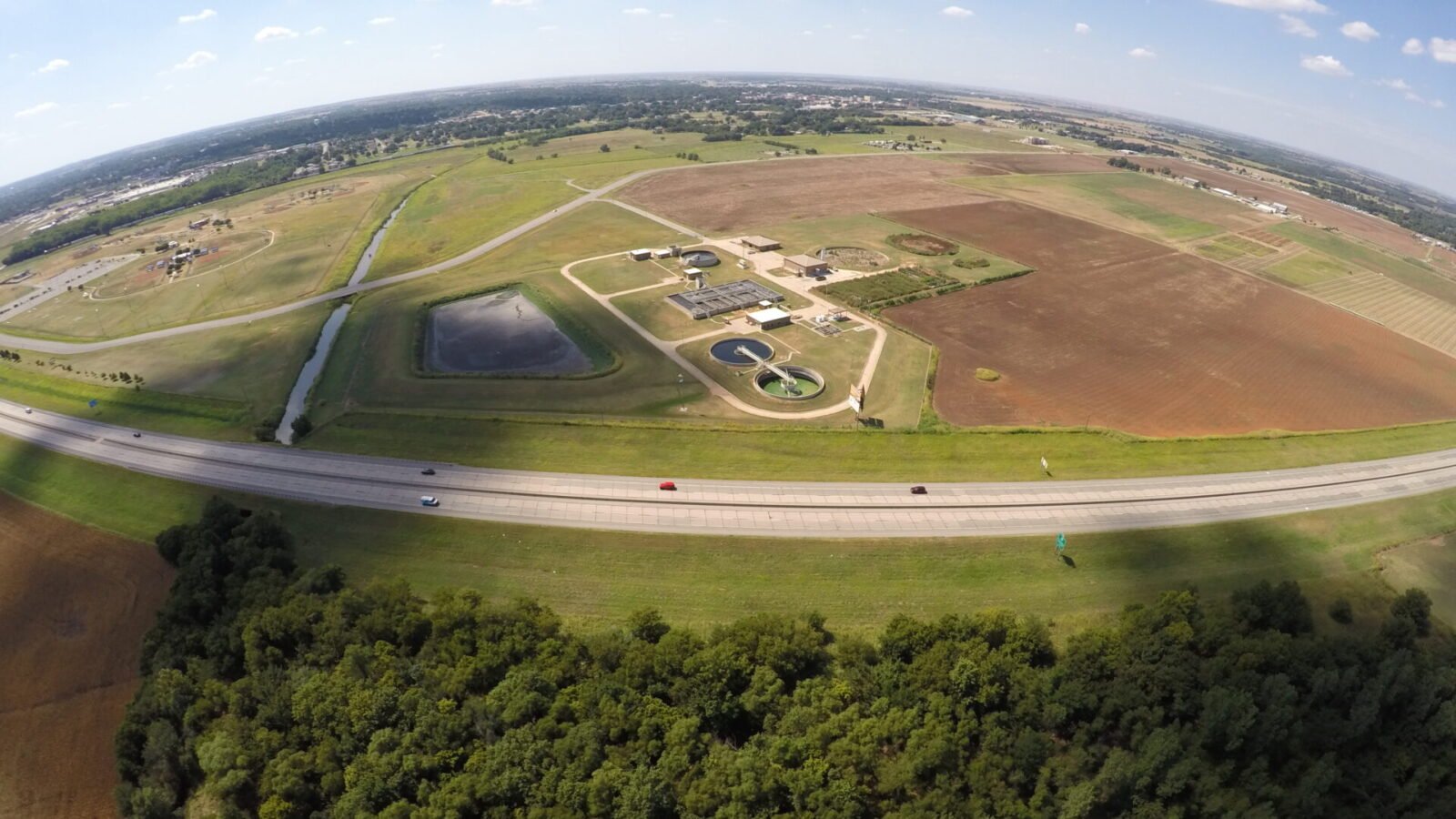
USGS: Chickasha wastewater-treatment image and public-domain status.
USDA ARS: Peggy Greb agricultural spray photograph and USDA ARS image licensing.
Reporting note: This article draws on peer-reviewed studies, public agency records and attributed institutional reporting. No firsthand interviews or independent laboratory tests were conducted. Laboratory findings, startup reports and operating water systems are distinguished throughout.