

By Lotta Goddess | Khemetic.News | November 10, 2026
A Texas jury’s $76 verdict against Bexar County is one piece of a larger, documented American debate over police authority on public roads. The evidence spans traffic stops that courts ruled unconstitutional, drug-dog disputes, roadside forfeitures and high-tech license-plate tracking—not one proven nationwide conspiracy.
In September 2026, a federal jury found that a Bexar County, Texas, sheriff’s department policy or custom had caused unconstitutional traffic enforcement against Alek Schott, a Houston father driving home from work in March 2022. The jury found that the stop was unjustified, officers improperly extended it, and deputies searched Schott’s truck without probable cause. After 76 minutes at the roadside and a fruitless search, Schott had received only a warning. He asked the court for $76—one dollar per minute—and won that amount. The Institute for Justice case archive includes the verdict and jury instructions; its September 28, 2026 account explains the verdict. The verdict form separately records findings about the detention and search.
The surveillance behind that roadside encounter was not an isolated vehicle lookup. An Associated Press investigation published November 20, 2025 found that federal officers were analyzing license-plate data to flag American drivers based on travel patterns, then passing tips to local officers who could make traffic stops. In Schott’s case, Border Patrol-linked intelligence about an overnight business trip preceded the stop. His own dashcam contradicted the deputy’s asserted reason: crossing a highway fog line.
Schott declined consent to a search. Deputies called a canine unit, whose handler reported an alert. A body-camera video shows a disputed hand gesture just before the dog jumped onto the truck. It is important not to overstate the evidence: Schott’s legal team described the alert as manipulated, and the jury found the vehicle search lacked probable cause. That is not a separate adjudication of a criminal charge that the handler deliberately fabricated the alert. No drugs or other illegal items were found in the truck.
How license-plate surveillance can become an unannounced police investigation
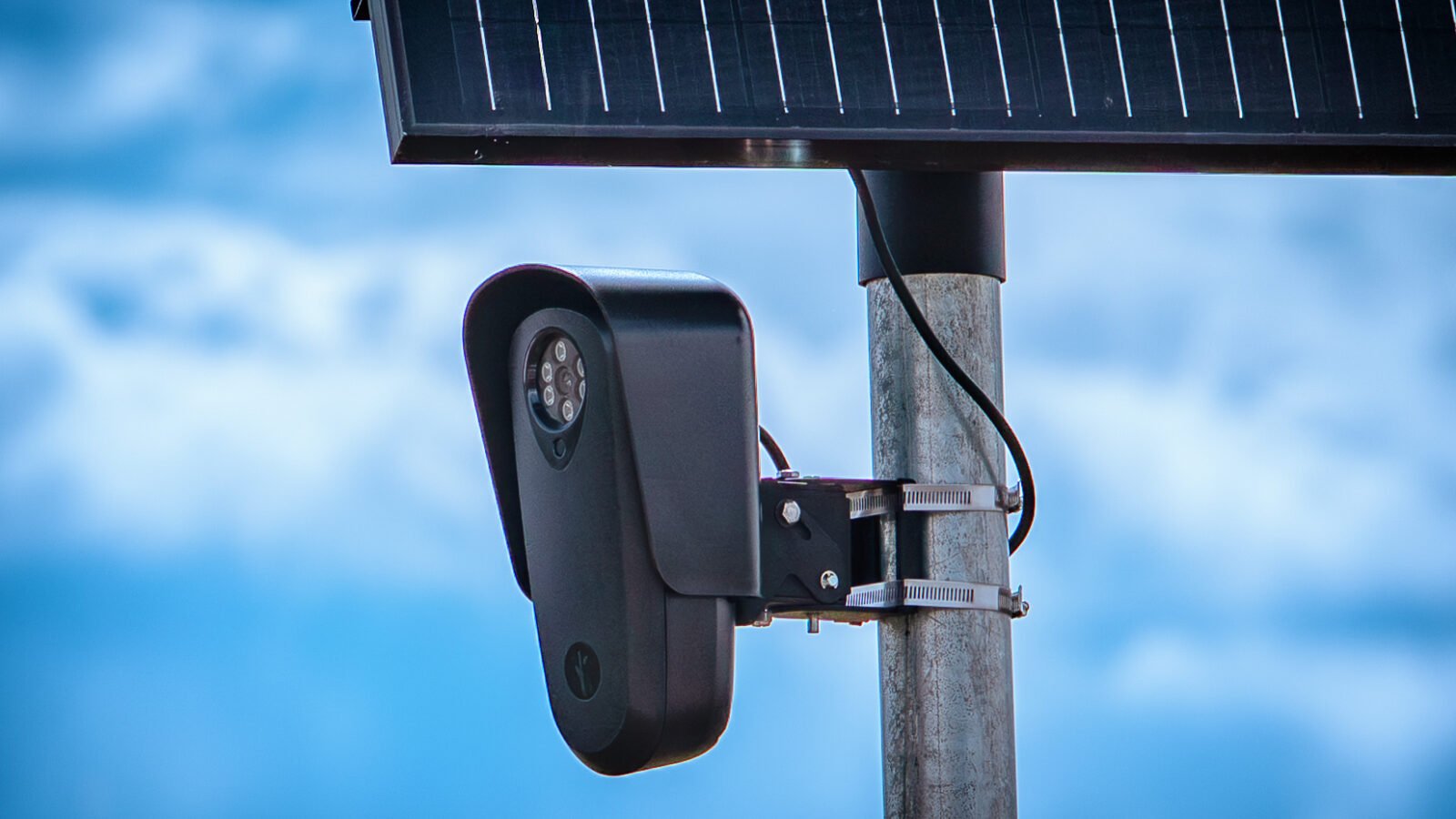
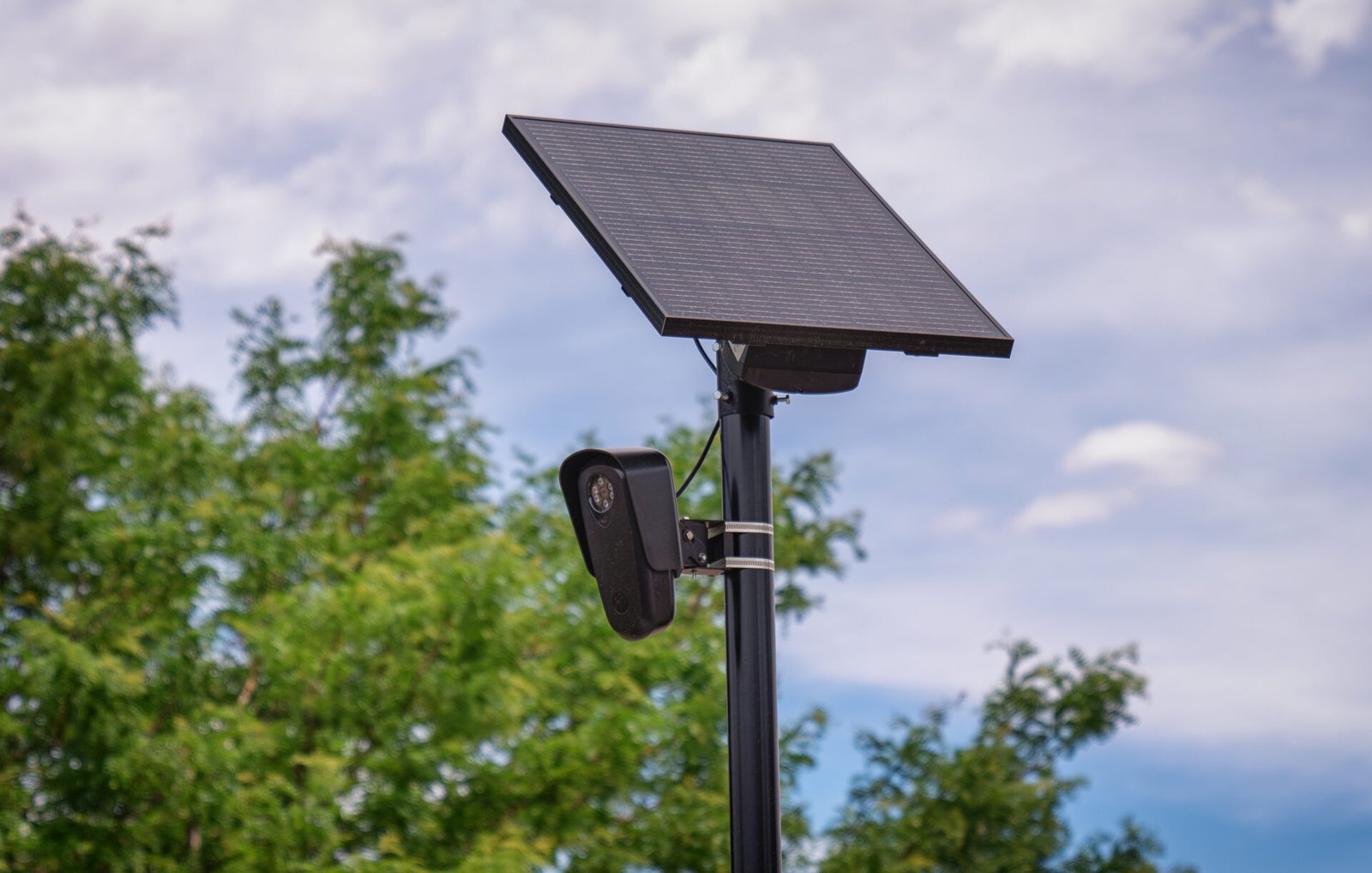
Automated license plate readers (ALPRs) photograph passing plates and associate them with time and location. Multiple sightings can reveal an individual’s travel history, including where a vehicle passed, how frequently it passed and whether its route differs from previously observed patterns. Police legitimately use plate readers to locate stolen vehicles, find missing persons and investigate crimes. But extensive histories of routine travel have raised difficult questions about reasonable suspicion, proportionality, oversight and warrant requirements.
The AP reported that Customs and Border Protection’s Conveyance Monitoring and Predictive Recognition System uses license-plate observations to identify what agents regard as unusual travel. Its analysis found cameras in Texas, Arizona, California and Michigan, including sites serving Phoenix, Detroit and travel corridors toward Chicago. The AP also examined messages from a Texas federal-local group called Northwest Highway, where leads about vehicles were exchanged through WhatsApp. Some cameras were disguised as construction equipment.
When a federal agent passes an intelligence lead to a local police officer, the officer may cite an observed traffic offense as the basis for a stop. Some officials call this a whisper stop or wall stop. Withholding the investigative source can make it difficult to challenge the true origin of a stop in court. CBP said its technology is used to disrupt criminal networks and is governed by federal law, constitutional protections and internal policy. An intelligence tip is not itself proof that a driver committed an offense. Read the AP’s sourcing and agency response.
Ten documented comparisons from other states and jurisdictions
1. Kansas: The Highway Patrol’s ‘Two-Step’ questioning tactic
In Shaw v. Smith, several out-of-state motorists challenged Kansas Highway Patrol troopers who appeared to complete traffic stops, walked away and then returned to question drivers about drugs or request consent to search. A federal trial court found a pattern of unconstitutional detentions. On January 29, 2026, the Tenth Circuit recognized a pattern of constitutional violations and upheld parts of the injunction’s training and recordkeeping remedies, but held that some provisions dealing with out-of-state vehicles and the Two-Step were overly broad. The appellate court affirmed in part, reversed in part and remanded—it did not make every variation of the Two-Step categorically illegal.
2. Oklahoma: A month of travel records before one traffic stop
In United States v. Kyle, decided October 1, 2026, Tulsa County Sheriff’s Deputy Freddie Alaniz searched information from Flock and Motorola’s VehicleManager concerning a driver’s historical travels before the stop. Federal Judge Sara Hill concluded that the warrantless search through the aggregated location histories infringed the Fourth Amendment and suppressed resulting evidence. The judge separately found a lawful basis for the initial following-too-closely stop, but inadequate grounds to prolong it as officers did. The ruling applied to the particular database investigation and facts, not every ALPR photograph anywhere.
3. Nebraska: The Supreme Court limits drug-dog delays
In Rodriguez v. United States (2015), Valley Police Officer Morgan Struble finished a warning and continued to detain Dennys Rodriguez to conduct a dog sniff after Rodriguez refused consent. The Supreme Court ruled that a police officer cannot prolong a traffic stop to investigate unrelated drugs without independent reasonable suspicion. A dog sniff conducted while an otherwise lawful stop remains properly in progress can be different.
4. Arizona: Court finds racially discriminatory traffic enforcement
In Melendres v. Arpaio, a federal judge in 2013 found that the Maricopa County Sheriff’s Office had discriminated against Latino drivers and passengers during immigration-oriented traffic operations, violating constitutional protections. The court imposed reforms and independent monitoring. This involved documented discriminatory policing—not a claim about Flock cameras or canine fabrication.
5. Washington: State courts may bar pretextual stops even when federal law permits them
The Washington Supreme Court held in State v. Ladson (1999) that police violated the state constitution by using a traffic infraction as a pretext for a general criminal investigation. Lacey police and a Thurston County sheriff’s detective had been pursuing a gang investigation. Washington’s Article I, Section 7 gives motorists protection beyond the federal standard announced in Whren.
6. Colorado: A plate mix-up and a $1.9 million family settlement
In Aurora, police conducting a stolen-vehicle stop in August 2020 ordered Brittney Gilliam and four children to the ground at gunpoint. Officers had mistaken her SUV for a reportedly stolen vehicle because plate numbers matched while the state registration and vehicle type did not. Aurora settled a subsequent civil lawsuit for $1.9 million in February 2024. The mistake illustrated the harm caused by insufficient verification of a database hit. It was not a K9 case or a court finding that a surveillance vendor deliberately supplied false information. Associated Press report.
7. Nevada: Cash taken at a traffic stop and transferred to federal authorities
In 2021, Nevada Highway Patrol officers seized more than $85,000 from Stephen Lara, who was not charged with a crime. They transferred the money to the Drug Enforcement Administration for federal forfeiture proceedings; it was later returned. Lara challenged the state patrol’s participation in federal adoption and equitable sharing under Nevada’s forfeiture statutes. A lower court prohibited the practice, and the Nevada Supreme Court heard the state’s appeal on November 5, 2026. The appeal’s final disposition is not established in the records reviewed for this article. Nevada Supreme Court case synopsis.
8. Virginia: A court upholds Norfolk’s camera network
In Schmidt v. City of Norfolk, residents challenged a citywide system of 176 Flock cameras. On January 27, 2026, a federal judge granted the city’s motion for summary judgment, rejecting the plaintiffs’ Fourth Amendment challenge under the facts and network configuration before that court. That decision shows that legal outcomes over ALPR monitoring are not uniform. Other courts have reached different conclusions when investigating targeted historical searches.
9. California: An official audit documents improper access to plate data
The San Francisco Police Department’s 2026 biannual surveillance report identifies approximately 400 fixed Flock cameras and says an internal audit found 299 queries of city plate data between May 2025 and May 2026 by Western States Information Network analysts acting for federal and out-of-state agencies. Officials said none of those identified queries referenced immigration or reproductive-health enforcement. The department also reported that a Flock ‘Nationwide Lookup’ feature had allowed some outside access without authorization; the company subsequently disabled that feature for California agencies. The audit is powerful evidence of policy violations or unauthorized access, but it is not proof that the vendor directed fabricated police stops.
A separate federal suit, Moore v. San Francisco, was voluntarily dismissed on January 28, 2026. That case should not be listed as pending or as having established the surveillance unconstitutional. Bloomberg Law’s dismissal report.
10. Texas: Tenaha’s roadside cash-seizure settlement
In Morrow v. City of Tenaha, motorists alleged that officials in Tenaha and Shelby County disproportionately stopped Black and Latino drivers and pressured them to surrender cash under threat of prosecution. The 2012 class-action settlement required reforms to traffic stops and asset-forfeiture practice. The defendants denied wrongdoing, and a settlement was not an admission of a constitutional violation. ACLU of Texas settlement announcement.
Another surveillance-driven stop in Texas: no charges followed
The AP separately documented the case of Lorenzo Gutierrez Lugo, who was driving a delivery truck toward Brownsville when a Kingsville officer stopped him in February 2025 after a Border Patrol tip. Investigators questioned him about routes, searched the truck with his consent, and found no contraband. He was nevertheless arrested on suspicion of money laundering and organized criminal activity over cash in his possession. The prosecutor did not ultimately bring criminal charges, and efforts to seize his vehicle and money were dropped. The account is based on the AP’s review of police and court records; it is not presented as a separate judicial verdict that all officers involved violated the Constitution.
Which companies and government bodies are involved?
Federal and local agencies named in the documented cases: U.S. Customs and Border Protection and Border Patrol; the Drug Enforcement Administration; the Bexar County Sheriff’s Office; the Kansas Highway Patrol; the Tulsa County Sheriff’s Office; the Maricopa County Sheriff’s Office; the Nevada Highway Patrol; and police in Norfolk, San Francisco, Aurora, Lacey, Valley, Kingsville and Tenaha. Regional information-sharing centers also appear in plate-reader records. Different agencies participated in different cases; their inclusion here does not establish they all follow one unlawful practice.
Private technology suppliers: Flock Safety supplies networked ALPR cameras and searchable plate histories used in Oklahoma, Norfolk, San Francisco and other departments. Motorola Solutions’ VehicleManager was identified in the Oklahoma court record; Motorola/Vigilant data sources were disclosed by San Francisco police. Rekor has also supplied plate-recognition technologies and was among private-sector platforms described in the AP’s federal-surveillance reporting. WhatsApp carried communications among officers in the Schott matter, but was not the plate-recognition system.
Technology suppliers and agencies say vehicle recognition assists legitimate investigations. Selling a product, or operating a licensed communications platform, does not alone prove involvement in a specific unconstitutional seizure. Legal responsibility depends on the actions, contracts, records and applicable law in each case.
What the Fourth Amendment actually permits
The controlling legal question often changes as an encounter progresses. Under Whren v. United States (1996), a valid, objective traffic violation may support a stop even where an officer also hopes to investigate other crimes. The actual traffic violation cannot simply be invented. Rodriguez (2015) holds that officers generally may not lengthen a completed stop for an unrelated dog sniff without independent reasonable suspicion. Under Florida v. Harris (2013), a trained dog’s reliable alert can support probable cause when the totality of the evidence warrants it. Courts can examine the handler’s conduct and reliability records when an alert is challenged.
Washington’s state constitution adds special protections against pretextual stops. California imposes statutory restrictions on ALPR retention, use and sharing under Civil Code sections 1798.90.51–1798.90.55. Lawsuits against state and local officers for established constitutional violations can proceed under 42 U.S.C. § 1983, subject to legal defenses and rules governing municipal liability. None of these rules means that a driver may safely obstruct officers at the roadside: disputes are generally best handled with preserved footage, records requests, counsel and court review.
What records would establish a systemic problem?
The next phase of accountable reporting should seek original ALPR logs, surveillance-vendor contracts, federal-local intelligence-sharing agreements, body-camera files, dashcam footage, K9 deployment and certification data, stop statistics and civil-forfeiture outcomes. Researchers should ask which plate searches prompted stops; what legal grounds were recorded; whether dogs alerted; whether contraband was actually found; and whether complaints led to judicial or internal findings. The results would help distinguish isolated mistakes, unlawful policies and uses that courts have permitted.
What remains unknown: The nationwide total of drivers stopped due to behavioral travel alerts is not established. The exact predictive rules used by federal analysts are not fully public. Not every accusation of a fabricated K9 alert has been proven. Different courts have reached different results about extensive ALPR searches. The verified record is serious enough without assuming every surveillance operation or traffic stop is illegal.
Watch the original incident and review the records
Video and primary case files: the Institute for Justice’s Schott case page includes its original case video, complaint, jury instructions and September 2026 verdict. The short-form explainer provided for this report summarizes the incident, but should be read alongside the court record rather than used as the sole source of legal conclusions.
Sources and further reading
- Institute for Justice, Schott case page and verdict files; September 28, 2026 verdict statement.
- Associated Press, federal travel-pattern surveillance investigation, November 20, 2025.
- Tenth Circuit, Shaw v. Smith, January 29, 2026.
- U.S. District Court, United States v. Kyle, October 1, 2026.
- U.S. Department of Justice, Melendres v. Arpaio history and remedies.
- Washington Supreme Court, State v. Ladson.
- Nevada Supreme Court, Lara appeal synopsis, November 5, 2026.
- Virginia District Court, Schmidt v. Norfolk, January 27, 2026.
- San Francisco Police Department, 2026 surveillance report and ALPR audits.
- ACLU Texas, Tenaha settlement; AP, Aurora family settlement.
Reporting note: This article is a public-records and published-source analysis, not firsthand investigation or an allegation that all named people and vendors acted unlawfully. Corrections and newly issued rulings should be attributed and dated.


