

Khemetic News Network | World Desk | Thursday, October 29, 2026
Reporting cutoff: approximately 7:30 a.m. U.S. Eastern time on October 29. This independently written briefing draws on reporting dated October 28–29. We distinguish peaceful assembly, organized work stoppages, documented clashes and disputed accusations. A report’s publication date may differ from the date of the event.
Four different developments illustrate why the word unrest needs precision. Indonesian students are demanding a stronger response to destructive forest fires; Spanish train drivers are taking industrial action over safety; a South African court is considering police concerns about threatened violence at anti-immigration marches; and an Italian judge has rejected the case for holding a researcher accused of facilitating violent demonstrations. These are separate events, not evidence of a coordinated international movement.
Indonesia: environmental protests spread as haze worsens
Classification: primarily public demonstrations; localized scuffles reported, not a blanket finding of rioting. Hundreds of students and civil-society activists assembled in Jakarta on Wednesday, October 28, calling on President Prabowo Subianto’s government to declare the country’s extensive forest fires a national disaster. Demonstrations were also reported in Makassar and Bandung. Some protesters wore gas masks to highlight dangerous smoke and respiratory concerns. Reuters reported that police and military personnel blocked some students and that scuffles followed; it did not establish that every gathering was violent. Reuters, October 28.
The fires, intensified by dry conditions and vulnerable peatlands, have created a regional haze problem affecting Indonesia and neighboring countries. Protesters also criticized government spending priorities, including the free-meals program. The government’s communications office said it welcomed student input, had prosecuted companies linked to the fires, delivered aid and would continue monitoring conditions. The Guardian’s October 29 reporting described broader dissatisfaction over economic pressures and government policy; those criticisms are attributed to demonstrators and analysts, not presented as established criminal findings. The Guardian, October 29.
What changed: KNN’s October 24 installment discussed Indonesian students demanding action on haze. The October 28 gatherings are a new reported mobilization in multiple cities, with specific government responses and reported police barriers. They should not be recycled as a fresh riot without evidence. KNN, October 24.
Spain: rail safety strike amid a national tragedy
Classification: labor strike, not a riot. Spanish train drivers went ahead on Thursday, October 29 with a previously planned strike seeking structural improvements to rail safety. The SEMAF union said the work stoppage had been arranged before a deadly high-speed rail collision on October 28 and urged caution about speculating on the accident’s cause. Rail operator Renfe reported significant disruption and offered affected passengers free ticket changes or cancellations. Reuters, October 29.
The crash near Toledo prompted national mourning and an intensive rescue and investigation. Reuters reported 69 deaths as of its October 29 account, a toll subject to change as recovery continues. The collision’s cause was under investigation; the strike’s pre-existing safety demands do not establish the cause of the crash. Industrial action aimed at workplace or public safety is distinct from violence in a street demonstration. This is a different labor dispute from the Qantas freight action in KNN’s October 28 briefing. KNN, October 28.
South Africa: court weighs threatened violence and the right to march
Classification: planned demonstrations, allegations of threatened violence, and separately documented prior attacks. South African police sought a court order to halt planned anti-immigration marches in Durban, saying they feared threats to burn a refugee reception office and further violence. The KwaZulu-Natal High Court issued an interim order on Wednesday, October 28, with a decision on making it final expected Friday. The group March and March, led by Jacinta Ngobese-Zuma, criticized the attempt to prevent demonstrations. Associated Press, October 29.
AP reported that earlier anti-migrant unrest included vehicles being burned, shops looted and a reported death. More than 500 soldiers had been deployed to the province. These earlier attacks must not be treated as proof that every person intending to join a future march plans violence. Equally, allegations of threats to a refugee facility require careful attribution and judicial scrutiny. The rights of peaceful demonstrators and the safety of migrants and asylum seekers are both material to the story. Associated Press, October 29.
What changed: KNN’s October 28 report covered South Africa’s security deployment. Today’s distinct development is the court proceeding over future marches, including the competing public-safety and freedom-of-assembly claims. KNN, October 28.
Italy: a court rejects the detention of a protest suspect
Classification: legal development following earlier violent incidents; alleged individual involvement not proven. On October 28, a Milan judge ordered the release of Youssef Siher, a freelance journalist and researcher arrested on October 24 over accusations linked to protest-related messages in a Telegram group. Judge Tiziana Landoni found insufficient serious grounds for the alleged offenses and noted that messages advocating violent conduct had been written by others, not Siher. Siher denied wrongdoing. Reuters, October 28.
Prime Minister Giorgia Meloni criticized the ruling, while Milan court president Fabio Roia objected to her comments. The prosecution invoked a newly introduced public-order offense. This decision does not erase the separately reported violence during earlier Milan demonstrations, but it does illustrate why arrest, accusation and judicial proof cannot be conflated. KNN’s October 27 coverage of Italian theatre workers’ industrial action was a separate, non-equivalent labor story. KNN, October 27.
Europe watch: protest grievances do not equal a single movement
A Reuters report published October 28 examined student-led demonstrations across France, Belgium, Italy and Albania, identifying education conditions, housing costs, job prospects and corruption concerns as overlapping grievances. It also reported that student-led organizing in Serbia contributed to an electoral change. Reuters described some violent incidents, but neither peaceful student participation nor protest-related property damage can be assumed for every location. A separate Reuters report dated October 25 said French organizers were calling for further October 31 rallies and a planned November 5 strike; those are scheduled actions, not events that have already occurred. Reuters, October 28; Reuters, October 25.
What to watch next
Watch for the South African court’s Friday ruling and any independently documented incidents at subsequent marches; the extent of Spanish rail disruption and official findings on the crash; Indonesian government action on the fires; and whether scheduled European demonstrations proceed peacefully. None of these future outcomes is known at this reporting cutoff. Where estimates or accusations differ, KNN will identify their sources and correct the record when verified information changes.
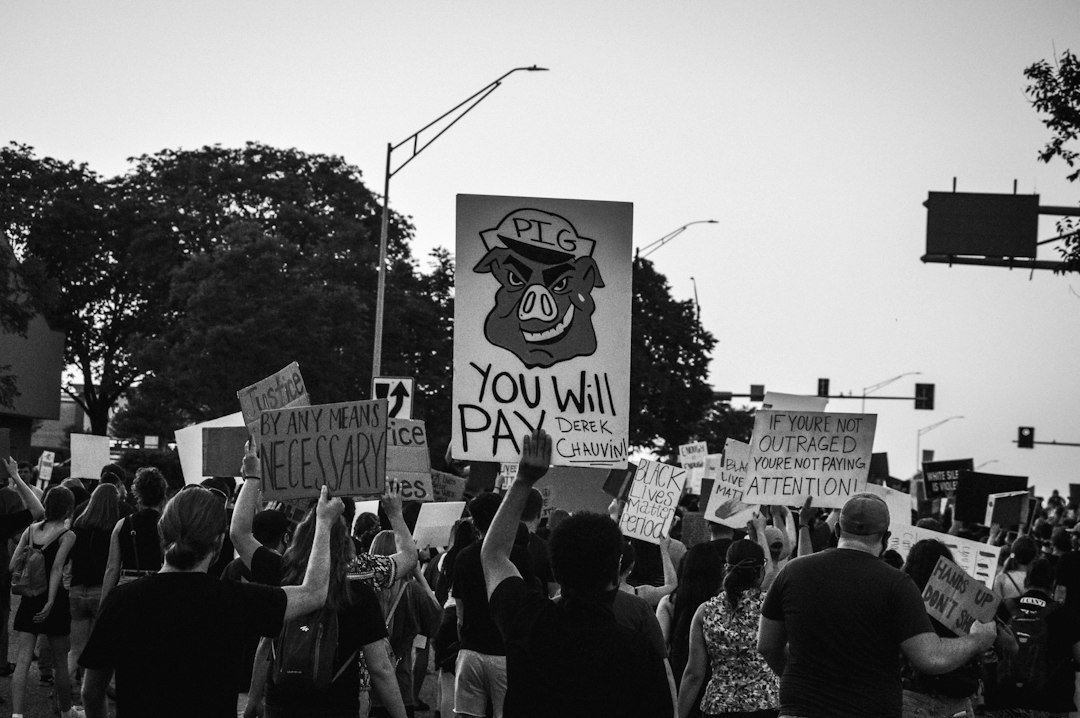
Editorial standards: This is an original KNN synthesis, not a reproduction of wire copy. Arrests are not convictions; reported scuffles are not synonymous with mass riots; announced strikes are not completed strikes. No claim of global coordination is made. Featured image: historical photograph of a 2020 Nebraska protest, by Kalea Morgan / Unsplash, used as licensed illustration. It does not depict any October 2026 event.

