KNN Science Desk | October 21, 2026
New satellite research is sharpening scientists’ view of how people affect freshwater stored beneath and across the Earth’s continents. In a study highlighted by NASA on October 20, researchers analyzed measurements from the GRACE and GRACE Follow-On satellite missions and identified 40 regions where trends in terrestrial water storage were significantly associated with human activities.
Satellites measure shifting water mass
The satellites detect minute changes in Earth’s gravity caused by mass moving around the planet. Because groundwater, lakes, rivers, soils and ice hold substantial mass, scientists can use these observations to estimate water storage over wide areas. For the new analysis, NASA reports the researchers studied data from April 2002 through November 2025, producing maps with five to ten times finer spatial detail than earlier approaches, while sacrificing some temporal detail.
Researchers then evaluated relationships between long-term storage changes, climate factors and human influences, including irrigation and reservoirs. An association is not a universal proof of a single cause at every location, and the method is better for broad regional patterns than for precisely locating an individual well.
Why California matters
California’s Central Valley was among the places where extensive groundwater irrigation was strongly associated with declining water storage. Similar patterns appeared in the southern High Plains and northern India. Other regions showed increases linked with reservoir impoundment or changes in agricultural land cover. The contrasting results suggest that water management can change not only how much water is accessible but also where it is stored.
For the Central Valley, the findings add another observation system to conversations about groundwater use, farm water demands and planning during drought. They do not establish the condition of every aquifer or prove that a single policy will reverse a measured trend.
Book of Maat: a philosophical comparison
The 2018 edition of the Book of Maat, in The Seven Principles of Maat (printed pages 156–157), describes the Principle of Rhythm in terms of recurring flows and cycles, and the Principle of Cause and Effect in terms of actions having consequences. This offers a philosophical lens for thinking about humanity’s responsibility toward water systems. The satellite study, by contrast, rests on measurable gravity data and statistical analysis. The text is not scientific evidence for the study’s results, and the NASA findings do not test spiritual principles.
Watch: how GRACE follows freshwater
Background video from NASA Goddard, originally published in 2018—not footage of the 2026 study.
Open NASA’s official video page.
Sources and image note
NASA Earth Observatory, October 20, 2026 · O’Neill and colleagues, Proceedings of the National Academy of Sciences (2026).
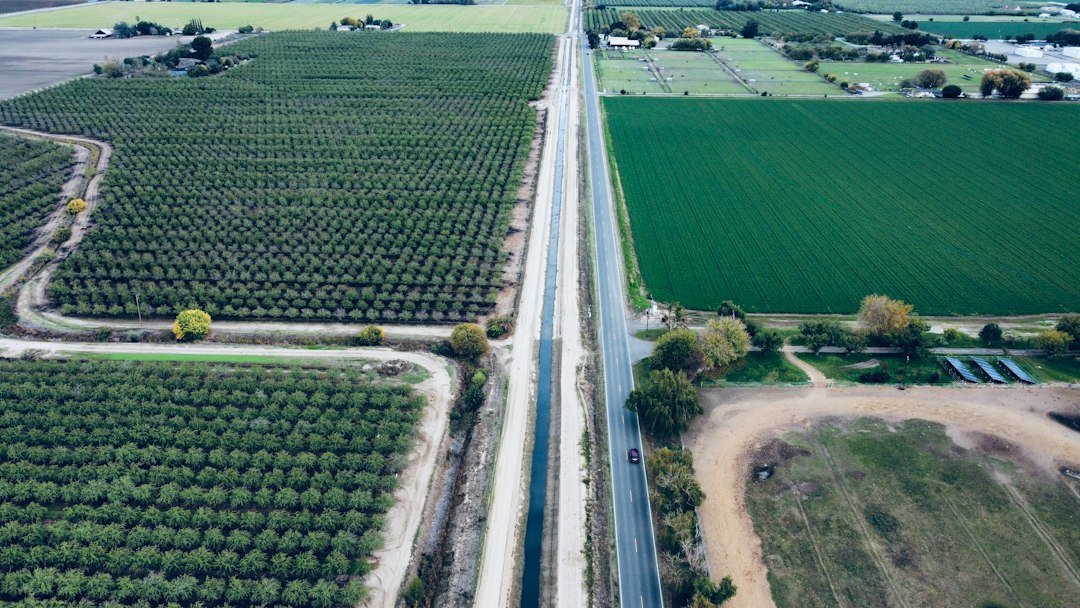
Featured image: representative agricultural landscape photographed by Vasile Stefirta / Unsplash, not a water-storage measurement map. Source satellite graphics are available in the NASA report. Editorial disclosure: the Book of Maat section is KNN’s interpretive comparison, not a NASA conclusion.