Updated November 5, 2026 | By Lotta Goddess | Khemetic.News
NASA’s Neil Gehrels Swift Observatory reentered Earth’s atmosphere over North Sumatra, Indonesia, on Wednesday, November 4, ending a space mission that lasted almost 22 years—roughly 11 times the observatory’s originally planned two-year lifespan. The U.S. Space Force confirmed its reentry at 7:39 a.m. Eastern Standard Time (12:39 UTC), according to NASA’s updated mission announcement.
The roughly 3,200-pound spacecraft spent more than two decades examining some of the universe’s most violent events. Its return to Earth followed faster-than-expected orbital decay and an unsuccessful attempt to prolong the mission by raising its orbit.
Where did the telescope reenter?
NASA said the reentry was recorded over the North Sumatra region of Indonesia, near 3.4 degrees north latitude and 98.6 degrees east longitude, on November 4. The event is no longer a forecast: both the date and approximate location were confirmed by the U.S. Space Force and reported by NASA.
NASA expected most of Swift to disintegrate during its passage through the atmosphere, but warned that some components might survive. The agency’s confirmation does not establish that fragments were recovered or that any person or property was struck.
Did the reentry threaten Americans?
Before reentry, NASA estimated an approximately 1-in-2,100 chance of harm to anyone on Earth from surviving debris. That was an overall event-risk estimate, not the chance of injury to any particular individual. The spacecraft’s orbit limited possible reentry locations to the band between about 20.6 degrees north and 20.6 degrees south latitude, including some U.S. tropical territory but excluding the contiguous states.
The actual confirmed reentry occurred over Indonesia, not over the continental United States. A ground-impact location for any surviving fragment has not been verified in NASA’s November 4 confirmation.
Why did Swift fall from orbit?
Swift launched in November 2004 to find and study gamma-ray bursts—brief, extraordinarily energetic flashes associated with violent cosmic events. Its three telescopes helped researchers observe bursts across gamma-ray, X-ray, ultraviolet and optical wavelengths and alert other observatories for rapid follow-up.
But Swift did not carry the propulsion needed to raise its own orbit. Like other satellites in low Earth orbit, it experienced drag from the upper atmosphere. Increased solar activity made the upper atmosphere more disruptive, accelerating the observatory’s orbital descent.
NASA’s team tried to buy more time through an ambitious commercial servicing effort involving Katalyst Space’s LINK spacecraft. The attempted rescue ended without a successful orbital boost. Swift resumed observations afterward, but falling altitude and growing drag ultimately made stable science observations impossible. NASA reported that the observatory made its final science observation on October 20, 2026, at roughly 171 miles (275 kilometers) above Earth.

What did the 22-year mission accomplish?
Swift became a major tool for investigating rapid, short-lived changes in the sky. Its ability to swivel quickly after a gamma-ray detection helped astronomers observe the afterglow before it faded. Beyond gamma-ray bursts, the observatory studied stellar explosions, activity around supermassive black holes, X-ray flares, and even comets and asteroids within our solar system.
NASA’s retrospective credits Swift with observations of more than 2,000 gamma-ray bursts and more than 1,400 supernovae, contributing data used in roughly 7,000 scientific publications. The scientific archive remains valuable even though the satellite is no longer operational.
The observatory was renamed in honor of astrophysicist Neil Gehrels, who helped lead the mission. Its long life shows how well-designed research infrastructure can continue generating discoveries far beyond its initial assignment, even as the challenge of sustaining aging satellites grows.
Watch: NASA explains the Swift mission
This is an official NASA Goddard video published before the 2026 reentry. It explains the observatory’s design and history; it is not footage of the spacecraft falling to Earth.
What comes next for aging American space telescopes?
NASA is considering commercial servicing options for Hubble, including a possible orbital boost or other work to extend its usefulness. Swift’s experience illustrates both the promise and difficulty of rescuing observatories that were not originally designed to be serviced.
Swift’s scientific story is not over. Researchers can continue analyzing its archived observations, while its reentry will also inform work on predicting atmospheric drag and uncontrolled satellite returns.
Sources and image credits
- NASA, updated November 4, 2026: Reentry confirmed over North Sumatra
- NASA, October 23: Swift operations end
- NASA: Scientific legacy of Swift
- NASA Community Coordinated Modeling Center: Swift reentry and atmospheric drag research
- Reuters, November 4: Confirmed reentry and the failed rescue effort
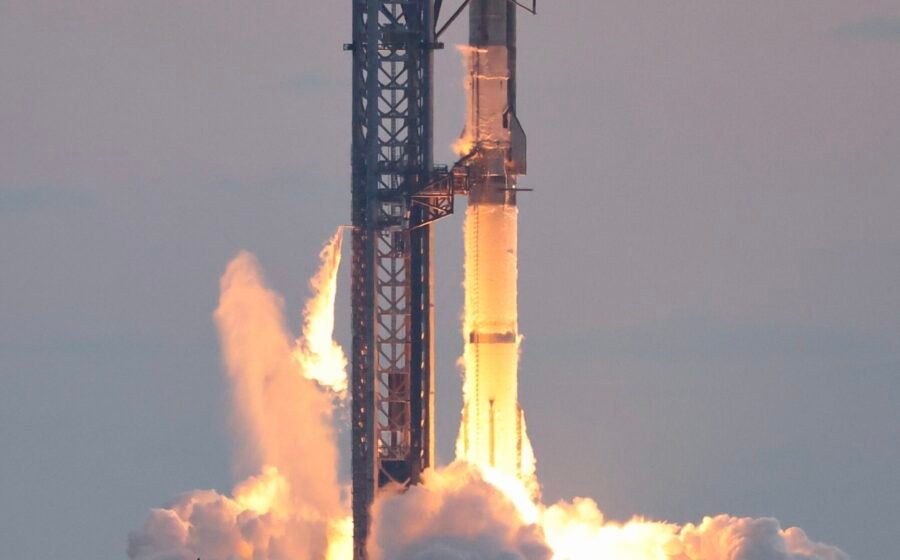
- Featured photograph: NASA/Kennedy Space Center, November 2004. Original Swift prelaunch photograph, public domain.
- Inline photograph: NASA/Sophia Roberts, April 2026. Original LINK servicing spacecraft photograph, public domain.
- NASA image and media usage guidelines
Update note (November 5, 2026): This article was originally published November 3 using NASA’s pre-reentry forecast. It has been updated after the U.S. Space Force and NASA confirmed Swift’s November 4 reentry, with the earlier predicted timing replaced by the confirmed time and location. The previously unrelated Earth featured image has been replaced with an actual archival photograph of Swift; a second, relevant NASA photograph illustrates the unsuccessful rescue program.