Ancient American Technology 2026 · Series Finale, Part II of II
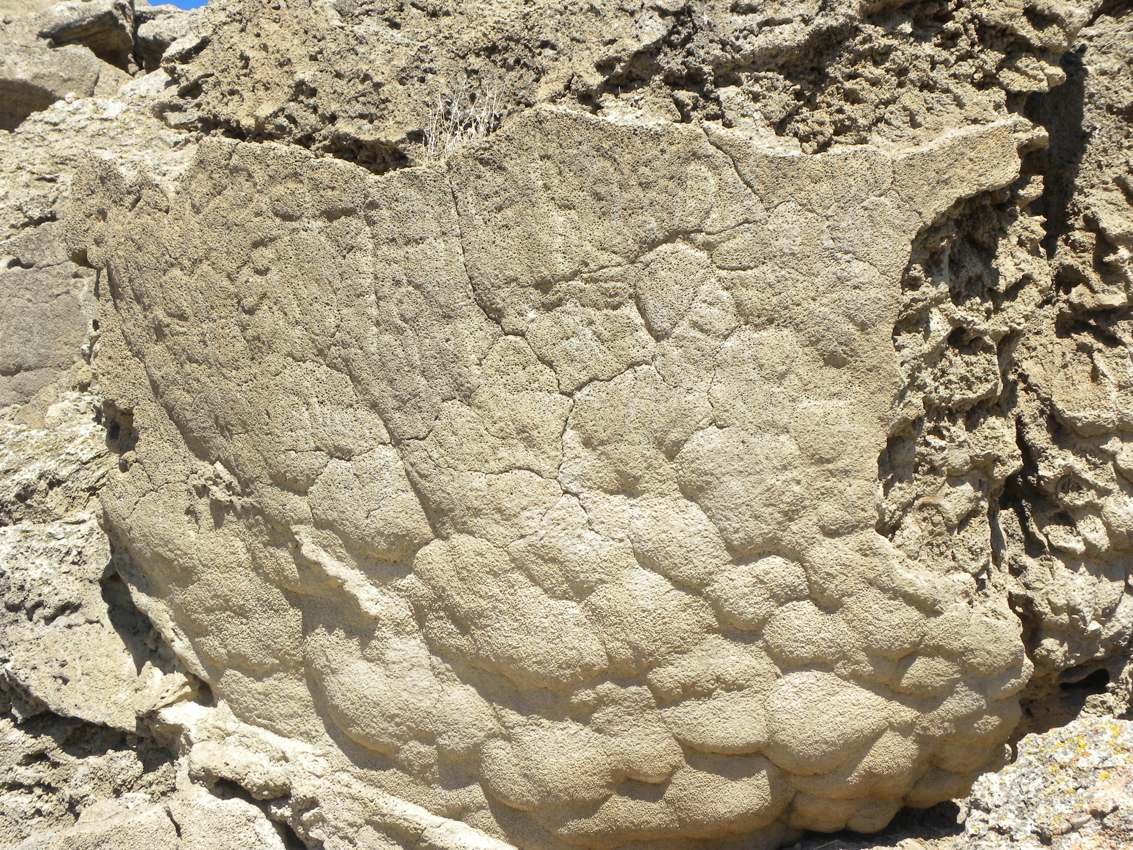
At Winnemucca Lake, a row of small pits can carry as much information about the work as a long groove. The pits occur on upright faces, where some are arranged in groups and others sit near linear elements. On the same outcrop, the carvers directed deep cuts across irregular tufa surfaces. These choices make the Nevada panels a record of Indigenous stoneworking, even where the original meanings of the designs remain beyond what the published archaeological evidence can establish.
Grooves, cupules and the choice of stone
The 2013 study describes grooves commonly one to two centimeters deep and motifs reaching roughly a meter in scale. Archaeologists call the small rounded depressions cupules. A cupule on a flat surface can resemble a small grinding hollow. On the upright Winnemucca panels, their placement and repetition make them part of the visible design. The study illustrates branching forms, sets of short parallel strokes and groups of rounded pits. It reports an absence of recognizable human figures, animals and handprints among the documented motifs at this particular outcrop.
Tufa is relatively soft compared with basalt, so it can be worked with a harder stone. Cutting a deep and even groove still takes repeated work, and arranging a sequence of pits on an upright face requires control over spacing. The surviving cuts show where the makers removed rock and how they laid out forms. The exact tools, order of individual strokes and number of makers remain unknown.
A Great Basin comparison in Oregon
Benson and colleagues compared Winnemucca Lake with Long Lake in south-central Oregon. Some Long Lake panels share branching forms, groups of short parallel cuts and patterned cupules. The Oregon panels were worked into basalt, a harder material. At one panel, volcanic ash from the Mount Mazama eruption covered part of a carving, giving researchers a minimum age for that work. At Winnemucca, lake carbonate supplies a similar kind of evidence by covering part of an older cut.
| Site | Physical evidence | What the comparison shows |
|---|---|---|
| Winnemucca Lake, Nevada | Deep grooves and cupules in tufa | Lake deposits constrain the age of the lower carvings. |
| Long Lake, Oregon | Comparable motifs in basalt | Volcanic ash constrains the age of one buried panel. |
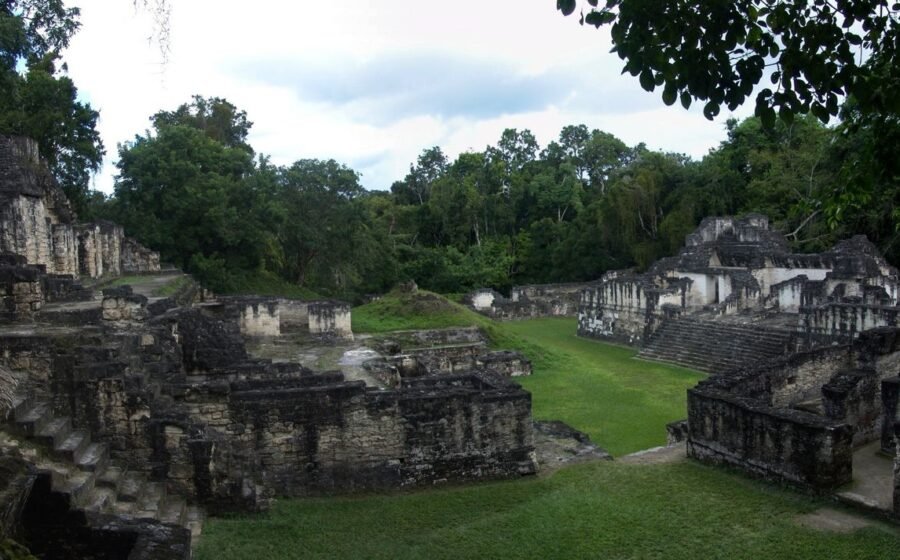
| Naj Tunich, Guatemala | Carvings, painted figures, handprints and Maya texts | Some texts contain calendar dates associated with visits to the cave. |
Shared design features give researchers a basis for comparing how people worked stone across the western Great Basin. Each site still needs its own chronology. A branching figure on one panel cannot independently date a similar figure hundreds of miles away, and a name such as “tree-form” describes the outline a researcher sees.
A Maya comparison at Naj Tunich
The ancient Maya cave of Naj Tunich in Guatemala shows what changes when rock art appears alongside writing. Guatemala’s submission to UNESCO describes a body of carvings, paintings and handprints, including painted Maya inscriptions that record dates. Those texts give researchers historical clues about some visits and people associated with the cave. At Winnemucca Lake, the strongest chronology comes from the rock and the former lake. In both settings, the surface is part of the evidence. Which evidence survives determines which questions can be answered.
The living community and the site
The panels stand on Pyramid Lake Paiute land. CU Boulder reports that the Tribe gave Benson permission to examine the carvings non-invasively, and Benjamin Aleck of the Pyramid Lake Paiute Tribe Museum and Visitors Center co-authored the study. Archaeology magazine reports that the Tribe considers the carvings sacred. Readers can learn about the region through the Tribe’s museum in Nixon, which presents Paiute history and the relationship between the community and the lake.
This series has followed Indigenous decisions from canal engineering in the Sonoran Desert to Inka terrace building in Peru. It closes at a Nevada rock face, where the surviving evidence is the work itself. A maker chose which part of the surface to use, how far to cut and where to stop. The resulting grooves held their shape through changes in the lake and across thousands of years.
Featured photograph: Larry V. Benson / USGS, public domain, resized.