When studying ancient Kemet, one of the biggest mistakes we can make is assuming that everything appearing together must represent the same thing.
A deity holding a symbol does not automatically become that symbol. A symbol appearing in a religious scene does not mean it represents every deity within that scene.
It sounds simple, but this distinction matters.
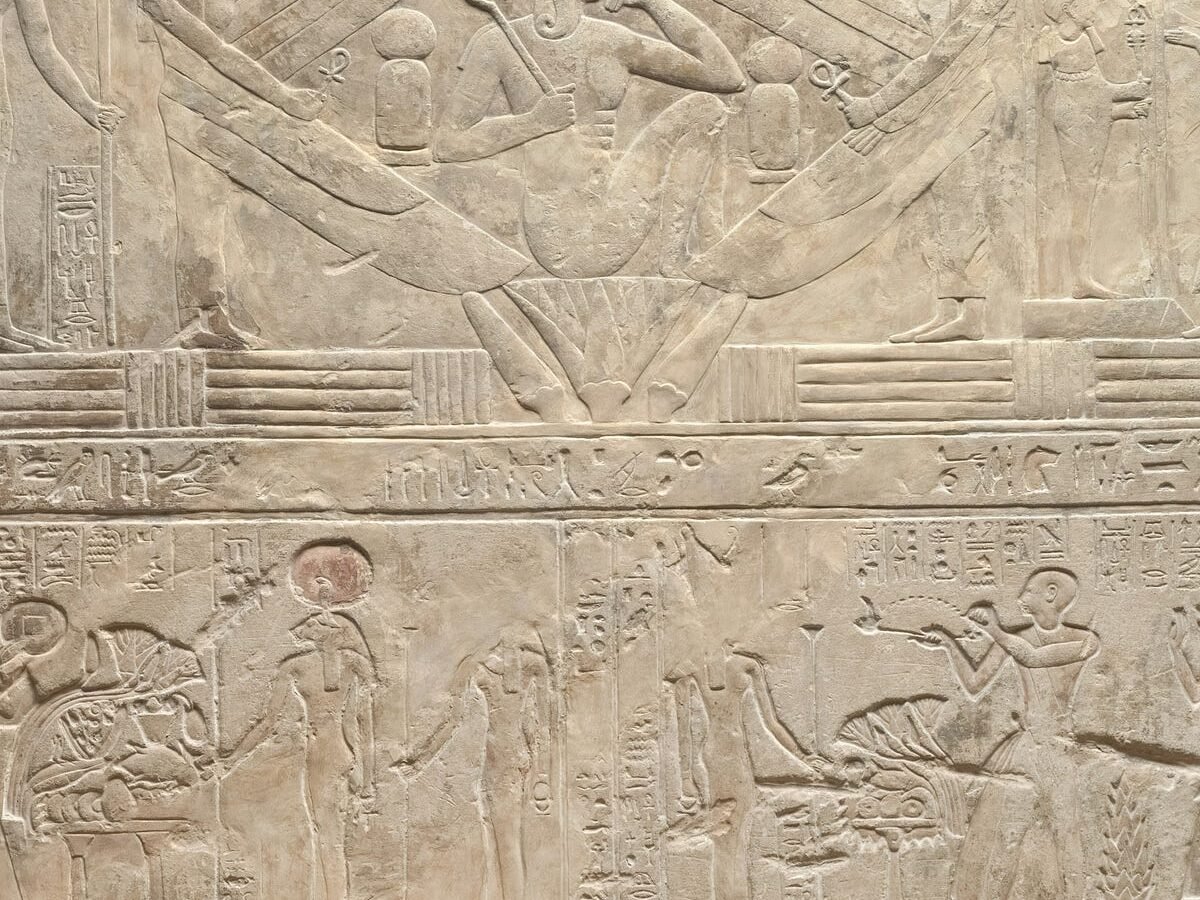
In our previous discussion, we examined the Ankh and its association with life in ancient Egyptian writing and religious imagery. We explored how it appears in temple reliefs, funerary scenes, and representations of the Netjeru granting life to kings.
But another question deserves our attention:
Is the Ankh actually Ptah?
Some modern interpretations present Ptah and the Ankh as though they are essentially the same thing. Others suggest that the Ankh represents the creator of all existence, connecting the symbol directly to Ptah.
Before accepting that interpretation, let’s slow down and examine what the historical record actually tells us. Let’s talk about it.

First, Who Was Ptah?
Ptah was one of the most important deities in ancient Egyptian religious tradition, particularly in Memphis, one of ancient Egypt’s major religious and political centers.
He was associated with craftsmanship, artisans, creation, and the ordering of existence.
But Ptah’s significance goes beyond simply being a patron of craftsmen.
In the Memphite theological tradition, Ptah occupies a central position in the explanation of creation. This tradition presents creation as an act involving the heart and tongue.
In other words, thought and speech are central to the creative process.
The heart represents the conception of an idea, while the tongue expresses that idea through speech. What is conceived internally is brought into existence through the spoken word.
Think about that for a moment.
This is a sophisticated theological understanding of creation. It presents existence as something that can be ordered through intelligence, intention, and speech.
We don’t need to attach modern interpretations to appreciate the intellectual depth of this tradition.
The Egyptians gave us something worth studying on its own terms.

The Shabaka Stone: An Important Source for Understanding Ptah
One of the most important sources for examining Ptah’s creative role is the monument commonly called the Shabaka Stone.
The stone preserves a theological composition associated with the Memphite tradition. It was commissioned under the Kushite ruler Shabaka during Egypt’s Twenty-Fifth Dynasty.
The inscription presents Ptah as a central creative power, emphasizing the relationship between the heart, thought, speech, and the creation of the world.
However, we must be careful with the historical dating.
The inscription claims to preserve an earlier tradition, but scholars debate the composition’s original date and development. The surviving monument is not necessarily the original moment when these theological ideas first emerged.
That distinction matters.
We can recognize the importance of the text without pretending that every question about its origins has been settled.
This is what responsible historical investigation looks like.
We examine what the source says, when the surviving inscription was produced, what earlier traditions it claims to preserve, and what conclusions the evidence allows us to draw.

So, Is Ptah the Ankh?
Here is where we need to make an important distinction.
Ptah is a deity.
The Ankh is a hieroglyphic sign associated with life.
Those are two different categories.
Now, can Ptah appear in religious imagery holding symbols associated with life, stability, or divine authority? Absolutely.
But does holding a symbol make the deity identical to that symbol?
Of course not.
Think about it this way.
A king can hold a scepter. That does not mean the king and the scepter are the same thing.
A deity can hold an Ankh. That does not mean the deity and the Ankh are interchangeable.
The symbol communicates something about the deity’s power, authority, or relationship to life. It operates within a larger religious vocabulary.
This is why we must examine Egyptian iconography carefully.
We cannot simply identify a deity holding an object and then declare that the object represents that deity.
If someone argues that the Ankh is specifically a hieroglyph for Ptah, that claim requires textual and archaeological evidence. It cannot rest solely on the fact that Ptah and the Ankh appear within Egyptian religious imagery.
Ancient Egypt Had More Than One Creation Tradition
There is another important piece of this discussion.
Ancient Egyptian religion was not one single, unchanging theological system.
Different religious centers developed their own creation traditions, divine relationships, and theological explanations.
Memphis emphasized Ptah in its creation theology.
Heliopolis developed a different account centered on Atum and the Ennead.
Other religious centers maintained their own important theological traditions.
These ideas could coexist, interact, and develop over centuries.
We must remember that ancient Egypt existed for thousands of years. Religious thought evolved, political circumstances changed, and different centers maintained their own intellectual and religious traditions.
So when someone says that a particular deity was the creator of everything, we should ask a few questions:
Which religious tradition are we discussing?
Which historical period?
Which surviving text supports that interpretation?
How did that particular religious center understand creation?
These questions help us move beyond general statements and into actual historical investigation.

The Difference Between Connection and Identity
This brings us back to the Ankh.
The Ankh is associated with life. Ptah is associated with creation and the ordering of existence within the Memphite theological tradition.
Those concepts can certainly intersect.
After all, creation and life are closely related ideas within Egyptian religious thought.
But a relationship between two concepts does not automatically make them identical.
We must resist the temptation to collapse every symbol, deity, and religious concept into one universal explanation.
That does not make ancient Egyptian religion less profound. It makes our understanding of it more precise.
And that is the point.
We should be able to appreciate the complexity of Kemetic religious thought without inventing connections that the surviving evidence does not establish.
Let’s Continue the Conversation
When studying ancient African civilizations, we must be willing to distinguish between what the sources establish and what modern interpretations propose.
That standard applies to everybody.
It applies to university professors, museum curators, independent researchers, YouTube personalities, and yes, even me.
If the evidence proves us wrong, we make the correction.
That’s scholarship.
The Ankh is not automatically Ptah simply because the two can appear within the same religious framework. Ptah deserves to be understood through his own theological tradition, particularly the creation account preserved in the Shabaka Stone.
And the Ankh deserves to be understood through its own documented history as a symbol of life.
Connection is not identity. Context matters. And evidence still matters.
In our next discussion, we’re going to move from the Ankh and Ptah to one of the most popular claims circulating about ancient Egypt: the so-called Dendera Light Bulb.
Did the ancient Egyptians really possess electrical lighting technology, or are we looking at a religious composition that has been interpreted through modern eyes?
Let’s examine the evidence.
Talk to you later…