By SaKm | Khemetic News Network | November 13, 2026
Medical autonomy is not only about whether a patient agrees to treatment. It also depends on whether the patient can see the records used to explain, evaluate, and challenge that treatment. Federal enforcement actions in 2025 illustrate how access to medical records can become a civil-rights and accountability issue.
From historical exploitation to today’s documentation rights
In Medical Apartheid, historian Harriet A. Washington traces the exploitation of Black Americans in medical research and practice, including unequal power, coercion, and exclusion from meaningful decision-making. That history provides a reason to scrutinize modern accountability systems, but it does not prove that every contemporary records-access violation is racially motivated. The cases below concern documented HIPAA access enforcement, not findings of racial discrimination.
Case one: Concentra and a year-long records delay
On December 16, 2025, the U.S. Department of Health and Human Services Office for Civil Rights announced a settlement with occupational-health provider Concentra, Inc. OCR reported that an individual made six records requests beginning in February 2018 and did not receive access until March 2019. OCR determined the company failed to act timely. After a proposed civil penalty and a requested administrative hearing, the matter was settled on May 5, 2025, for $112,500, before the hearing. A settlement is not a criminal conviction or an adjudicated finding following that hearing. HHS primary report and linked settlement documents.
Case two: Oregon Health & Science University
On March 6, 2025, OCR announced a $200,000 civil monetary penalty against Oregon Health & Science University for failing to provide timely records requested through a patient’s personal representative. This was an administrative civil enforcement action, not a criminal conviction. The publicly described case should not be characterized as proof of intentional racial bias. HHS penalty announcement.
Why the distinction matters
Patients may need medical records to obtain a second opinion, review consent documentation, dispute billing, or identify a treatment error. A delayed chart can obstruct those efforts even when no discriminatory intent has been established. Enforcement records should be read precisely: allegations, agency determinations, civil penalties, settlements, acquittals, and exonerations are not interchangeable.
Medical Accountability Registry — institutional entries only
Concentra, Inc. — Role: occupational-health provider. Relevant dates: six requests from February 2018; records supplied March 2019; proposed determination June 29, 2021; settlement May 5, 2025; public announcement December 16, 2025. Conduct: delayed access to requested protected health information. Finding: OCR determined untimely access. Legal status: $112,500 civil settlement before administrative hearing; no criminal conviction established by the cited source. Source: HHS.
Oregon Health & Science University — Role: public academic health center. Relevant date: March 6, 2025 announcement. Conduct: failure to provide timely access to records through a personal representative. Finding: OCR imposed a civil monetary penalty. Legal status: $200,000 administrative civil penalty reported by HHS; no criminal conviction indicated. Source: HHS.
No individual doctor, nurse, researcher or administrator is added solely by virtue of employment at either institution. No claim of racial intent is made in these entries.
Whistleblower and Witness Registry — strictly separate
Concentra complainant (name withheld) — Role: records requester and complainant whose experience prompted OCR review; evidence: six requests and delayed production as described by HHS. Not accused of wrongdoing. The person’s identity is not disclosed.
OHSU patient/personal representative (names withheld) — Role: affected patient and records requester, respectively, as described in the federal enforcement announcement. Evidence: HHS’s civil enforcement report. Neither is listed as a participant or accused party.
These are role-based witness entries, not assertions that the individuals publicly self-identify as whistleblowers. No other named whistleblower is added without independently verified evidence.
Know Your Medical Rights: a practical guide
Informed consent: Ask the clinician to explain the proposed procedure, material risks, expected benefits, alternatives, and what may happen if you decline. Consent requirements and exceptions vary by state and clinical circumstances; HIPAA alone is not a comprehensive informed-consent statute.
Request your records: Ask the provider’s medical-records office or patient portal for the designated records you need, including consent forms, visit notes, test reports and billing records. Keep a dated copy of the request. Under HIPAA, covered entities generally must act within 30 calendar days; one additional 30-day extension may be available with timely written notice. Some state laws require faster access. See HHS access guidance.
Make a complaint: For a possible HIPAA access or privacy violation, contact the HHS Office for Civil Rights. Complaints generally must be filed within 180 days of learning of the alleged violation, subject to good-cause extensions. For quality-of-care or licensing concerns, contact the relevant state medical or nursing board or health department. Different laws, deadlines and remedies may apply; legal advice may be appropriate.
Protect privacy: Do not post complete medical records or identifiable patient details publicly. Obtain explicit informed permission before publishing another person’s account.
Evidence log and source bibliography
- March 6, 2025 — HHS OCR, OHSU civil monetary penalty.
- December 16, 2025 — HHS OCR, Concentra settlement announcement, linking the 2021 proposed determination and 2025 agreement.
- Current patient guidance — HHS Right to Access FAQs; OCR complaint process.
- Historical context — Harriet A. Washington, Medical Apartheid: The Dark History of Medical Experimentation on Black Americans from Colonial Times to the Present (2006). Historical synthesis, not a source for the contemporary enforcement findings.
Editorial verification note: The previously mentioned NewsBreak article was not included because its original content could not be independently authenticated. This report does not allege criminal conduct by named individuals. Institutional responses and any later procedural developments should be incorporated when independently documented; corrections will be dated.
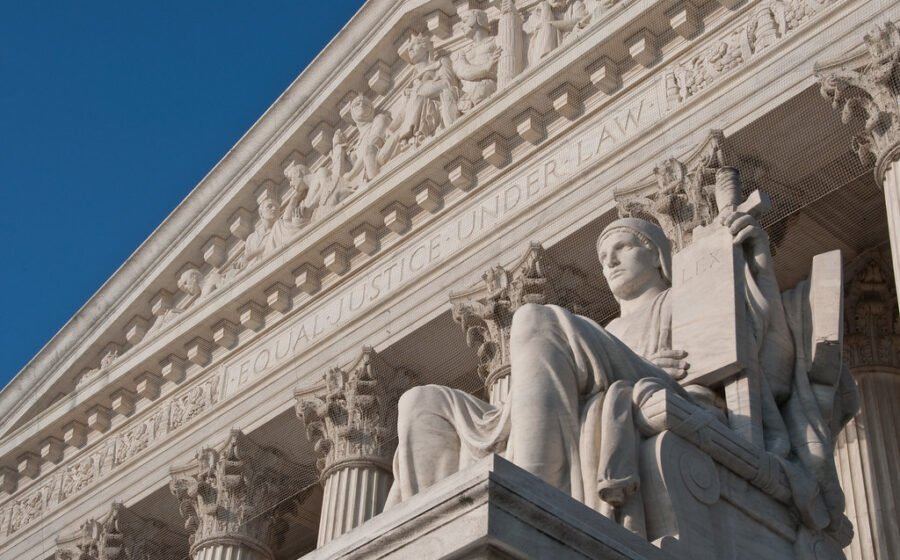
Image credit: No case-specific patient image is used. A suitable rights-cleared featured image remains pending media-library access.