China has authorized work on nine industry standards for brain-computer interfaces (BCIs), including a project concerning wireless communication for invasive implants. The announcement advances a technical rulemaking effort, but it does not establish what cybersecurity protections the future implant-link standard will require.
China’s Ministry of Industry and Information Technology (MIIT) published its fifth 2026 industry-standards project plan on November 3. National Business Daily reported on November 12 that nine BCI projects fall under the ministry’s dedicated standardization committee, MIIT/TC4. The projects are approved for development, not nine completed or enforceable standards.
What China approved
The nine planned projects span product classification and grading, risk management, interaction interfaces, invasive wireless communication, data and algorithm management, and applications including assisted sports training and attention monitoring. The public reporting gives these broad subjects rather than full technical requirements.
As Tech Times noted November 14, the accounts available at publication do not specify a frequency band, data rate, authentication rule or encryption mandate for the invasive-device wireless link. That absence of published detail should not be described as proof that future rules will exclude security controls.
Why a wireless brain implant needs special safeguards
Brain-computer interfaces read brain-related signals and translate patterns into outputs a computer can use. Some operate using electrodes on the scalp; invasive systems place electrodes in or on neural tissue. Researchers are exploring implanted BCIs to restore communication or interaction abilities for some people with paralysis or limb loss.
For implanted systems, wireless links may reduce the need for cables crossing the skin, but the connection introduces security questions alongside medical risks. Device makers and researchers must evaluate unauthorized access, communication integrity, software updates, data storage and what happens if an external controller or network is compromised.
These are risk categories, not findings that any Chinese implant has been hacked. No verified security breach involving the announced standardization projects has been established in the evidence cited here.

How the United States approaches brain implants and cybersecurity
The U.S. Food and Drug Administration issued implantable BCI testing and clinical-study guidance in May 2021 addressing devices intended to help patients with paralysis or amputation. That guidance describes nonclinical studies and clinical research considerations; it is not a blanket authorization for every brain implant.
Separately, the FDA’s February 2026 medical-device cybersecurity guidance addresses secure design, premarket submissions and the federal law’s requirements for qualifying “cyber devices.” Under Section 524B, covered premarket submissions must include information such as a vulnerability-management plan, processes for security updates and a software bill of materials.
Not every implanted BCI automatically satisfies the statute’s particular definition of a cyber device; applicability depends on factors including software, internet connectivity and potential cyber vulnerabilities. Even where this provision does not apply, medical-device manufacturers still face applicable safety and regulatory obligations.
Neural data, consent and standards across borders
The development also raises questions for U.S. patients and researchers: Who controls recordings of neural activity? How much data is stored? Can patients revoke consent for secondary research or machine-learning use? What evidence will show that an implant’s communication system cannot be accessed by unauthorized parties?
China serves as the secretariat country for the international ISO/IEC JTC 1/SC 43 brain-computer interface committee. However, that committee’s stated scope expressly excludes standards for human implants and medical applications. The new Chinese industry project on invasive wireless communication therefore should not be confused with an existing international medical-implant standard.
An FDA video on connected-device security
The following FDA educational video explains general precautions for connected medical devices. It is not a report about China’s new standards or a claim of an identified brain-implant vulnerability.

What to watch next
The meaningful next steps are publication of draft text, technical details for invasive wireless links, a review process, and testing or conformity procedures. Until those records are available, it is premature either to praise the proposed standards as adequately protective or to claim they leave patient data unprotected.
For the United States, the practical lesson is the need to couple medical innovation with testable device security, independent oversight and clear patient rights. A standards project is a beginning, not evidence that a device is safe.
Sources and image attribution
- China MIIT, fifth 2026 batch of industry standard projects (November 3, 2026).
- National Business Daily, nine BCI projects approved for development (November 12, 2026).
- Tech Times, implant-link technical details remain unpublished (November 14, 2026).
- U.S. FDA, Implanted Brain-Computer Interface guidance (May 2021).
- U.S. FDA, Medical Device Cybersecurity resources (updated 2026).
- ISO/IEC JTC 1/SC 43, scope and exclusions.
- UC San Diego, transparent neural-implant research (January 2024).
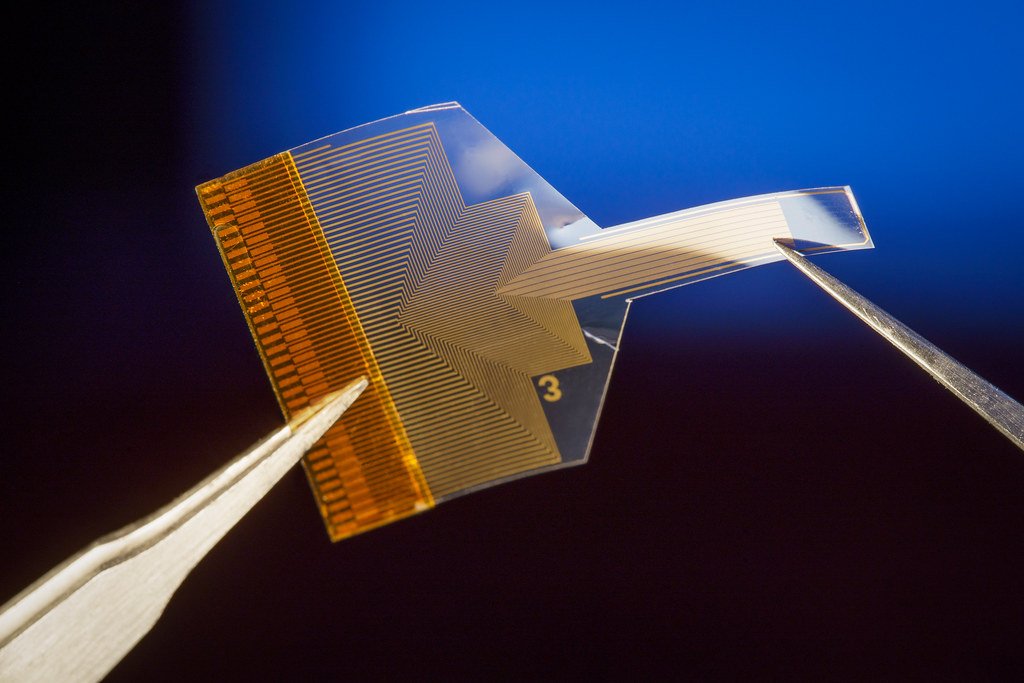
- Featured and inline photographs: David Baillot / UC San Diego Jacobs School of Engineering, CC BY 2.0. Archival U.S. laboratory images, not photographs of Chinese standards officials or devices. The media are used with attribution and license links.
- Video: U.S. Food and Drug Administration, Cybersecurity Awareness for Connected Medical Devices (November 4, 2021).