By SaKm | Khemetic Biotech | November 20, 2026
Japan has crossed a medical threshold: treatments made from reprogrammed adult cells have moved from experimental laboratories into its regulated healthcare system. On March 6, 2026, Japan granted conditional, time-limited approval to two induced pluripotent stem-cell (iPS-cell) products, one targeting Parkinson’s disease and another severe heart failure. This is a historic regulatory milestone, not proof that either treatment provides durable clinical benefit.
How reprogramming changed medicine
Induced pluripotent stem cells are adult cells reprogrammed into a state capable of generating many specialized cell types. Japan’s regenerative medicine programs use this approach to produce dopamine-producing nerve-cell precursors or heart-muscle cells. The Japan Agency for Medical Research and Development (AMED) identifies the two approved products as AMCHEPRY and RiHEART. Both approvals are conditional and time-limited, requiring continued evidence gathering. AMED primary source.
Parkinson’s disease: seven patients, a consequential signal
At Kyoto University Hospital, seven patients aged 50 to 69 received iPS-cell-derived dopamine-cell precursors in a phase I/II study. After 24 months, investigators reported no serious adverse events and no MRI evidence of tumor-like graft overgrowth, although 73 mild or moderate adverse events were recorded. Among six patients assessed for effectiveness, four improved on an off-medication motor score. Brain imaging also suggested increased dopamine-related activity. These findings are promising, but the study was small, single-center and open-label, without a randomized placebo-controlled comparison. It cannot establish efficacy for the wider Parkinson’s population. Sawamoto et al., Nature, April 16, 2025.
On March 6, 2026, Sumitomo Pharma announced conditional approval of AMCHEPRY (raguneprocel) for motor symptoms in Parkinson’s patients insufficiently helped by existing drugs. The company states that post-marketing studies and surveillance will be needed for full approval. Sumitomo Pharma regulatory announcement.
A living patch for the failing heart
RiHEART, developed by Cuorips from University of Osaka research, consists of iPS-derived heart-muscle cell patches placed on the heart’s surface for severe ischemic cardiomyopathy. The intended effect includes signaling from transplanted cells that may help preserve or improve heart function. Japan granted conditional approval in March. Cuorips reported that the first transplant after insurance listing took place on September 29, 2026, at Osaka Police Hospital. This demonstrates real clinical deployment, not established long-term effectiveness. Cuorips product description; Cuorips, October 1, 2026.
The regulatory gamble: earlier access, later proof
Japan’s special pathway allows certain regenerative products to reach patients after safety is established and effectiveness is reasonably predicted, while further clinical evidence is collected. Critics warn that an expensive intervention may be reimbursed before robust efficacy is demonstrated. A 2025 peer-reviewed analysis of the withdrawal of the earlier Heartsheet skeletal-muscle product argues that the system needs stronger safeguards and transparent confirmation studies. Clinical Pharmacology & Therapeutics, January 2025.
What remains unanswered
Will motor improvements persist for years? Can transplantation meaningfully change quality of life rather than selected test scores? What are the risks of immune suppression, surgery, abnormal cell growth and delayed complications? Will independent, appropriately controlled studies replicate the early results? And who can afford treatment when manufacture, surgical delivery and long-term monitoring are expensive?
Japan’s achievement is a scientific and institutional breakthrough: a platform invented in the laboratory has become a regulated medical product. Its ultimate value will be measured not by approval headlines, but by reproducible patient outcomes, safety and equitable access.
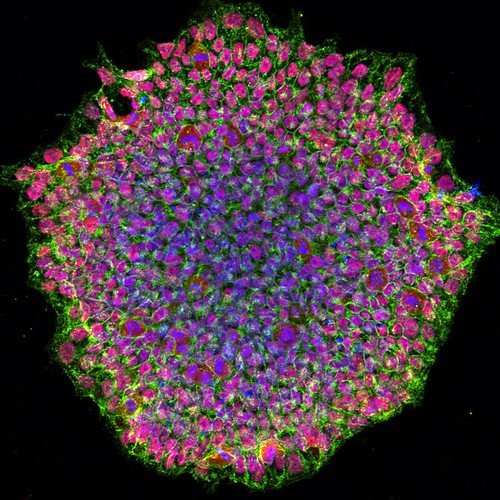
Featured image: “Human induced pluripotent stem cell colony,” National Institutes of Health (NIH), Public Domain Mark 1.0, via Openverse. This is a contextual microscopy image, not a photograph of the Japanese clinical trial or either approved product.