LA JOLLA, Calif. — Scientists at the University of California San Diego have shown that activating approximately 20 carefully selected brain cells can launch a much larger neural activity pattern and, in many cases, trigger a previously learned movement in mice. The findings, published October 14, 2026, in Nature, help explain how small groups of neurons can participate in generating practiced actions.
The discovery could eventually inform research into neurological rehabilitation and brain-computer interfaces. It does not demonstrate mind control in humans or a treatment for paralysis.
How researchers triggered a learned movement
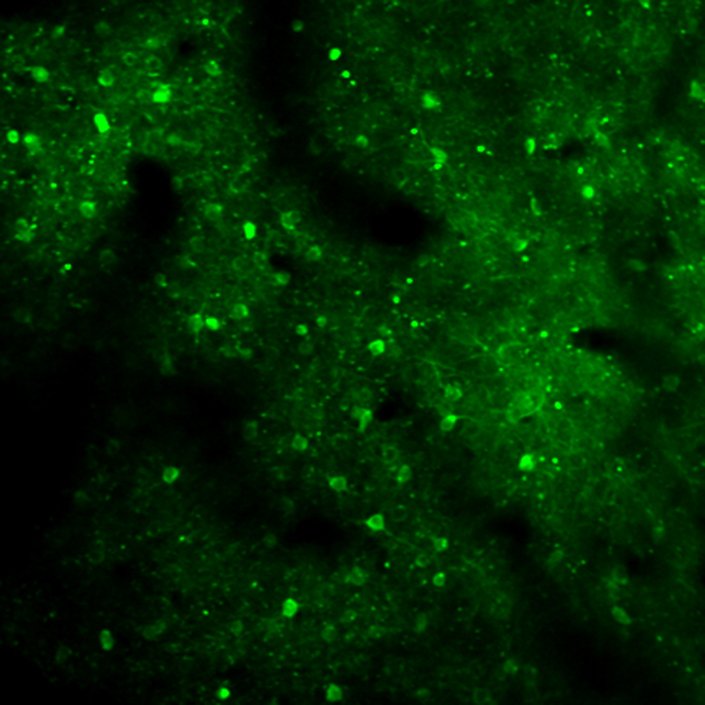
The research team studied mice trained to press a lever as part of a skilled motor task. Using two-photon calcium imaging, the scientists recorded activity across hundreds of neurons in the primary motor cortex, a region involved in voluntary movement.
They identified neurons whose activity began before a mouse performed the movement. These early-onset neurons were then stimulated with holographic optogenetics, a technique that uses carefully aimed light to activate selected cells made light-sensitive for the experiment.
Brief stimulation of roughly 20 early-onset cells produced a larger activity pattern resembling the one seen during learned movements and often caused the mice to make a similar lever press. However, not every stimulation produced the same result.
When the researchers instead stimulated neurons that became active after movement started, the characteristic learned movement was not reliably triggered. This contrast showed why the identity and timing of the selected neurons mattered.
The brain had to be ready
The 20 cells did not act alone. Successful stimulation depended on the activity of the surrounding network immediately beforehand and whether a mouse was engaged in the learned task. In disengaged mice, stimulation failed to generate the learned movement or the associated brain activity.
Sometimes stimulation reproduced the learned neural activity without producing an actual movement. That finding indicates the brain-activity pattern was more than a passive reflection of the lever press.
The experiments support an active role for the primary motor cortex in generating at least some learned movement patterns, a question neuroscientists have long debated.
The people behind the research
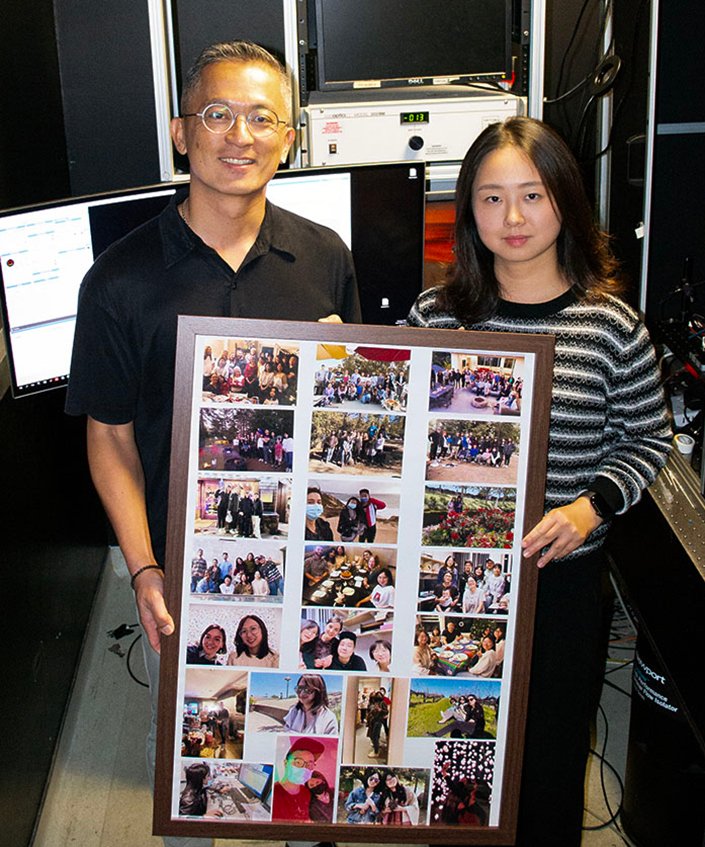
The study was led by graduate student Qiyu Chen, with professor Takaki Komiyama as senior author. The project originated with An Wu, an assistant project scientist in the laboratory who died in 2023. The researchers dedicated their paper to Wu’s memory, according to UC San Diego’s original research announcement.
Could this research help people after stroke or paralysis?
Understanding which cells help initiate specific movements could contribute to future research on brain-computer interfaces and methods for restoring motor function after injury. Researchers hope to learn how targeted activity spreads through the broader circuits involved in coordinated movement.
But the experiments involved laboratory mice, trained behaviors and specialized optical equipment. Scientists have not demonstrated that stimulating 20 neurons can direct arbitrary human actions, decisions or thoughts. The work is basic neuroscience, not an available medical treatment.
Future studies will need to clarify how these neurons connect with other cells, why stimulation sometimes works and sometimes fails, and whether any related approaches could one day be adapted safely for human patients.
What happens next?
Komiyama’s laboratory is investigating how the key neurons communicate with the larger network. The central finding is that a learned movement-related brain pattern can, under the right circumstances, be initiated by a surprisingly small and precisely selected population of cells.
The results demonstrate the importance of specific neurons within an interconnected brain circuit, not unrestricted control of movement or behavior.
Sources and image credits
- Chen, Q., Wu, A., and colleagues, “Targeted stimulation of motor cortex ensembles drives learned movements,” Nature, October 14, 2026. DOI: 10.1038/s41586-026-11174-3.
- UC San Diego research announcement, October 14, 2026.
- U.S. National Library of Medicine study record.
- Featured scientific image: Komiyama Lab / UC San Diego; inline laboratory photograph: UC San Diego. Both provided for use in coverage of the cited Nature paper.