A century after a young fossil skull transformed scientific thinking about humanity’s origins, researchers say the Taung Child is raising a new question: Were several early hominins grouped under one species name when they actually represented different evolutionary lineages?
An international team led by paleoanthropologist Gabriele A. Macho of Vrije Universiteit Brussel reports that the famous South African fossil is approximately 2.96 million to 3.03 million years old. Its examination of skull development, teeth and ancient environments also challenges how scientists classify other southern African specimens commonly called Australopithecus africanus. The study was published November 5, 2026, in npj Palaeoecosystems.
Why the Taung Child changed the story of human origins
Workers recovered the fossil in 1924 near Taung, South Africa. Anatomist Raymond Dart described it the following year and designated it the defining specimen, or “type specimen,” of A. africanus.
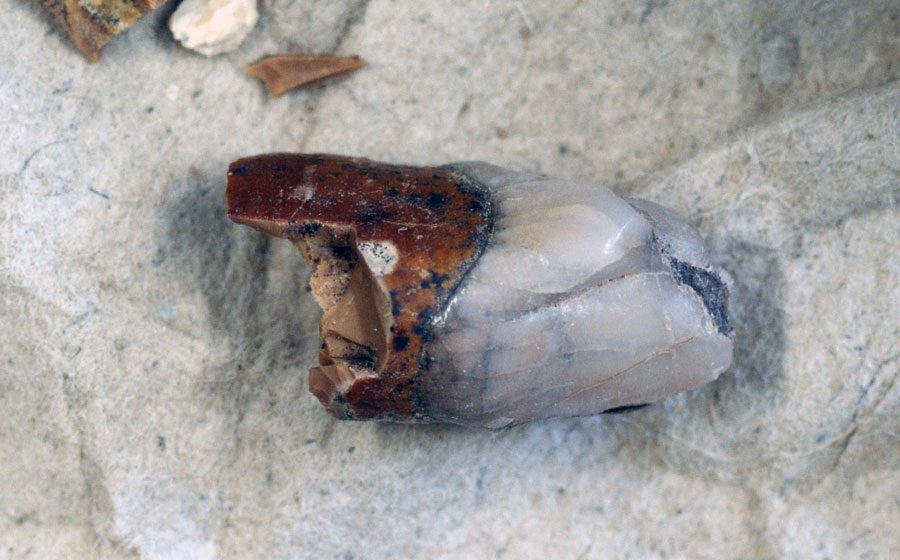
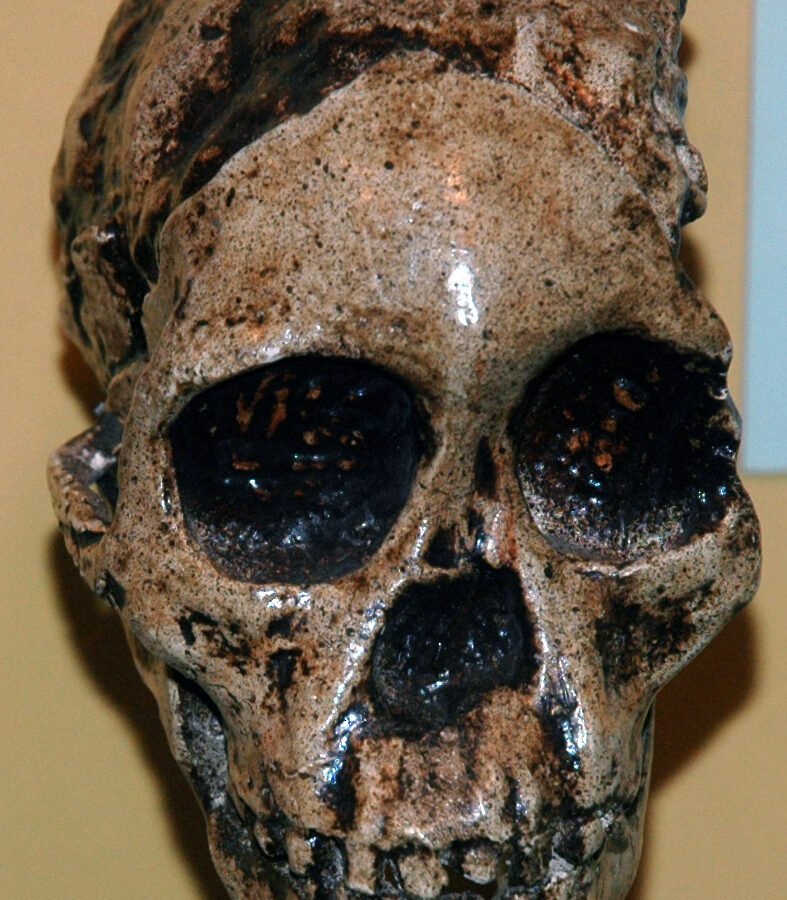
The fossil includes a young child’s facial bones, lower jaw and a natural impression of the brain cavity. Its anatomy helped show that early relatives of humans walked upright before evolving the large brains characteristic of modern humans. The discovery was especially important at a time when some influential European researchers resisted the evidence for humanity’s African roots. The Smithsonian Institution’s Human Origins Program explains the fossil’s historic role.
Do all the fossils labeled Australopithecus africanus belong together?
The new study revisits a longstanding classification problem: Scientists have assigned a number of later fossil finds to A. africanus, but their developmental features do not necessarily match the Taung Child.
Researchers compared tooth structure and patterns of brain and dental development. They concluded that some adult fossils traditionally classified with the Taung Child do not fit the same expected developmental trajectory. The results raise the possibility that southern Africa hosted multiple hominin species across this period.
That is not a confirmed discovery of several newly named species. Fossils are incomplete, evolutionary relationships are difficult to reconstruct, and the study does not settle how many distinct species existed. It does call for a more cautious approach to treating different fossils as members of one group. In a November 9 announcement, Vrije Universiteit Brussel emphasized that the Taung Child remains the one undisputed specimen defining the species.
Ancient climate shifts may explain the diversity
The team also reconstructed conditions in southern Africa when these hominins lived. Fossil pollen and other ecological evidence point to wetter, more wooded environments around Taung than exist there today. Across millions of years, shifts between wetter and drier conditions changed the distribution of habitats and potentially the movements of hominin populations.
The researchers propose that changing habitat boundaries could have separated populations, allowed lineages to develop independently and sometimes brought them back into contact. They discuss possibilities such as genetic drift and interbreeding. Those processes are explanatory hypotheses, not genetic events directly demonstrated for the Taung fossil.
The skull’s exact age remains debated
The new estimated window of roughly 2.96 million to 3.03 million years draws on geological dating of deposits associated with the site, including flowstone, together with paleomagnetic constraints. It is not a direct radiometric measurement of the skull itself.
Scientists have published different age estimates. In 2024, University of the Witwatersrand researcher Francis Thackeray described a dental-comparison method yielding an estimate of about 2.58 million years. Differing methods and limited original geological context help explain why the fossil’s date continues to be studied.
Why it matters beyond one fossil
The Taung Child helped redirect research toward Africa during an era in which prevailing assumptions often discounted African evidence. The newest work reinforces the continent’s importance to studying human origins while suggesting that the evolutionary history of southern Africa was more varied than a single, straightforward family tree.
For students in the United States, the Smithsonian’s fossil collections and educational resources offer accessible ways to understand how new findings can change established scientific classifications. The study does not overturn the African origins of humanity; it challenges how specific early populations are grouped and how climate may have shaped their history.
Watch: Understanding fossil evidence
Watch the Smithsonian National Museum of Natural History’s “Human Origins: Evidence of Human Evolution” video, featuring paleoanthropologist Rick Potts. This is general educational background published in 2011, not a report on the 2026 study.
Featured image: Photograph of the Taung Child fossil by James St. John, CC BY 2.0, via Openverse. Image shows the fossil; it is not a photograph of a living child.
Sources and further reading
- Macho and colleagues, “The Taung child and the biogeographic and palaeoclimatic drivers of southern African hominin diversity,” npj Palaeoecosystems, November 5, 2026
- Vrije Universiteit Brussel, research announcement, November 9, 2026
- Smithsonian Human Origins Program, Taung Child fossil record
- University of the Witwatersrand, Francis Thackeray, July 23, 2024
- Gizmodo, November 18, 2026, coverage of the new study