Khemetic Nation News Network | By Joseph | November 22, 2026
Opinion — Joseph: November’s scientific news provides a practical argument for treating reusable research data as an enduring public asset rather than merely an archive that researchers consult after a project ends.
What is confirmed
A newly published gamma-ray study used a fresh computational technique to discover a pulsar in 15 years of NASA Fermi observations. Separately, UNESCO reported on November 20 that its member states supported principles for monitoring progress on open science. These are distinct developments, but both highlight how documentation, access and responsible reuse can make earlier public investments more valuable.
Why this matters
My view is that agencies and universities should measure data stewardship by whether people can actually understand, verify and reuse what is shared. Funding a dataset without maintaining its metadata, software context and accessibility can sharply reduce its long-term usefulness. Effective public infrastructure also needs safeguards for privacy, Indigenous knowledge and communities whose information should not be treated as automatically available for unrestricted exploitation.
Context and limitations
Not all research data can lawfully or ethically be made public, and open access alone does not guarantee better science. UNESCO’s monitoring principles explicitly warn against simple country rankings that ignore context. This editorial advocates durable, responsibly governed data systems, not a blanket demand to publish sensitive records.
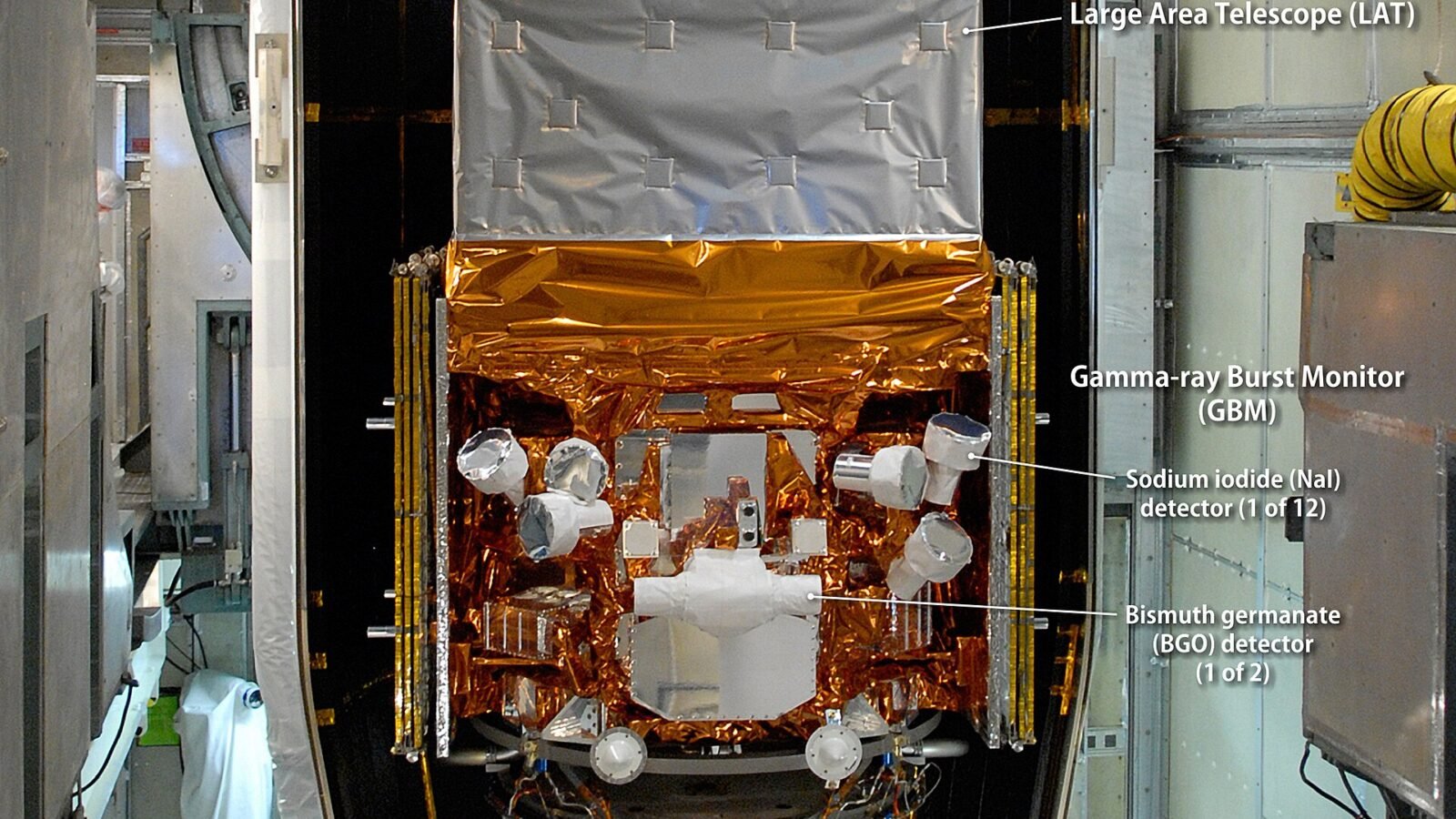
Photograph: The Fermi Gamma-ray Space Telescope readied for launch in May 2008. NASA / Wikimedia Commons, public domain. The image shows the mission whose historical data enabled the new pulsar discovery.
Sources: Original source · Additional source.