Image: NASA, ESA, CSA, STScI, Tea Temim (Columbia University), Rick Arendt (UMBC), Dan Milisavljevic (Purdue University); Image Processing: Joseph DePasquale (STScI). CC BY 4.0.
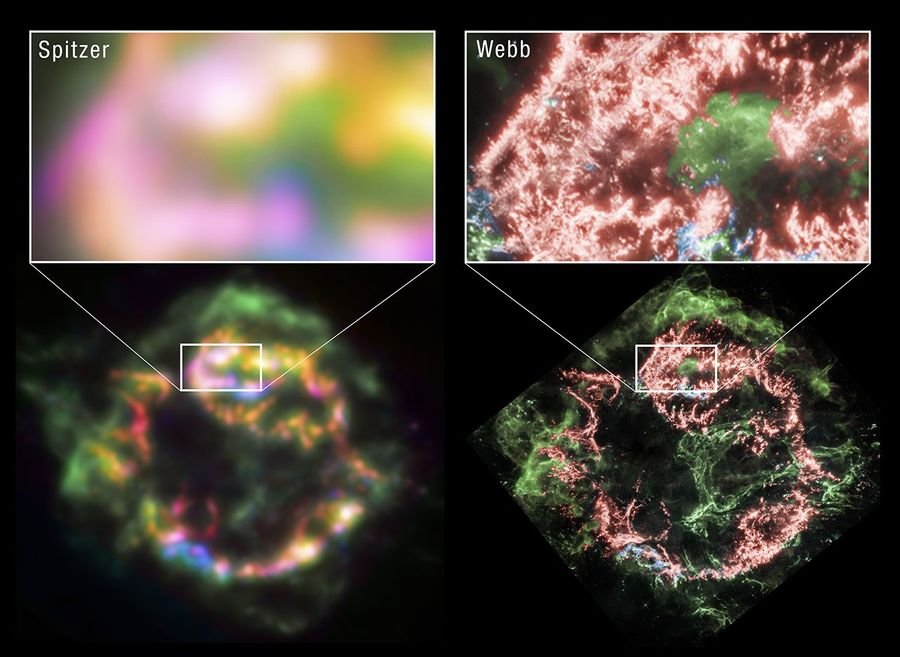
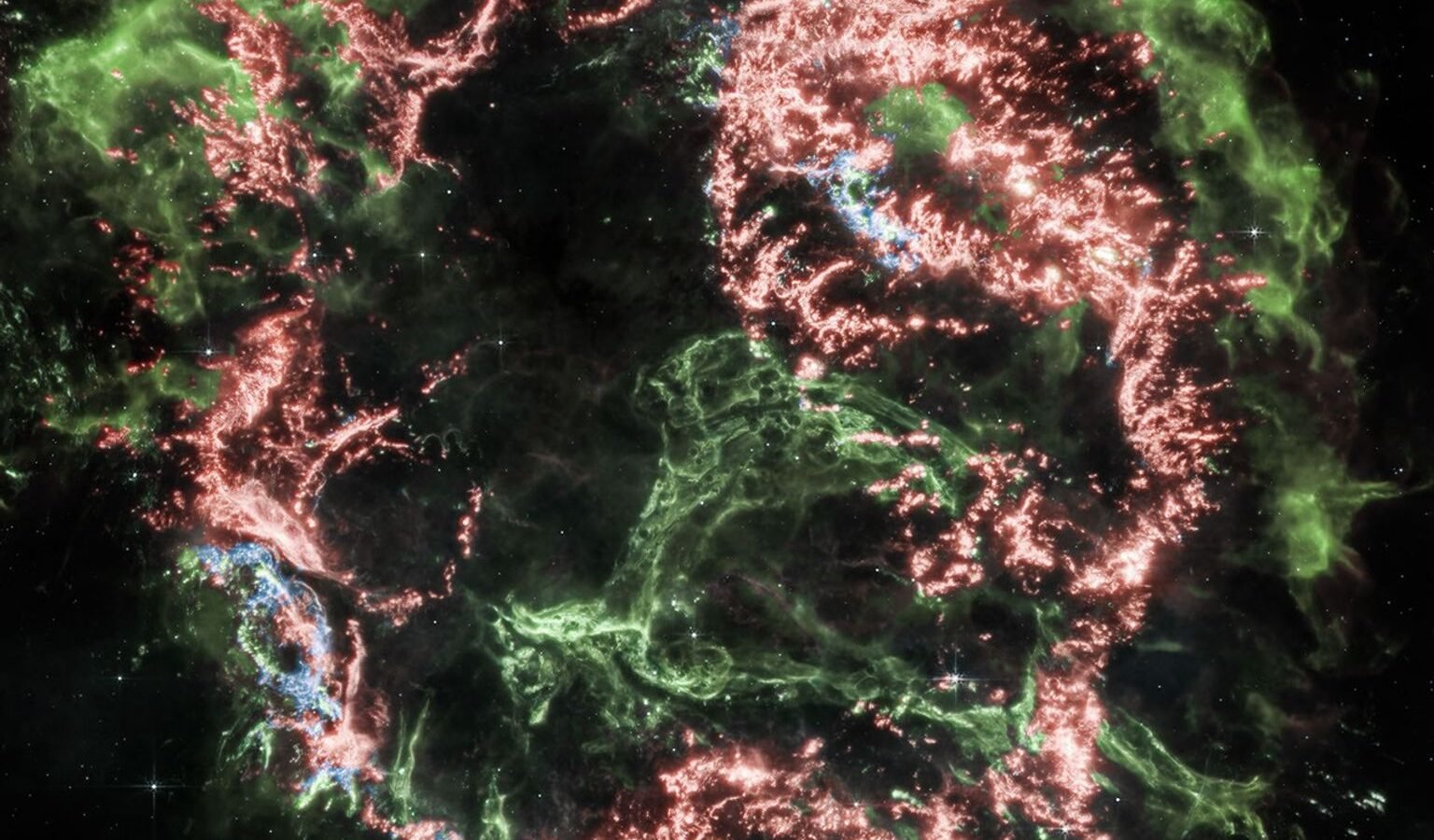
NASA and ESA reported November 23 that the James Webb Space Telescope has mapped warm dust in the Cassiopeia A supernova remnant using mid-infrared observations. The detailed distribution of material offers clues to the star’s internal structure before it exploded.
A record in the debris
Astronomers analyzed the composition of individual clumps of dust and found evidence consistent with a merger of internal stellar layers before the explosion. A comparison with Spitzer observations shows the improvement in spatial detail. The observations concern one remnant; the inferred merger is an interpretation of the data, not a direct recording of the star before it died.
A Khemetic perspective
The Pyramid Text, Word of the Gods 215 (2018 edition, p. 28), uses stellar imagery to express spiritual continuity. Modern astrophysics instead measures the material left by exploding stars. The comparison is symbolic, not evidence for a spiritual process. Book of Maat.
Sources: Original report | Additional reporting or context.