KNN Science Desk | October 16, 2026. NASA’s James Webb Space Telescope has revealed a crowded landscape of young stars, dust and gas in NGC 7129, a stellar nursery roughly 3,300 light-years from Earth. The image and research description released October 6 show how infrared astronomy can expose activity that dust clouds hide from many other telescopes.
What the telescope shows
NGC 7129 contains young stars and protostars still forming inside clouds of gas. According to NASA, glowing golden areas in the image represent hot atomic hydrogen, while red features trace cooler molecular hydrogen shocked by energetic outflows from embedded protostars. These colors are part of the scientific visualization and help researchers distinguish structures; they are not a claim that human eyes would see the nebula exactly this way.
Material flowing away from some developing stars interacts with surrounding gas, revealing the dynamic nature of stellar formation. The view also resolves faint background galaxies, showing the capacity of Webb’s infrared instruments to look through dusty regions.
What remains to be studied
The new view improves observation of a known star-forming region; it is not evidence of life, a new law of physics or a discovery of dark energy. Researchers use images alongside spectroscopy, modeling and other measurements to understand how gas clouds collapse, how young stars grow and how their outflows influence neighboring material.
A careful comparison with the Book of Maat
The 2018 Book of Maat, in The Seven Principles of Maat (printed page 156), includes the Principle of Vibration, describing the world through motion and change. That provides a philosophical lens for considering a universe in motion. Webb, by contrast, measures electromagnetic radiation and physical structures with scientific instruments. A poetic parallel about movement should not be mistaken for experimental verification of the book’s spiritual claims.
The astronomy is valuable in its own right: a clearer view of how stars begin their lives, and another reminder of how much remains beyond ordinary sight.
Source: NASA Webb science release, October 6, 2026. Reference: Book of Maat, 2018, p. 156.
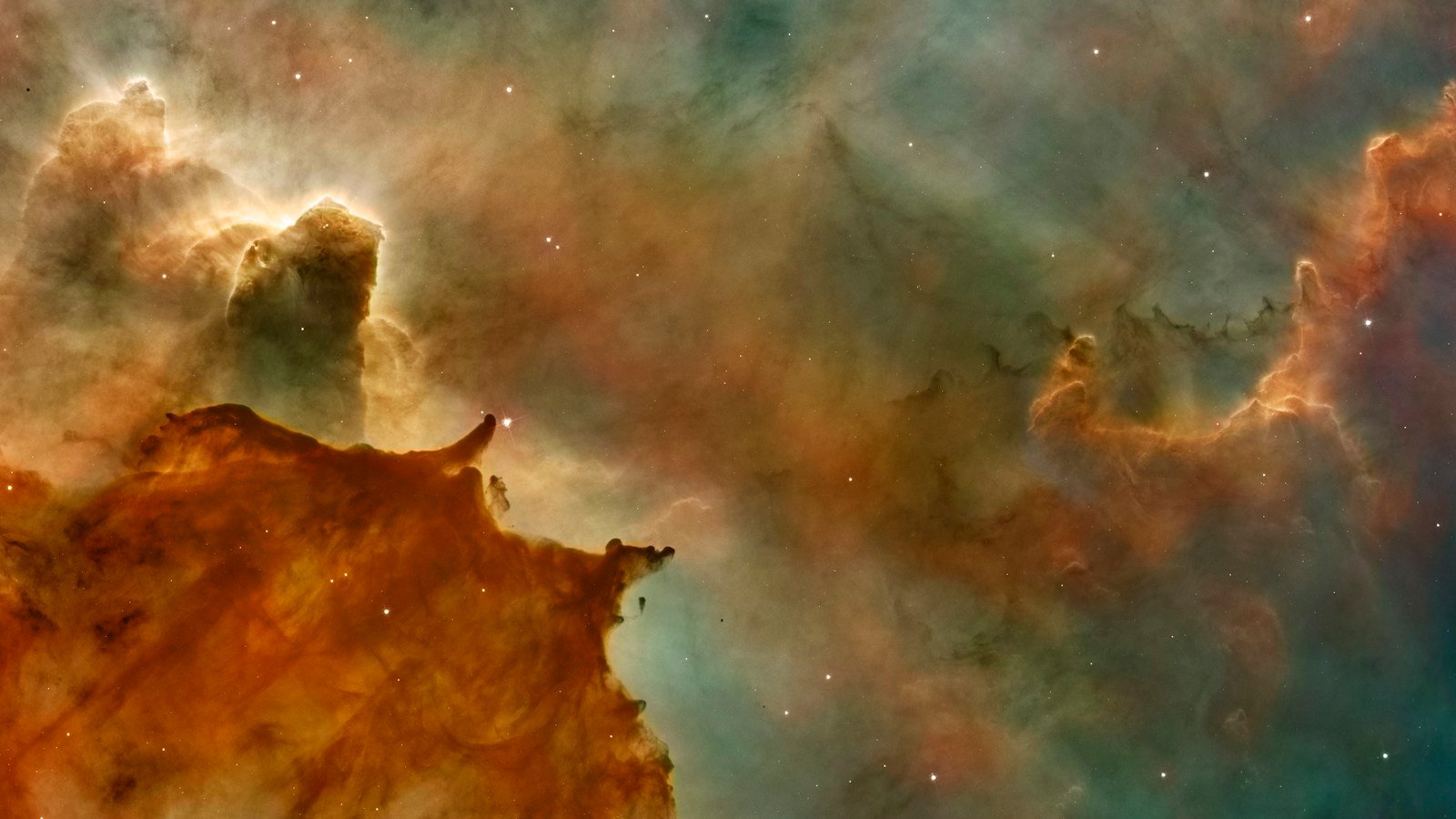
Featured image: NASA / Unsplash archival nebula photograph, used illustratively; not a Webb image of NGC 7129.