


A study of nearly 36,000 older adults found that a single blood test detected cancer signals across 17 broad cancer types. The finding is promising, but the test missed many other cancers, and researchers have not established whether using it routinely helps people live longer.
Researchers published the PATHFINDER 2 study in Nature Medicine on September 22, 2026. The prospective study enrolled 35,878 adults aged 50 and older at 32 clinical sites in the United States and Canada between December 2021 and July 2024. The study evaluated GRAIL’s Galleri multi-cancer early-detection blood test, which examines DNA fragments in blood for cancer-associated chemical patterns.
What the researchers found
Of the 35,878 people enrolled, 32,007 had the completed 12-month assessment used in the principal test-performance analysis. The blood test returned positive results for 287 of them. Cancer was confirmed in 173 of those people during follow-up, producing a positive predictive value of 60.3%.
The cancers detected by the test represented 17 broad categories and 81 distinct histological cancer types in the researchers’ classification. The headline figure of 17 does not mean that the test can identify every case of those cancers or that it has proven effective as a universal cancer screen.
Researchers reported 99.64% specificity and 39.3% 12-month episode sensitivity across all cancers. In practical terms, a positive result was relatively uncommon among participants without a cancer diagnosis, but the test did not detect the majority of cancers that were diagnosed during the following year. Its sensitivity was higher—69.8%—in a prespecified subgroup of 12 cancer types responsible for a large share of U.S. cancer deaths. Results vary substantially depending on the mix of cancers evaluated.
The test’s prediction of the likely location where a cancer signal originated was correct in one of its two leading predictions in 91.3% of cases. That information can help physicians decide which diagnostic exams to pursue; a positive blood test by itself is not a cancer diagnosis.
Potential for cancers without routine screening
Among the 173 participants whose cancers were detected by Galleri, about 73% had cancers without a grade A or B screening recommendation from the U.S. Preventive Services Task Force. Of 151 participants with newly detected primary cancers, 80—53%—had stage I or II disease at diagnosis.
These findings are particularly relevant to cancers such as ovarian and pancreatic cancer, for which there are no broadly recommended routine screening programs for the general population. Researchers hope blood-based screening could help close that gap, although detecting a cancer earlier is not in itself proof that screening will prevent cancer deaths.
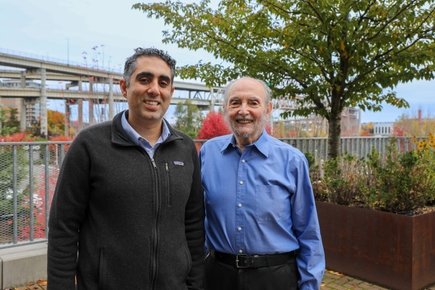
At Oregon Health & Science University, which enrolled roughly 6,100 participants, investigator Dr. Nima Nabavizadeh highlighted the potential to find cancers before symptoms appear. OHSU also described individual participants whose cancers were identified through study follow-up. Individual patient outcomes are informative but cannot establish the overall effect of population screening.
Why missed cancers and false alarms matter
Some participants received a positive cancer signal without a cancer diagnosis during the 12-month period: 114 of the 287 positive results in the performance analysis were not confirmed as cancer in that interval. These results may lead to additional appointments, imaging, biopsies and uncertainty. The study reported that 213 of 35,335 safety-evaluable participants underwent at least one invasive procedure following a positive result, with most invasive procedures nonsurgical.
A negative test is also not a clean bill of health. Researchers identified 267 participants whose test was negative but who were subsequently diagnosed with cancer during the follow-up period. Patients should continue age- and risk-appropriate mammograms, colon cancer screening, cervical cancer screening, lung screening when eligible and other recommended care, irrespective of a Galleri result.
A separate randomized trial missed its main goal
The NHS-Galleri trial randomly assigned more than 142,000 people in England to blood-test screening plus usual care or usual care alone. Its main measure—reducing the rate of stage III and IV cancers combined across 12 prespecified types—did not show a statistically significant improvement after three annual screening rounds. Researchers observed a potentially encouraging signal for stage IV cancers in a secondary analysis, but that does not change the primary outcome.
The two studies answered different questions. PATHFINDER 2 measured how the test performed in practice and what happened after positive results, but had no randomized control group. NHS-Galleri tested whether screening changed later-stage diagnoses. Neither establishes that this approach reduces deaths from cancer; longer follow-up and additional studies are needed.
What Americans should know about FDA review
On September 23, a U.S. Food and Drug Administration advisory committee voted 7–2, with one abstention, that Galleri’s potential benefits outweighed its risks for the proposed screening population. The committee voted 6–4 on effectiveness and 10–0 on safety. An advisory vote is not final FDA approval; the agency makes that decision separately. The test has been offered through laboratory-based channels, but an FDA marketing authorization for routine screening was not established by this advisory decision.
GRAIL designed and funded PATHFINDER 2 and participated in data analysis and preparation of the scientific paper. The study also tested an earlier version of Galleri, not exactly the version now commercially available. Those limitations matter in interpreting the evidence and deciding what additional independent research is needed.
For patients, the next meaningful question is not simply how many cancer types a blood draw can detect, but whether using it alongside established screening leads to fewer advanced diagnoses, fewer cancer deaths and acceptable rates of unnecessary workups and cost.
Watch: Official PATHFINDER 2 study presentation
GRAIL’s PATHFINDER 2 Study Results from ASCO 2026 (official presentation). The presentation comes from the test developer and should be interpreted alongside the peer-reviewed research and independent trial findings.
Sources and research
- Nature Medicine, PATHFINDER 2 peer-reviewed study (September 22, 2026)
- OHSU Knight Cancer Institute, study release and documentary photos
- New England Journal of Medicine, NHS-Galleri randomized trial (2026)
- FDA advisory committee voting summary, September 23, 2026
- GRAIL media resources, official study presentation
Reporting note: This article is based on published research and official records, not firsthand patient interviews. Cancer-screening decisions should be discussed with a qualified clinician.


