

Human brain organoids are becoming more sophisticated, offering new ways to study brain development and neurological disorders. But scientists warn that today’s models still cannot reproduce the complexity of a living brain—or replace every experiment involving animals.
Researchers can grow three-dimensional clusters of human brain cells in laboratory dishes, allowing them to investigate aspects of brain biology that are difficult to observe directly in people. A October 21, 2026, report in The Transmitter examined how far these models have progressed since 2013, and what obstacles remain: immature neurons, differences between batches and the absence of a working blood-vessel network.
With U.S. research agencies encouraging more human-based experimental methods, the debate is no longer simply whether organoids are useful. It is which questions they can answer reliably—and which still require other models.
How scientists grow human brain organoids
Many organoids begin with human pluripotent stem cells, including cells reprogrammed from adult tissue. Under carefully controlled conditions, the cells develop into neurons and other nervous-system cell types and organize into small, three-dimensional structures.
Scientists can guide cultures toward particular brain regions. Some combine separate region-specific models to create assembloids, which help researchers study how developing neural circuits may connect. Other groups add cells such as astrocytes and microglia to better approximate aspects of the brain’s cellular environment.
The resulting tissues are not miniature, fully functioning human brains. They model selected features of development, with substantial differences in architecture, cell maturation and connections.
One crucial obstacle: No functional blood supply
A living brain receives oxygen and nutrients through an extensive network of blood vessels. Most conventional brain organoids do not. As they increase in size, oxygen and nutrients may fail to reach cells deep inside, which can die and form a necrotic core.
Scientists are testing several workarounds, including engineering vessel-like structures, growing organoids on perfused scaffolds and slicing tissues so that their interior cells have better access to nutrients. Yet creating a mature, fully functioning vascular system remains difficult, according to the researchers interviewed by The Transmitter.
A Harvard experiment kept organoids developing for years
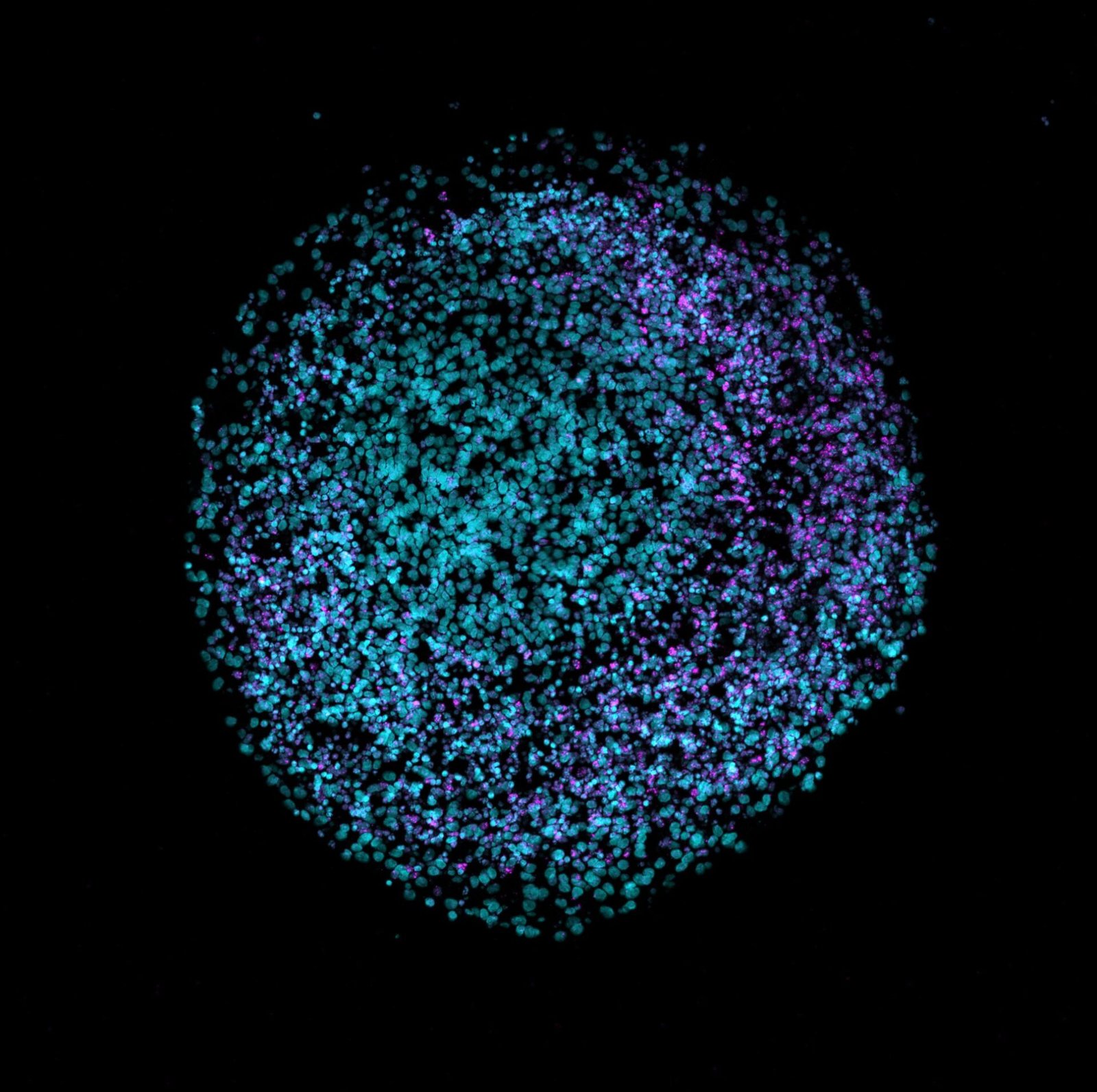
A major advance was reported by Harvard University researchers in a study published in Nature on August 19, 2026. Led by developmental neuroscientist Paola Arlotta, the team maintained human cerebral organoids in culture for five years using improved conditions that supported neurons over unusually long periods.
By comparing molecular patterns in the organoids with those in human brain development, the researchers found evidence that different cell types followed age-related transcriptional changes over time. Their work helps establish whether these models can reflect developmental periods beyond the earliest stages.
This does not establish that the organoids have memories, thoughts or consciousness. It shows that certain cellular programs can mature over years, while important physiological limitations persist.
Could they improve research on autism or Alzheimer’s disease?
Brain organoids can be grown from cells donated by individuals carrying particular genetic variants. Researchers can then compare cellular development, investigate disease mechanisms and screen experimental compounds under laboratory conditions.
These approaches may be useful in studies of autism, epilepsy, Rett syndrome and neurodegenerative conditions. They are especially appealing when human-specific biology differs from what is seen in other species.
But organoids cannot capture the entire range of influences on a living person, including the body’s immune system, metabolism, sensory experience and decades of aging. Promising results in a dish are not proof that a treatment is safe or effective in patients.
What changing U.S. policy means for animal research
On April 29, 2025, the National Institutes of Health announced a plan to prioritize human-based research technologies while reducing animal use. On June 15, 2026, NIH established its Office of Research Innovation, Validation, and Application to help develop and validate such approaches.
Those decisions did not prohibit all animal research. NIH has said scientists should select models that fit the questions being asked. Researchers interviewed by The Transmitter emphasized that organoids will need further validation before they can substitute for more complex experiments, particularly those investigating integrated brain function.
What about consciousness and research ethics?
Organoids may contain electrically active neurons, but electrical signals alone do not demonstrate awareness or subjective experience. There is no established evidence that today’s brain organoids have human-like consciousness or thoughts.
As scientists develop more complex neural models, ethical oversight will need to consider what is actually being measured rather than assuming these tissues either are—or could never become—sentient. This is a topic of ongoing scientific and bioethical discussion, not a settled claim about present organoids.
What comes next
The near-term priorities are more consistent production, appropriate mixes of brain cells, longer-term maturation, improved blood-vessel support and more accurate neural connections. Just as importantly, laboratories must test whether findings can be reproduced and whether they predict real human biology.
Brain organoids are already valuable tools. Their greatest promise is not that they recreate a human brain in a dish, but that they give researchers a new window into human development while making clear what remains beyond their reach.
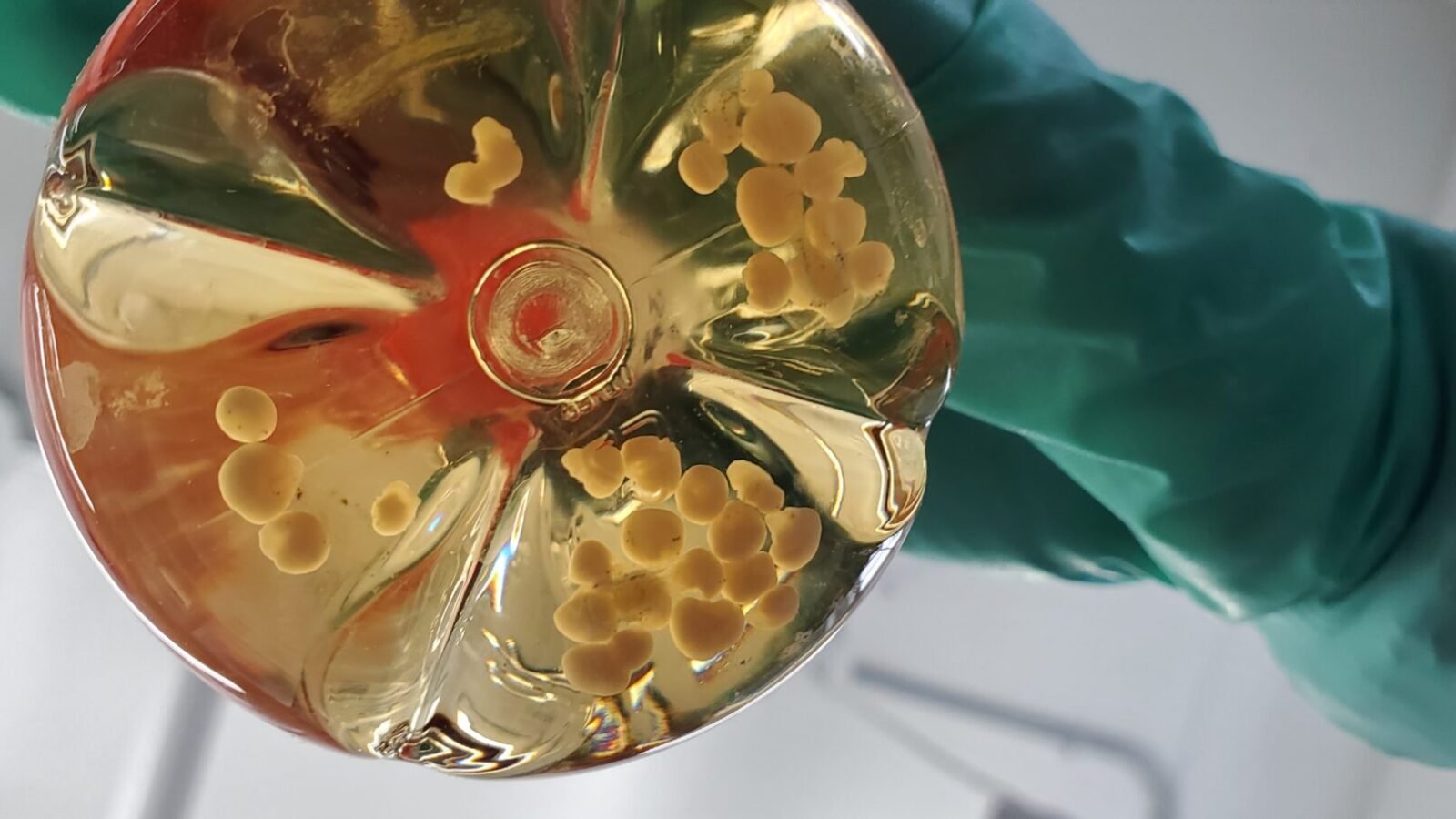
Featured photograph: An archival NIAID/NIH photograph from 2024 shows real human cerebral organoids grown in a laboratory flask, not the 2026 Harvard experiment. Credit: NIAID/NIH via Wikimedia Commons, CC BY 2.0; image displayed without editorial alteration.
Research video: Growing Human Brains in Space
In a University of California Television lecture published May 1, 2026, UC San Diego neuroscientist Alysson Muotri discusses the use of brain organoids in space research to investigate maturation, cellular aging and disease models. The lecture presents research approaches, not established medical treatments.
Sources and further reading
- The Transmitter — Human brain organoids come of age—but still have room to grow (Claudia López Lloreda, October 21, 2026).
- Nature — Human brain organoids record the passage of time over multiple years (August 19, 2026).
- National Institutes of Health — NIH to prioritize human-based research technologies (April 29, 2025).
- National Institutes of Health — New office to advance human-based research (June 15, 2026).
- University of California Television — Growing Human Brains in Space (May 1, 2026).


