Chinese regulators have prohibited SoftBank from acquiring ABB Robotics’ operations inside China, disrupting a proposed $5.375 billion global acquisition and adding uncertainty to the international competition over artificial intelligence and industrial automation.
The restriction applies to the robotics business in China. ABB and SoftBank have not announced the cancellation of their entire worldwide transaction. Both say discussions are continuing. This distinction matters for manufacturers and workers in the United States, where ABB also operates robotics facilities. ABB’s announcement and SoftBank’s regulatory notice confirm the decision.
China Blocks the Purchase of ABB’s Robotics Business in China
On November 4, 2026, SoftBank received a formal notice from China’s Office of the Working Mechanism for Foreign Investment Security Review prohibiting its acquisition of the ABB Robotics business in China. ABB confirmed the decision on November 5, and SoftBank published its own statement on November 6.
The sale was agreed on October 8, 2025, for an enterprise value of $5.375 billion. The proposed purchase remains subject to regulatory approvals and customary closing conditions. SoftBank is managing the approval process, and both companies say they are working constructively on the transaction.
Neither company has announced a revised deal, a new closing timetable or termination of the global agreement.
Why SoftBank Wanted ABB Robotics
SoftBank says its investment strategy centers on four areas: AI chips, AI robots, AI data centers and energy. Its proposed acquisition of ABB Robotics would add decades of industrial-engineering knowledge, a worldwide customer base and physical production infrastructure to its investments in artificial intelligence.
ABB Robotics employed approximately 7,000 people and generated $2.279 billion in revenue in 2024, according to SoftBank’s original transaction disclosure. The proposed acquisition was to be completed after ABB separated the division into a holding company that a SoftBank subsidiary would acquire.
SoftBank calls the convergence of robotics and AI physical AI—systems that use computing and machine perception to carry out tasks in the real world. SoftBank also cited existing robotics investments involving Berkshire Grey, AutoStore, Agile Robots and Skild AI as possible complements to ABB’s technology.
Why the Shanghai Factory Matters
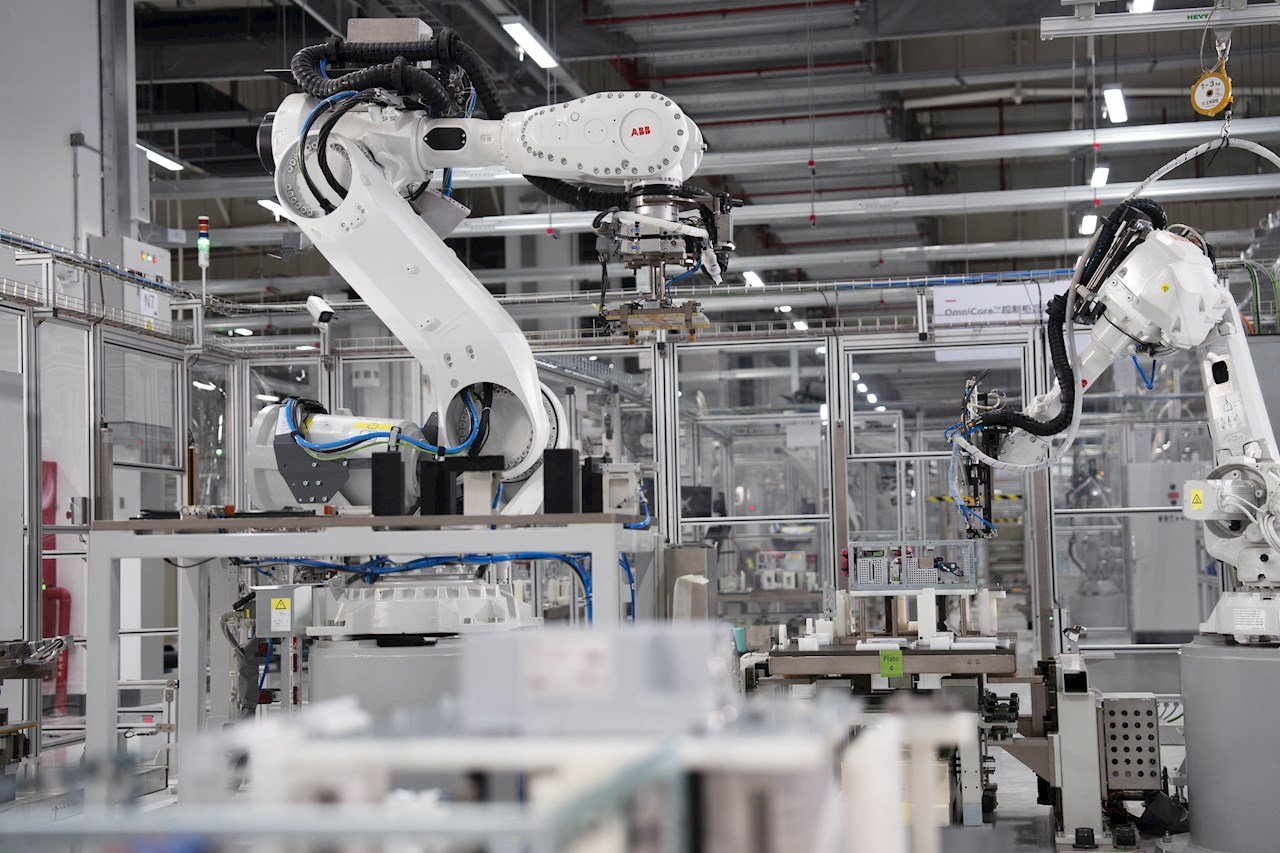
China is a major center for ABB’s robotics manufacturing and research. In December 2022, ABB opened a $150 million, 67,000-square-meter robotics mega-factory in Kangqiao, Shanghai. The company said the facility combined production with research and development, modular automated work cells, and digital systems for coordinating industrial equipment.
The Shanghai factory supports Asian markets, while ABB’s plant in Västerås, Sweden, serves Europe and its Auburn Hills, Michigan, factory serves the Americas. The operations are part of a global industrial supply system, making the Chinese business particularly important to a would-be buyer.
The main image accompanying this article shows actual ABB robots at the Shanghai facility. It is an archival company photograph from 2022, not an image of the November 2026 regulatory announcement. Source: ABB’s Shanghai factory announcement. Photo: © ABB.
Why Did Chinese Regulators Intervene?
The public ABB and SoftBank statements do not give a detailed explanation of the Chinese authority’s reasoning. Reuters and other outlets, citing Financial Times reporting, described concerns about industrial robotics data potentially being transferred abroad and used to train artificial intelligence models. SoftBank’s relationships with American AI firms, including OpenAI, were also mentioned in that reporting.
Those reported concerns are not the same as a published government finding. The companies’ disclosures do not establish that any espionage, illegal data transfer or other criminal wrongdoing took place in connection with the transaction. Reuters’ November 5 coverage offers context on the regulatory concerns and ongoing talks.
The American Connection: Michigan Manufacturing and Jobs
ABB’s robotics footprint extends to American factories and researchers. In March 2024 the company opened an expanded U.S. robotics headquarters and production facility in Auburn Hills, Michigan, following a $20 million investment. ABB said the expansion would support its U.S. customers and create 72 highly skilled positions.
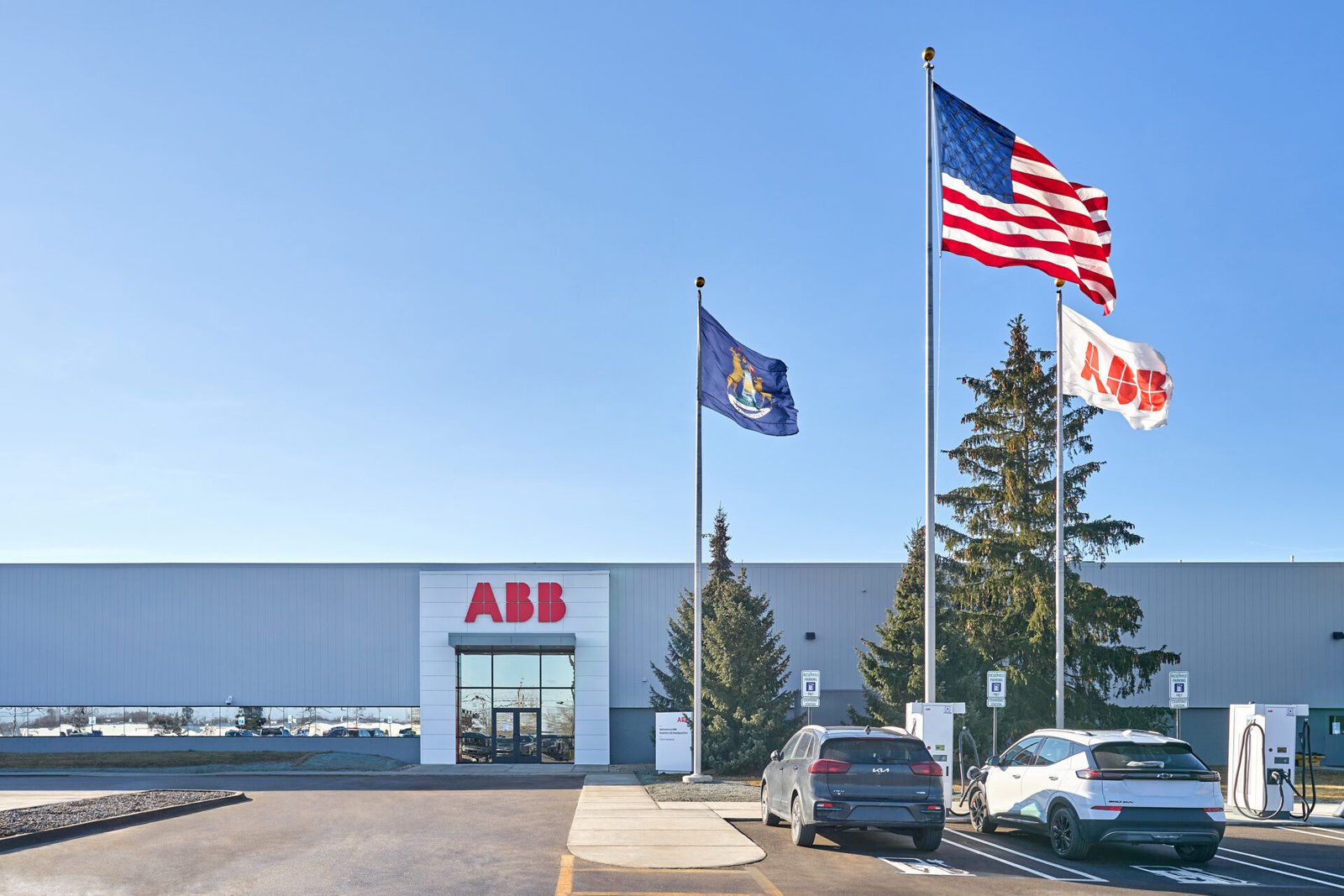
ABB also identified U.S. robotics investments associated with packaging and logistics in Atlanta, life-sciences and healthcare research in Houston, and research and development in San Jose. The company’s American operations serve manufacturing sectors such as automotive production, food and beverage, pharmaceuticals and logistics.
A lengthy ownership dispute could affect future investment priorities, technology integration and customer relationships. But ABB has not announced U.S. factory closures, production suspensions or layoffs resulting from China’s November 2026 decision. The immediate documented consequence is uncertainty surrounding a proposed ownership change, not a verified American employment crisis.
How U.S. Robotics Growth Compares With China
The International Federation of Robotics reported that U.S. manufacturers installed about 38,400 industrial robots in 2025, an increase of 12% from 2024. China installed about 354,000, accounting for roughly 59% of global industrial robot installations. According to the federation, the United States moved ahead of Japan to become the world’s second-largest national market for new industrial robot installations.
These are annual installations, not counts of every robot operating in either country’s factories. They illustrate both rising U.S. demand for automation and the much larger scale of China’s industrial robotics market. Source: International Federation of Robotics, World Robotics 2026.
The Growing Competition Over Physical AI
Industrial robots already weld, assemble, sort, package and move goods. Improvements in machine vision and AI could allow some systems to handle more varied tasks and adjust to changing factory conditions with less manual programming. That creates commercial interest in the machines themselves, the software that controls them and the data they collect.
The proposed ABB–SoftBank deal sits at the intersection of manufacturing hardware and advanced computing. For U.S. businesses, it illustrates how decisions made by foreign regulators can shape access to technology and the business plans of international equipment suppliers.
It would go beyond the evidence, however, to claim that China’s restriction was designed specifically to harm American manufacturing. Official statements confirm the prohibition; explanations about its precise motivation remain partly based on attributed reporting and analysis.
What Happens Next?
ABB and SoftBank may explore ways to address the Chinese prohibition, consider a revised transaction structure or revisit the global agreement. Those are possibilities rather than announced plans. The companies have not provided a timetable or disclosed a final alternative.
For American manufacturers and policymakers, the unresolved issues are practical: who will own a global industrial-robotics supplier, where future robotics investments will be made, and how sensitive industrial data will be governed as AI spreads through factory systems.
Video: Inside ABB’s Shanghai Robotics Mega-Factory
▶ Watch the official ABB Robotics factory video
Sources and References
- ABB — Update on Divestment of ABB Robotics (Nov. 5, 2026)
- SoftBank Group — Update on Acquisition of ABB Robotics (Nov. 6, 2026)
- SoftBank Group — Original Acquisition Announcement (Oct. 8, 2025)
- Reuters — China Blocks SoftBank ABB Robotics Takeover (Nov. 5, 2026)
- ABB — Shanghai Robotics Factory (Dec. 2022)
- ABB — Auburn Hills, Michigan, Factory Expansion (Mar. 2024)
- International Federation of Robotics — World Robotics 2026
- ABB — Terms of Use / Editorial Photography Rights
Editorial note: This report reflects information publicly available through November 6, 2026. Regulatory concerns reported by third parties are distinguished from the companies’ confirmed announcements. Archival photographs © ABB are reproduced with clear source credits for related editorial news reporting.