New neuroscience is sharpening questions about how social media affects children’s developing brains, but scientists have not established that social media causes permanent brain damage. A November 4, 2026, Nature review examined evidence about attention, the brain’s reward system, sleep, and measurable structural changes during adolescence.
The issue is especially relevant in the United States, where young people regularly carry smartphones into classrooms and where families and educators are weighing whether restrictions and digital-literacy programs can help protect sleep and concentration.
Why adolescent brains attract researchers’ attention
During adolescence, brain systems involved in social reward, peer relationships and emotional responses mature alongside networks responsible for planning and self-control. Researchers are investigating how platform features such as notifications, likes, recommendation feeds and endless scrolling interact with that period of development.
As Nature reports, developmental neuroscientists see reasons for concern about rapidly delivered social rewards. But a brain’s response to rewards is not, by itself, evidence of addiction or injury. A central question remains whether patterns of online use change development, whether pre-existing characteristics influence use, or whether both happen together.
A U.S. school-day study: 79 young people, 64 checks
In a 2026 study in JAMA Network Open, University of North Carolina researchers Eva H. Telzer and Kaitlyn Burnell examined smartphone activity among 79 participants aged 11 to 18.
The students spent an average of 2.22 hours on their phones during school hours and checked them an average of 64.46 times. More frequent checking was associated with poorer performance on a measure of cognitive control in the subset tested. The research was cross-sectional: it documented a relationship, not proof that phones caused weaker attention.
Another study discussed by Nature followed more than 8,300 children for four years and found a relationship between increased social-media use and symptoms of inattention. The study does not establish that social media causes attention-deficit/hyperactivity disorder, and it should not be presented as a diagnosis.

Brain imaging reveals small differences, not proven damage
Researchers also analyzed magnetic resonance imaging data from 1,462 participants in the U.S. Adolescent Brain Cognitive Development study. Over four years, greater social-media use was associated with a small difference in the developmental trajectory of cerebellum volume. The cerebellum helps coordinate movement and contributes to functions including memory and cognition.
The 2024 research in Scientific Reports did not establish lasting harm. Scientists need additional long-term data to determine whether such changes have meaningful consequences, whether they reflect other environmental or individual differences, and whether any changes persist.
Sleep may help explain the mental-health link
Sleep is another major concern. A study involving 976 children, discussed in the Nature review, identified relationships among screen exposure, shorter sleep, differences in white-matter organization and depressive symptoms. White matter supports communication between regions of the brain.
These findings suggest that sleep may be one pathway connecting some online habits with adolescent well-being. They do not mean that every child who uses a phone at night has suffered a brain injury.
The wider evidence is important—but mixed
A 2026 systematic review and meta-analysis in JAMA Pediatrics examined as many as 153 longitudinal studies of digital media and child development. Across the evidence reviewed, social-media use was associated with higher levels of several mental-health and behavioral difficulties and lower academic-achievement and self-perception measures.
Associations were generally modest and varied by media type and outcome. An observed statistical association does not prove a single mechanism or establish that every form of screen use is harmful.
What U.S. teenagers themselves say
A Pew Research Center survey published in April 2025 offers a fuller picture of young people’s experiences. Among U.S. teenagers ages 13 to 17, 74% said social media helped them feel more connected to friends, and 63% said it provided a place to show their creativity. At the same time, 45% said they spent too much time on social media, and 19% said it hurt their mental health.
Pew surveyed 1,391 teenagers and parents in September and October 2024. These are self-reported experiences, not clinical diagnoses or evidence of causation. They underscore why researchers avoid treating all teenagers and all forms of social media as interchangeable.
What families and schools can do
The American Academy of Pediatrics encourages families to evaluate media habits through its 5 Cs framework: Child, Content, Calm, Crowding Out and Communication. This approach asks what a child is viewing, how they respond, whether online habits interfere with sleep or offline relationships, and whether adults keep communication open.
In practice, families can protect regular sleep schedules, turn off nonessential notifications during study time, make space for offline relationships and discuss stressful online experiences without assuming that every digital interaction is harmful. Schools can help by addressing classroom interruptions and teaching students how algorithms and persuasive design work.
For additional guidance, the AAP offers an official collection of videos and resources on social media and youth mental health.
What scientists still do not know
Longer studies are needed to separate cause from correlation, identify which online features matter most, and determine whether observed differences in brain development have lasting consequences. Researchers also need to understand how effects vary with age, sleep, mental-health history, social support and the kind of content young people encounter.
The evidence justifies attention, thoughtful safeguards and continued research—not the sweeping conclusion that social media irreversibly damages children’s brains.
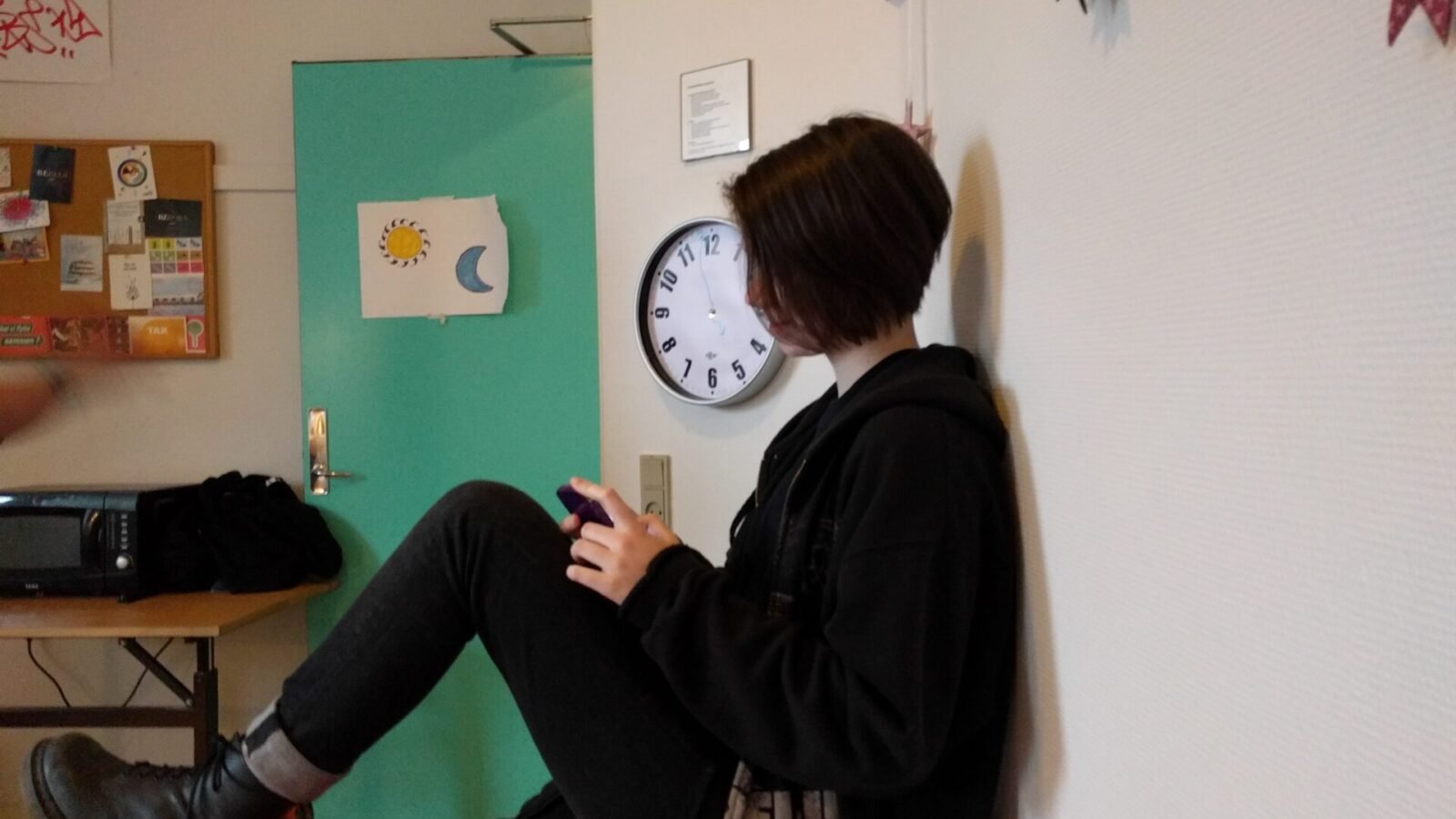
Featured photograph: Teenager using a smartphone, photographed in December 2016. TheEgdeLord / Wikimedia Commons, CC BY-SA 4.0. Illustrative photograph, not a study participant.
Sources
- Bianca Nogrady, “Is social media changing children’s brains? Here’s what the science says,” Nature, November 4, 2026.
- Telzer and Burnell, “Smartphone Use During School Hours and Association With Cognitive Control,” JAMA Network Open, March 2026.
- Nivins and colleagues, digital media and brain development study, Scientific Reports, 2024.
- Teague and colleagues, “Digital Media Use and Child Health and Development,” JAMA Pediatrics, 2026.
- Pew Research Center, “Teens, Social Media and Mental Health”, April 2025.
- American Academy of Pediatrics, Center of Excellence on Social Media and Youth Mental Health.