OPINION | Khemetic Nation News Network
At a time when attention is often mistaken for influence and outrage for leadership, one of the most important questions facing our communities is surprisingly simple: What does it mean to live by the values we publicly celebrate?
We can honor our heritage with festivals, art, architecture, and language. We should. But cultural restoration cannot stop at what we display. It must also shape how we treat a neighbor, how we share information, how we protect children, and how we handle power.
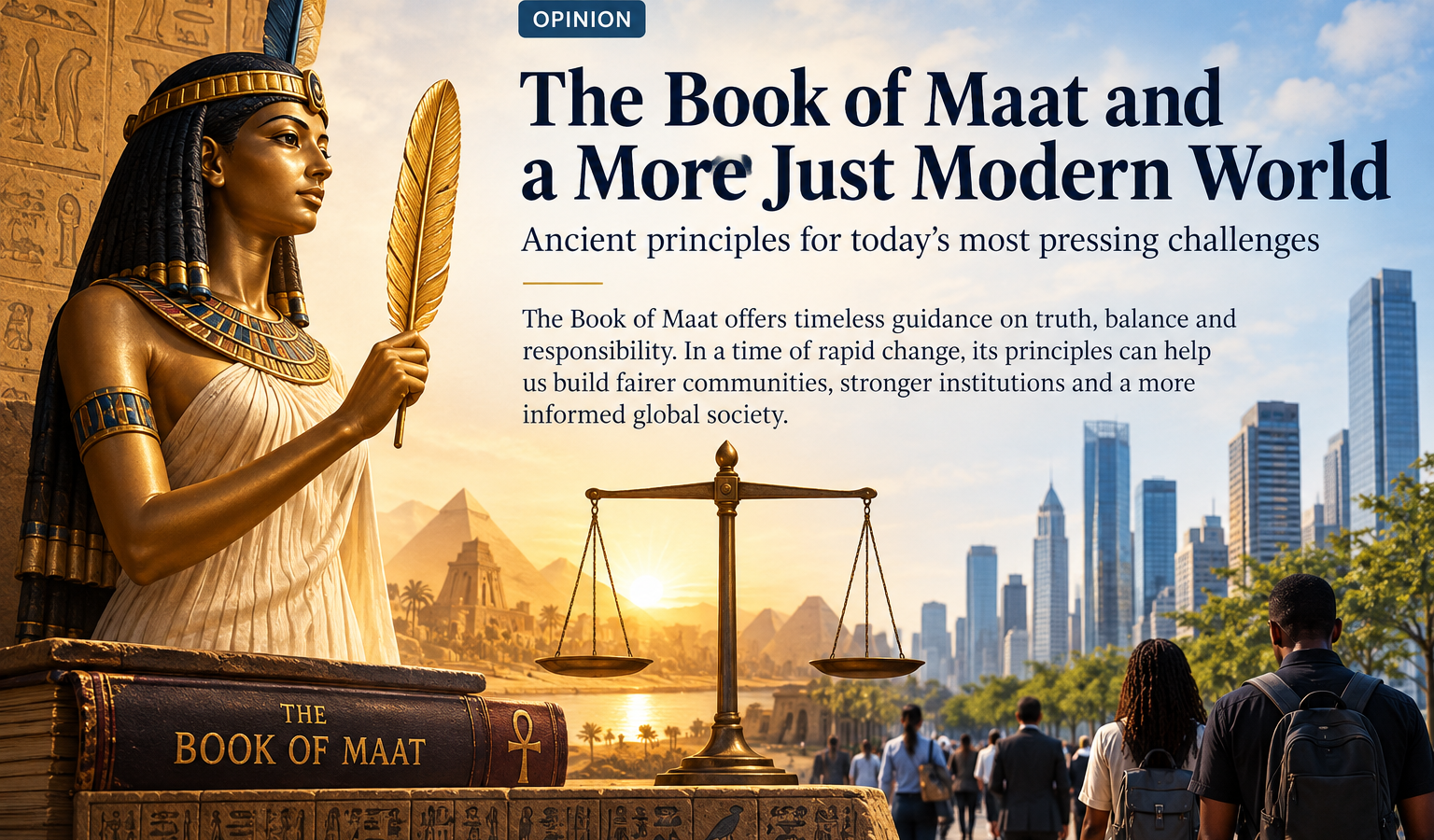
That is what makes the Book of Maat a useful companion to a modern conversation about justice. Its 2018 compilation brings together spiritual, literary, and ethical material associated with Khem/Egypt. The collection is not a single ancient document, and its philosophical passages should be read as teachings rather than proofs of any modern scientific claim. Still, the moral questions it raises are urgent.
Truth Is More Than Being Right
In the section titled Lost Books of Maat, the 42 Laws of Maat include the statements “I have not told lies” and “I have not closed my ears to truth” (2018 edition, p. 155). These two ideas belong together.
We cannot claim to love truth while refusing to hear inconvenient evidence. In the age of viral posts, this standard requires more than avoiding a deliberate lie. It asks us to verify a claim before spreading it, correct an error publicly, and listen carefully before condemning someone.
In my view, a stronger public culture begins not when everyone agrees but when disagreement no longer excuses dishonesty.
Balance Must Be Visible in Everyday Life
The same list includes “I have not polluted the water” and “I have not taken food from a child” (pp. 155–156). These are strikingly practical principles. Whatever our spiritual beliefs, they point toward an ethical test: how are the most vulnerable people and the resources everyone depends on being treated?
A community that speaks proudly about its ancestors but overlooks children’s learning, food security, or clean surroundings has confused remembrance with responsibility.
Living Maat today might mean supporting literacy, mentoring young people, keeping public spaces healthy, resolving disputes fairly, and building institutions that can be trusted with shared resources. These are everyday responsibilities, not distant ideals.
What the Seven Principles Add
In The Seven Principles of Maat, the Principle of Rhythm describes the rising and falling of circumstances, while the Principle of Cause and Effect emphasizes the relationship between actions and consequences (2018 edition, pp. 157–158).
I read these principles as a reminder that positive change requires patience and deliberate action. Communities go through difficult seasons. A setback is not the whole story; neither is a moment of success. What matters is what we build consistently, and whether our decisions create conditions in which others can flourish.
These are philosophical interpretations, not evidence that every social outcome is predetermined. In modern civic life, good intentions still need clear rules, fair budgets, independent scrutiny, and accountability.
From Cultural Pride to Cultural Practice
There is a meaningful difference between ancient ethical language and contemporary public institutions. A personal declaration of innocence, by itself, cannot prevent injustice. Systems must make misconduct difficult to hide and correction possible when harm occurs.
But Maat can still offer a moral question that every institution and individual ought to face: Are we bringing more truth, fairness, and care into the world than we found?
That is a standard we can apply today. Check information before sharing it. Protect a child’s opportunity to learn. Care for a shared resource. Disagree without cruelty. Judge leadership by service and accountability, not applause.
Our history deserves to be remembered. Our future deserves to be built. The bridge between the two is not simply pride—it is practice.
Editorial disclosure: This article expresses the opinion of the Khemetic Nation News Network editorial desk. Its comparison draws from the Book of Maat, 2018 edition, “Lost Books of Maat,” pp. 155–158, and should not be understood as independent historical authentication of every passage in the compilation.