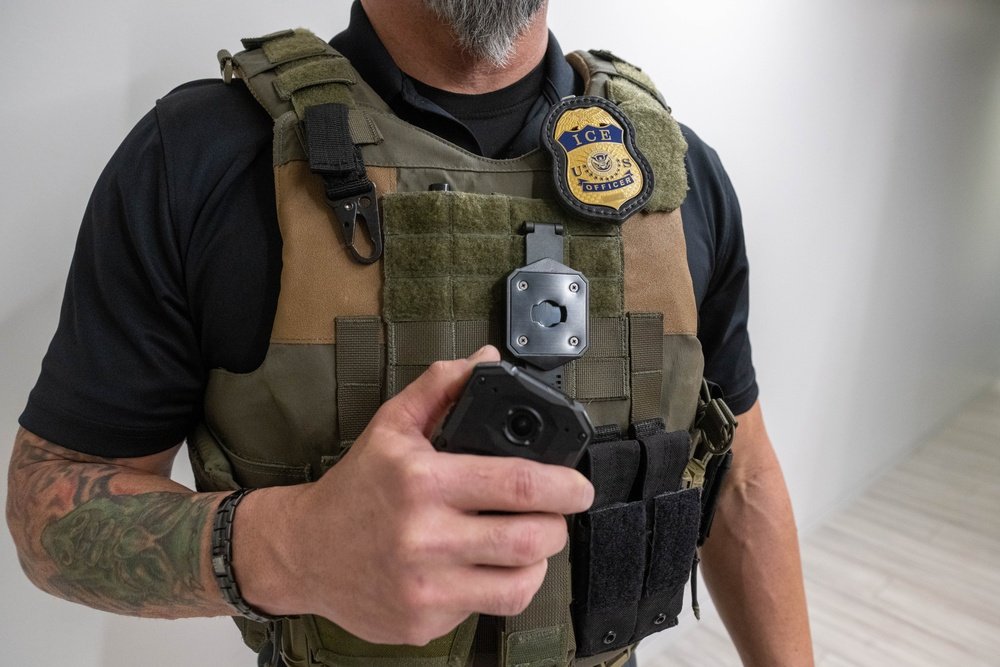
WASHINGTON — U.S. Immigration and Customs Enforcement (ICE) has reportedly introduced a body-camera function that can activate nearby agents’ cameras when one officer begins recording. The reported change could produce multiple views of an enforcement encounter, but the agency has not publicly documented its scope or effectiveness.
In a November 16, 2026 report, The Daily Wire cited three unnamed ICE sources who said cameras in the vicinity begin recording when another officer activates theirs. According to those sources, nearby cameras also begin recording when an agent uses a Taser. The sources described the change as a measure intended to strengthen accountability.
The Daily Wire said ICE and the Department of Homeland Security did not respond to its requests for comment. Khemetic.News has not independently verified the new configuration or located a published ICE technical directive documenting a nationwide rollout. The account should therefore be treated as a report based on anonymous sources, not an official agency announcement.
How synchronized activation could work — and what is not established
The reported change describes two triggers: activation by another officer’s camera within range and activation associated with Taser use. Neither the range, exact triggering conditions, error rate nor proportion of ICE-issued cameras running the feature was established in the report.
A coordinated recording system is not necessarily the same as a camera that automatically begins recording when an officer draws a weapon or initiates a stop. If no camera is activated and no other configured trigger occurs, an encounter might still lack video. It remains unknown how the reported update handles that scenario.
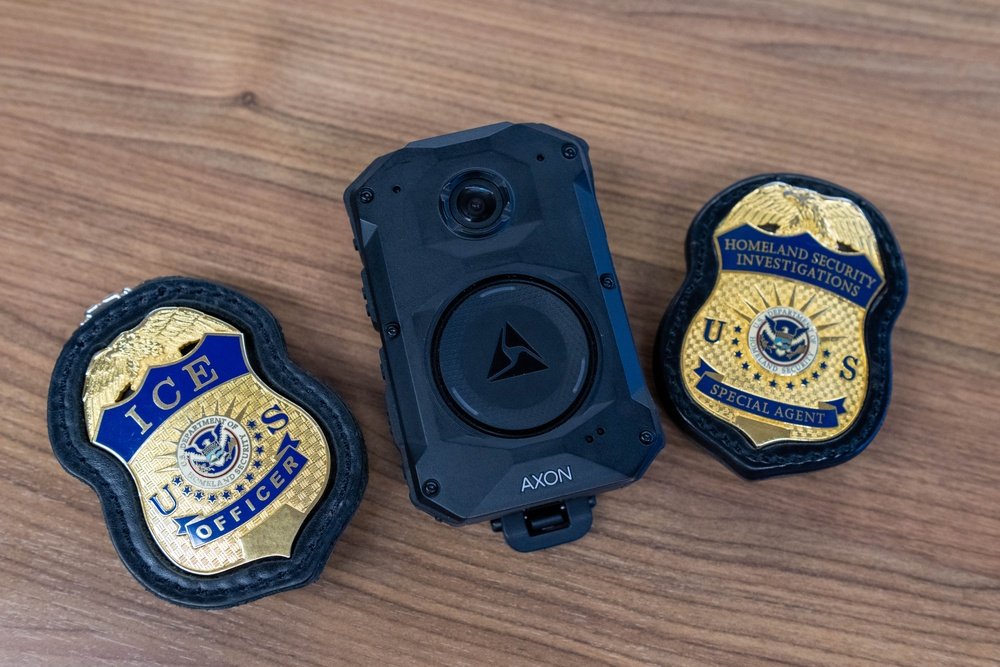
The GAO had warned that important encounters could go unrecorded
A separate, independently verifiable Government Accountability Office report, GAO-26-108157, published September 15 and publicly released October 14, 2026, assessed ICE and U.S. Customs and Border Protection body-camera programs. As of April 2026, ICE had deployed approximately 4,800 cameras across Enforcement and Removal Operations and Homeland Security Investigations. This is a historical deployment figure, not a verified November count.
The watchdog said ICE needed stronger controls to ensure cameras were activated as policy required. Its seven recommendations for the two agencies included improved program plans, performance measurements and operational guidance. One ICE-specific recommendation called for additional activation safeguards, such as automated technology.
DHS accepted six of the seven recommendations but initially rejected automated activation controls, citing privacy and operational concerns. The Associated Press, reporting on the GAO findings in October, described the department’s concerns that inadvertent recording could capture sensitive discussions involving informants, victims and people engaging in constitutionally protected activity.
The newly reported synchronization feature might address some of the recording gaps identified by investigators, but it does not by itself establish that ICE has implemented the precise safeguard GAO recommended. The GAO recommendation remained listed as open on its public report page during this review.
The accountability test extends beyond pressing record
Body-worn video can help reconstruct searches, arrests, confrontations and uses of force. Multiple angles may provide evidence that a single officer’s view misses. But accountability also depends on whether officers use the equipment consistently, whether recordings are stored securely, and who can review or obtain them.
ICE’s policies governing the release of body-camera footage have also drawn scrutiny. Reporting by The Guardian in August described agency discretion over disclosure of recordings in serious-injury and death cases. The distinction is important: preserving footage for an internal investigation does not necessarily mean the public, families or attorneys can immediately access it.
Separately, The Washington Post reported November 10 that the DHS inspector general was examining ICE compliance with requirements to activate cameras and store footage properly. That audit, unlike the anonymous-source report on the updated feature, is a documented oversight process.
What officials still need to explain
- Which field offices and personnel have the synchronized activation feature?
- What events trigger recording, and how far apart can cameras be while remaining linked?
- How are false activations, equipment failures and prohibited recordings handled?
- How are recordings preserved, reviewed and made available in investigations?
- Will ICE or an independent watchdog publish a technical policy and measurable compliance results?
Until those details become public, the reported upgrade is best understood as a potentially useful operational change whose real-world effects remain unverified. For communities affected by immigration enforcement, the key measure will be whether the system creates complete, trustworthy and independently reviewable records.
Related official archival video
ICE announces initial deployment of body-worn cameras — official ICE video released through DVIDS in March 2024, filmed by James Truitt. This is archival material from the earlier camera deployment, not footage demonstrating the alleged November 2026 synchronized system. The DVIDS page identifies the video as public domain.
Sources
- Jennie Taer, The Daily Wire, November 16, 2026 — anonymous-source report on linked camera activation
- U.S. Government Accountability Office, GAO-26-108157 — body-camera program findings, deployment figures and recommendations
- Associated Press, October 14, 2026 — DHS response to automated activation proposal
- The Washington Post, November 10, 2026 — inspector general audit of body-camera compliance
- The Guardian, August 7, 2026 — ICE footage disclosure policy
- DVIDS / ICE, March 2024 — official archival video