Science Desk | November 20, 2026 | By Joseph
Newly published astronomical research is giving scientists a rare way to follow the life cycle of a stellar collision. On November 18, NASA reported that observations from multiple telescopes, including the James Webb Space Telescope, helped reconstruct the merger of two stars in the Andromeda galaxy. The cosmic eruption itself occurred in October 2025, not this week.
What scientists observed
A smaller star spiraled into a much larger supergiant in a system researchers nicknamed Bao, catalogued as AT 2025abao. The research team combined historic NEOWISE data, ground-based monitoring, the SPHEREx survey and Webb observations taken on December 24, 2025. NASA says Webb followed the eruption about 47 days after its peak, unusually soon for this type of event.
The study provides evidence about how a companion star can lose orbital energy while moving inside a larger star’s extended gaseous envelope. It is a close-up reconstruction of a process that is otherwise difficult to observe as it happens. The researchers have not suggested that all stellar collisions unfold in the same way.
Why the timing matters
The original changes were noticed in earlier telescope data, and the eruption was recorded on October 17, 2025. The news in November 2026 is the publication and interpretation of the combined observations. That distinction is essential when reporting a discovery as current news.
A separate philosophical perspective
The Book of Maat (2018 edition, p. 156, The Seven Principles of Maat, Principle of Correspondence) discusses reasoning from known patterns toward the unknown. The comparison here is philosophical: astronomy instead relies on measured light, tested models and reproducible analysis. The text does not establish or predict the physics of a stellar merger.
Source: NASA’s November 18 science report, including links to the research publication.
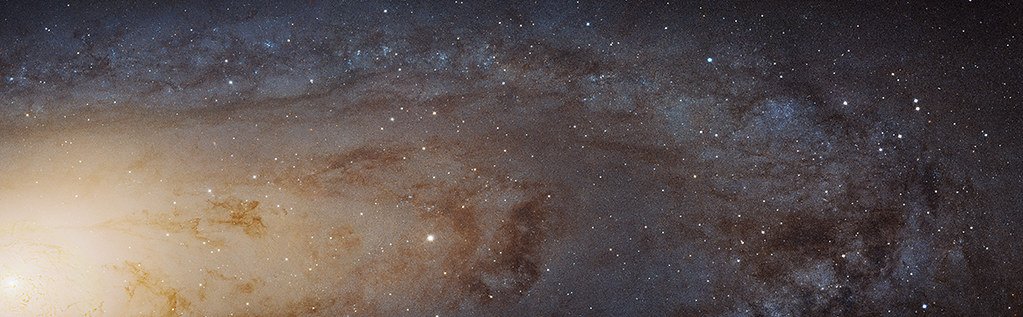
Featured photograph: archival Hubble panorama of Andromeda by NASA Goddard Photo and Video, CC BY 2.0. It does not depict the star Bao directly.