Microsoft has secured a U.S. patent describing technology that could turn privately owned computers into a distributed artificial intelligence training network, using spare processing capacity when owners are not running demanding applications.
The invention, Opportunistic Micro-training on Edge Devices Using Spare GPU Utilization, was issued as U.S. Patent 12,792,414 B2 on November 10, 2026. Microsoft Technology Licensing LLC is the named assignee, and Aditya Vasanth Challapally is the named inventor. The application was filed April 30, 2025, and published November 5, 2026.
The invention describes dividing complicated AI-training workloads into smaller assignments and distributing them across gaming computers, laptops, smartphones and other compatible devices.
It also describes the possibility of compensating participating device owners with money, software or access to AI models. However, Microsoft has not announced a commercial service based on this patent, and the patent does not establish guaranteed payments.
How Microsoft’s distributed AI training would work
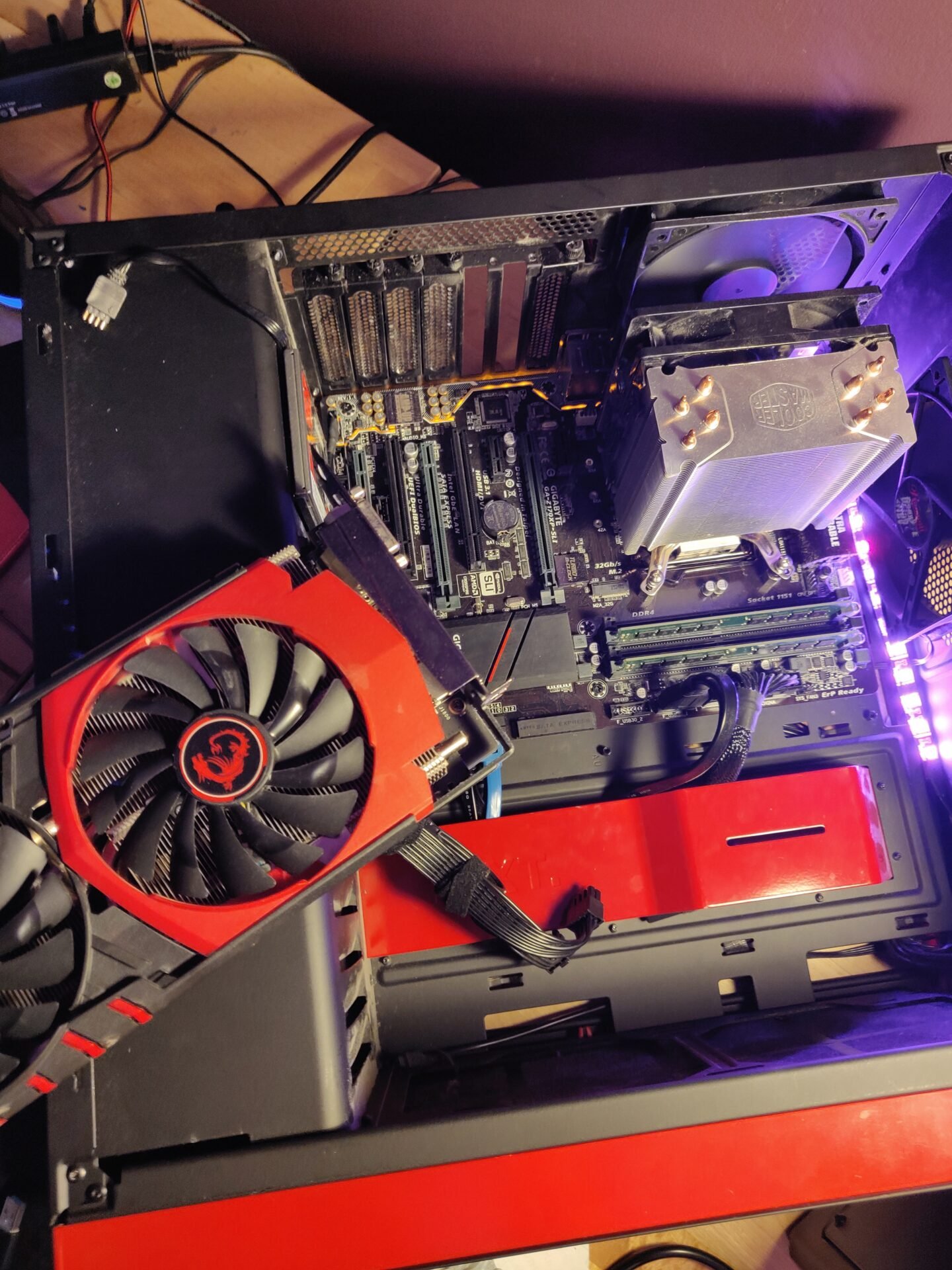
Modern AI training relies heavily on graphics processing units, or GPUs. Originally developed for graphics-intensive tasks, these processors have become important infrastructure for artificial intelligence.
Microsoft’s invention proposes using processing capacity already installed in consumer devices. The system would analyze an AI model, identify calculations that could be performed independently, and divide those calculations into smaller tasks.
Participating computers would receive work when they had sufficient unused resources. The patent’s description discusses monitoring GPU utilization, memory consumption, temperature and power use. If a computer became busy, workloads could be adjusted or suspended to reduce interference with its normal operation.
Completed calculations would be returned for evaluation and incorporated into the larger AI model. The patent describes methods for detecting unreliable or manipulated results, including comparing computations across devices and weighting outcomes by their trustworthiness, age and device reliability.
These are proposed technical mechanisms. Their effectiveness in a large-scale consumer deployment has not been established.
Would Microsoft actually pay PC owners?
The possibility of earning money from unused computing capacity has attracted attention. The published patent application describes third-party device owners who expressly authorize participation and suggests tracking their computational contributions.
Possible rewards include credits redeemable for software, access to AI models and monetary payments. But the patent’s 20 claims focus on distributing, scheduling and validating computing workloads rather than specifying a mandatory compensation arrangement.
There is no announced payment rate, minimum earnings guarantee, list of eligible graphics cards or consumer enrollment program. The document therefore does not establish that Microsoft will pay consumers, how much it would pay or when any program might become available.
The hidden cost: electricity and hardware
Allowing an outside organization to use a household GPU would not automatically generate passive profit. A computer that is technically idle still consumes power, and performing additional calculations increases its electricity demand.
For illustration, a sustained increase of 250 watts for four hours daily would consume approximately 30 additional kilowatt-hours over 30 days. At 15 cents per kilowatt-hour, that costs $4.50 per month; at 35 cents, $10.50.
Those are simple hypothetical calculations, not measurements of Microsoft’s system. Real costs would depend on hardware efficiency, workload intensity, local electricity prices and operating hours.
Consumers would also need to consider cooling, fan noise, sustained temperatures, possible component wear, and whether compensation would exceed operating expenses.
A familiar idea with a commercial difference
Distributed computing is not new. Folding@home uses volunteer computers to perform molecular simulations that support biological research. It divides scientific calculations among contributors and combines their results.
Microsoft’s proposal shares that broad approach, but its specific mathematical methods and possible commercial applications differ. Folding@home is a volunteer research effort; a future Microsoft-based platform could help train commercially valuable AI models.
That raises a question for consumers: if an AI company benefits from privately purchased computers and household electricity, what constitutes fair payment for the resources being supplied?
Privacy, consent and consumer control
The patent’s description of expressly authorized participation is significant, but it does not settle every privacy and consumer-protection issue.
A future service would need to explain what information it gathers about computers, how training tasks are secured, whether participating systems could receive unsafe workloads and how users could pause or withdraw access.
These are questions about a possible future implementation, not evidence that Microsoft has secretly activated this feature on Windows computers. There is no verified announcement that Microsoft is automatically using consumers’ GPUs through a program based on this patent.
Could this change America’s AI infrastructure?
Millions of computers operating together could potentially supplement dedicated AI training infrastructure for some types of calculations. However, consumer devices have inconsistent availability, diverse performance capabilities and varying network connections. Coordinating them creates technical challenges that conventional data centers manage with more predictable infrastructure.
Distributed training might therefore supplement centralized computing without replacing data centers or eliminating AI’s energy demands. For American consumers, the important question is whether privately owned computational capacity could eventually become a marketable resource under transparent, voluntary terms.
What happens next?
Microsoft now holds an issued U.S. patent on the described invention, but a patent grant does not mean a product has launched. No verified launch date, participant agreement or payment schedule has been announced.
For now, claims that PC owners can earn money by training Microsoft’s AI systems describe a potential business model, not an available income opportunity.
Sources and image credit
- U.S. Patent and Trademark Office — Issued Patent 12,792,414 B2 (November 10, 2026)
- U.S. Patent Application 2026/0349820 A1 — Technical description and compensation discussion
- TechPowerUp — Microsoft Patent Describes Paying PC Owners to Train AI on Idle GPUs
- VideoCardz — Microsoft Patent Describes Turning Idle Gaming GPUs Into Paid AI Training Hardware
- Folding@home — How Distributed Volunteer Computing Works
Featured historical photograph: Microsoft signage at the company’s Redmond, Washington campus, photographed May 2022 by Lectrician1. Wikimedia Commons original; CC BY-SA 4.0. This image shows the company campus, not an operational GPU-sharing program.