November 19, 2026 — An investigation into an AI-assisted fake-identification business has exposed a troubling overlap between online identity fraud and the North Korean remote-worker schemes targeting American employers. U.S. authorities have independently documented how North Korean operatives used stolen identities, proxy computers and American intermediaries to obtain jobs, collect paychecks and access corporate networks. A new account from 404 Media describes how the creator of the fake-ID service OnlyFake learned that people linked to North Korean IT-worker operations reportedly used his platform.
The distinction matters: the federal record establishes the existence and scale of fraudulent North Korean remote hiring. The specific connection between OnlyFake purchases and North Korean operatives is reported by 404 Media, based on interviews, and is not independently established in the public U.S. Justice Department announcements reviewed for this article.
OnlyFake Turned Counterfeit Documents Into an On-Demand Service
Yurii Nazarenko, also known as Yuriy Nazarenko, built OnlyFake to produce digital images of fraudulent driver’s licenses, passports and other identification documents. Unlike an ordinary flat forgery, the service could produce images that looked like photographs of identification cards resting on a desk or other surface. That staging could make a submission appear more like the snapshots banks and other companies routinely request for identity checks.
On February 26, 2026, the Justice Department announced that Nazarenko pleaded guilty to conspiracy involving fraudulent identification documents. Prosecutors said the site had produced at least approximately 10,000 digital fake IDs during its operation and had offered bulk packages. Nazarenko also agreed to forfeit $1.2 million in proceeds, according to the government. The forfeiture figure should not be confused with a verified count of documents purchased by North Korean customers.
In his November 5 investigation, 404 Media reporter Joseph Cox described how Nazarenko moved from painstaking manual document editing to a largely automated business, using generative AI for portions of the output. Nazarenko told Cox that the business grew well beyond his expectations. The account is based on Cox’s reporting and interviews, not interviews conducted by Khemetic.News.
What 404 Media Reported About North Korean Customers
In 404 Media’s accompanying podcast, Cox recounts that Nazarenko said United Nations investigators contacted him after the service came to public attention in 2024, indicating that North Korean IT workers were using OnlyFake and seeking information about those users. According to Cox’s account, Nazarenko said he did not respond to the request.
This is a significant allegation, but it should not be overstated. The accessible Justice Department release about OnlyFake does not identify particular North Korean customers, specific U.S. employers reached through OnlyFake documents, or transaction records showing that the site caused a particular fraudulent hire. Nor does the podcast transcript supplied for this article independently verify the reported United Nations communication. Those details remain attributed to 404 Media’s investigation.
Original video: Watch 404 Media’s full video discussion of the OnlyFake investigation on YouTube. Video credit: 404 Media. This link opens the publisher’s own upload and avoids an unverified embedded player.
The Broader North Korean Hiring Scheme Is Well Documented
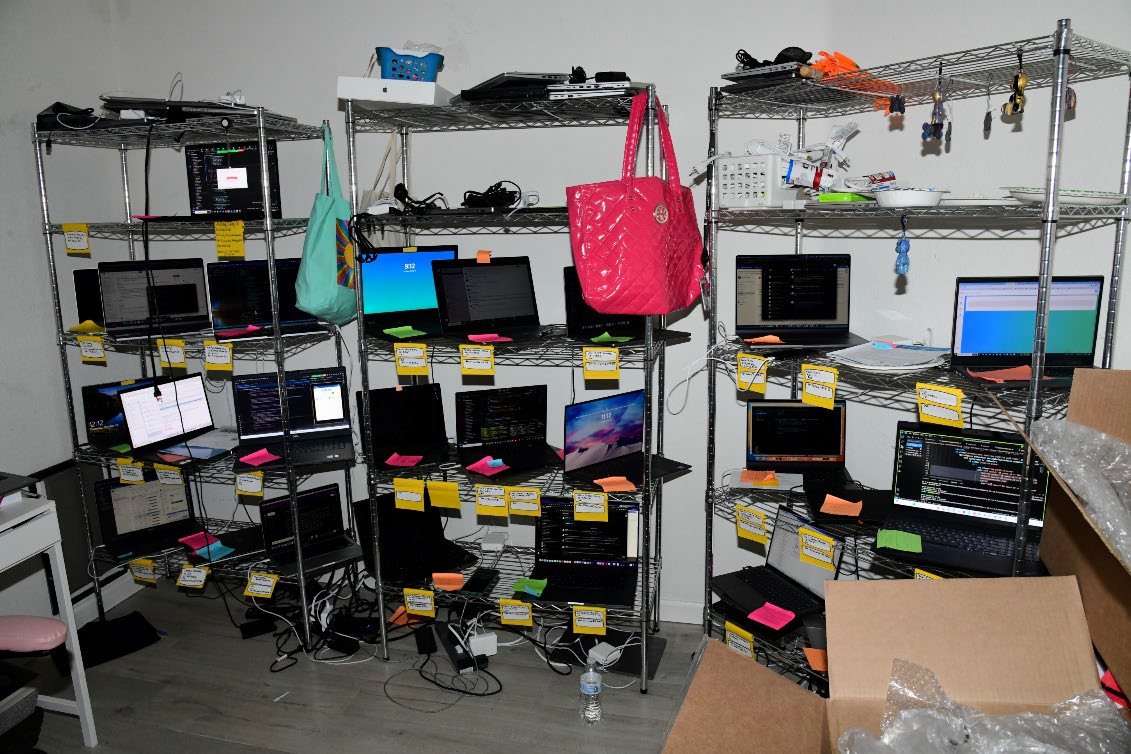
In a separate October 13, 2026 announcement, the Justice Department described a remote-employment operation affecting more than 70 U.S. companies. An indictment alleges that workers hid their identities behind fake documents, online accounts and remote-access tools. U.S.-based facilitators allegedly kept company-issued laptops connected at domestic addresses to conceal where the work was actually performed.
The operation generated approximately $3 million in revenue, which prosecutors believe was sent to North Korean-controlled sanctioned entities. As part of coordinated enforcement in Texas, investigators searched more than 40 residences and seized about 187 computers and related control devices. The employers cited by DOJ operated in sectors including health care, communications, cyber support, retail and manufacturing. These figures concern the federal remote-work investigation, not a proven subset of OnlyFake customers.
Federal cases also show that the fraud can depend on people inside the United States. On October 28, 2026, the U.S. Attorney’s Office for the Eastern District of Virginia announced that a defense-contractor employee, John Allen Kurrle Jr., pleaded guilty to conspiracy to commit wire fraud after allowing foreign individuals to use identities to apply for remote jobs. According to prosecutors, the applications generated nine job offers; Kurrle also received employer laptops and enabled overseas access. His sentencing was scheduled for January 2027.

How AI Changes the Hiring and Verification Problem
Forged documents are only one element. In a January 2025 advisory, the FBI said it had observed North Korean IT workers use artificial intelligence and face-swapping technology during video interviews to hide their identities. The FBI’s October 2026 warning documented an expanded network of facilitators who may take interviews, verify identities or host work equipment on another person’s behalf.
AI can help make a counterfeit document or on-camera identity appear more convincing, while automation can let an operator produce many variations quickly. However, it is not accurate to suggest that every document in such schemes is wholly AI-generated. Investigators describe a mixture of stolen real identities, altered documents, human intermediaries, remote-access systems and AI-enabled impersonation.
What Is at Stake for American Workers and Businesses
There are several distinct victims. A person whose identity is stolen may face tax, credit or employment-record complications. A company may unknowingly pay a fraudulent worker and allow access to confidential code, customer information or internal systems. The FBI has also warned of cases involving data theft and extortion after suspect workers were discovered. U.S. authorities say some revenue is directed to North Korea’s government and weapons programs.
The FBI recommends verification at multiple stages of the hiring and employment process, strong access controls, and investigation of unexplained remote-access activity. Its latest advisory also cautions against simplistic screening based on names, ethnic background or any one unusual interview behavior: such approaches can unfairly exclude legitimate applicants and may still miss the real operators. The focus should remain on corroborated identity, access and conduct.
The Unresolved Question
Nazarenko’s guilty plea establishes responsibility for a fraudulent document business. Federal investigations establish a separate and far-reaching problem of North Korean identity-based employment fraud. The reported use of OnlyFake by North Korean operators is an important point of potential intersection, but the reviewed public record does not establish how many documents those workers obtained or which American companies, if any, were directly compromised using an OnlyFake document.
Even with that limit, the policy challenge is clear: a photo of an identity card, a polished résumé or a seemingly authentic video interview is not necessarily sufficient proof that a remote employee is who they claim to be. Employers need layered and fair verification, while people offered easy money to host someone else’s work laptop should recognize the legal and security risks.
Original Reporting, Video and Primary Sources
- 404 Media, Joseph Cox — The Confessions of an AI Fraud Kingpin (Nov. 5, 2026)
- 404 Media — The Confessions of an AI Fraud Kingpin (full podcast) and short video
- U.S. Department of Justice — OnlyFake creator guilty plea (Feb. 26, 2026)
- U.S. Department of Justice — North Korean IT-worker enforcement (Oct. 13, 2026)
- FBI / IC3 — Remote IT-worker threat advisory (Oct. 13, 2026)
- FBI — AI face-swapping and data extortion advisory (Jan. 23, 2025)
- U.S. Attorney’s Office, Virginia — Facilitator plea (Oct. 28, 2026)
Reporting note: This article relies on court-related announcements, FBI advisories and clearly attributed reporting by 404 Media. Khemetic.News did not interview Nazarenko, the FBI or United Nations officials for this story.