ARIZONA — November 4, 2026. Human remains discovered in September in ground disturbed during construction of a second border wall at Organ Pipe Cactus National Monument have been confirmed as consistent with Native American cremation practices, according to statements from the National Park Service reported by ProPublica.
The September 8 discovery followed a warning from Hia-Ced O’odham elder Lorraine Eiler, 89, who told reporters in August that construction could disturb the resting places of her ancestors. The ProPublica investigation, published November 2 by reporter Ryan Devereaux, documented the discovery and the government’s response. Khemetic.News is reporting from those published records and has not independently inspected the site.
Federal Officials Confirm the Discovery
The National Park Service told ProPublica that the University of Arizona examined the material and concluded it was human, with indications of tribal cremation customs. James T. Watson of the Arizona State Museum told the publication that the evidence appeared consistent with cremation practices dating back roughly 1,500 years in the region. That comparison does not establish the precise age or tribal identity of the individuals.
Customs and Border Protection said it learned of the discovery six days afterward, assessed the area and identified no additional remains. The agency also said no further construction had occurred at that specific location as of its response. That statement is not the same as a halt to construction across the entire monument.
The Park Service said it was working to determine which Indigenous community has the appropriate cultural affiliation and to arrange respectful disposition of the remains. Eiler’s family, according to ProPublica, preferred to postpone reburial until nearby construction ends out of concern that other ancestral sites could be affected.
Why Tribal Leaders Raised the Alarm
Organ Pipe is more than a stretch of land along the international boundary. The Sonoran Desert holds generations of O’odham settlement, movement and ceremonial history. Among its most sensitive locations is Quitobaquito Springs, an oasis with longstanding cultural and spiritual importance for O’odham families.

ProPublica reported that the newly recovered remains were not found at Quitobaquito Springs itself. This distinction matters: the springs illustrate the cultural landscape at issue, not the precise location where the remains were discovered.
Earlier in 2026, contractors damaged the Las Playas Intaglio, an ancient desert ground design. CBP described that incident as accidental. The Tohono O’odham Nation has also challenged a separate proposed border-wall project across its reservation in federal court. These are related disputes, but they concern different locations and actions.
What Federal Law Requires After Human Remains Are Found
The Native American Graves Protection and Repatriation Act establishes federal procedures for discoveries of Native American remains on federal and tribal lands. Under the standard process, activities threatening a discovery must stop, the remains must be secured and the responsible agency must notify and consult with potentially affiliated tribes. Federal rules describe the conditions for formally authorizing work to resume.
There is a further complication along the border. The Real ID Act gives the Department of Homeland Security broad authority to waive legal requirements for certain border barrier projects. A 2019 Federal Register notice waived numerous protections in parts of southern Arizona, including provisions of NAGPRA and laws protecting historic and environmental resources. The interaction between those waivers, the Park Service’s discovery response and future work remains an important question.
Government Security Goals and Tribal Sovereignty
Federal border officials argue that stronger barriers are needed to address unlawful crossings and smuggling in the Tucson Sector. The 2019 waiver describes those security concerns as the government’s justification for accelerated construction. Tribal representatives, meanwhile, have said construction on ancestral land threatens graves, cultural landmarks and their ability to protect sacred places.
Tohono O’odham Nation Chairman Verlon M. Jose expressed appreciation for notification of the September discovery while condemning the disturbance of ancestral remains, ProPublica reported. U.S. Rep. Adelita Grijalva also said that tribal warnings should have prompted greater care before the construction began.
What Remains Unresolved
As of ProPublica’s November 2 report, the public record had not established a final cultural-affiliation determination, a reburial timetable or whether additional sites might be uncovered by ongoing construction. CBP reported no new remains at the immediate discovery site; that does not establish conditions along the full project corridor.
The next steps are the Park Service’s consultations with affected Indigenous communities, decisions on the respectful disposition of the remains, and scrutiny of how federal construction waivers are applied to culturally significant lands.
Official Archival Video: Border Barrier Construction Near Lukeville
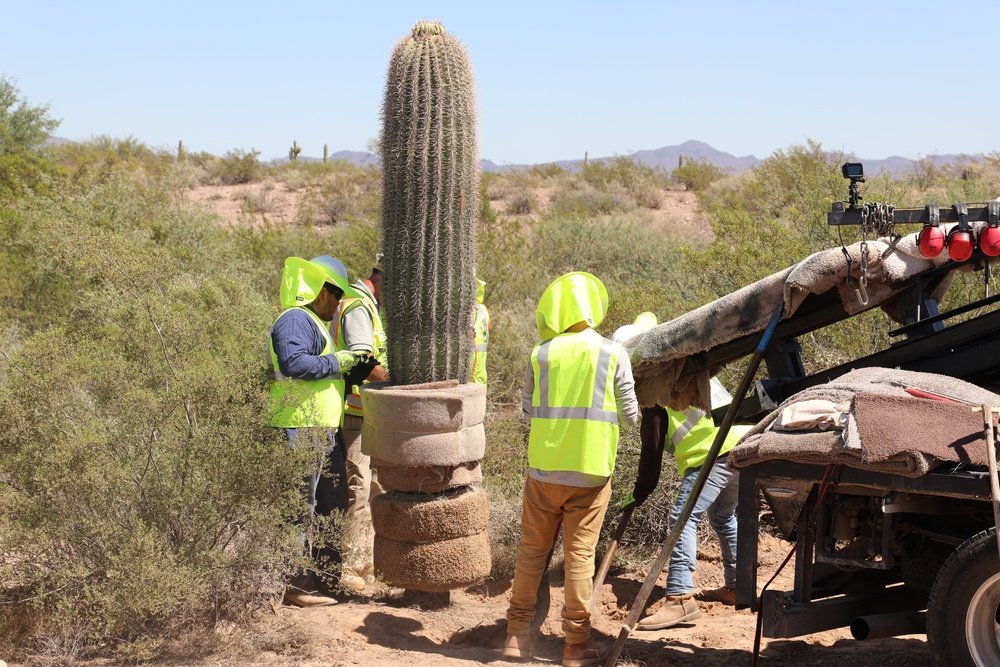
This September 2019 video, produced by the U.S. Army Corps of Engineers, shows barrier installation and cactus relocation near Lukeville, Arizona, in the Organ Pipe area. It is archival footage not video of the September 2026 discovery. Video: Dr. Michael Izard and Vincent Mouzon / U.S. Army Corps of Engineers, public domain via DVIDS.
Sources and Photo Documentation
- ProPublica, Ryan Devereaux, November 2, 2026 — original investigation including NPS, CBP and tribal statements.
- National Park Service — discovery and excavation requirements under NAGPRA.
- Federal Register — May 15, 2019 border construction waiver.
- U.S. Fish and Wildlife Service — public-domain NPS photograph of Quitobaquito Springs, September 2023.
- National Park Service — archival photographs of border fences near Organ Pipe. Archival images should not be presented as 2026 construction.
Editor’s note: This original summary and context report draws on ProPublica’s investigation, primary government documents and NPS image material. It is not a republication of ProPublica’s text or photographs.